
Why Your Funnel Is Asking People to Decide Too Soon
The structure of a funnel often appears clear on the surface. The pages are in place, the messaging is written, and the call to action is visible. From a distance, it looks like a complete pathway from interest to decision. Yet when people move through it, something does not settle. They pause, they hesitate, or they leave without taking the next step. The assumption is often that something needs to be made more persuasive. The response becomes one of adjustment, where more explanation or stronger language is added in an attempt to create movement.
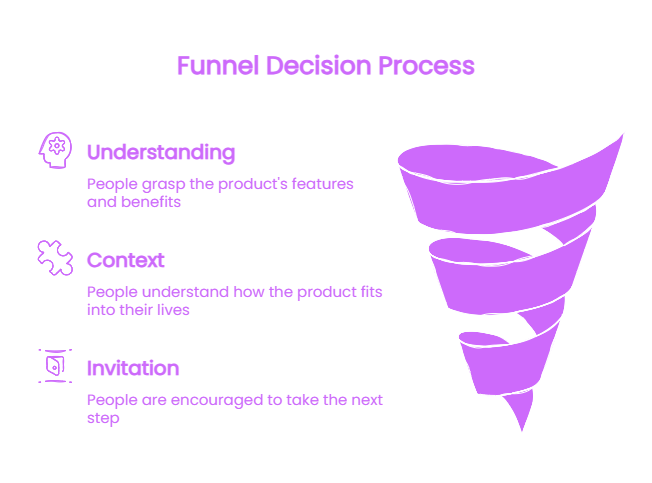
What is being experienced in these moments is not always a lack of persuasion. It is often a matter of timing. The funnel is asking for a level of decision that the sequence has not yet supported. When this happens, the issue is not with the person moving through the funnel. It is with the order in which understanding, context, and invitation are being presented. A decision is not a single action that can be triggered on demand. It is the result of progression that must be allowed to form before commitment is introduced.
What Decision Actually Requires
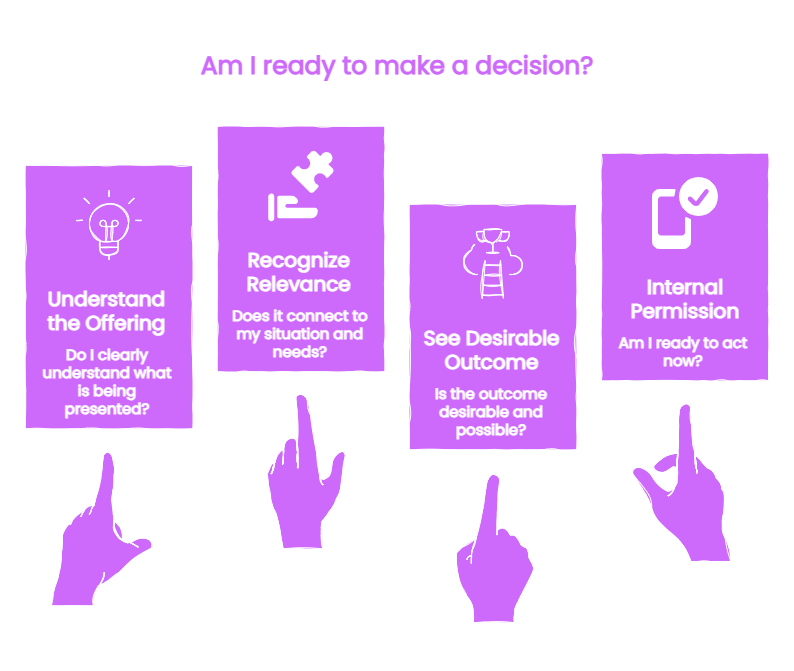
A decision is not made at the point of invitation. It is made through a process that develops before that moment arrives. A person must first understand what is being presented in clear and specific terms. They must recognize how it connects to their situation and whether it holds relevance to their current needs. They must also begin to see the outcome as something that is both desirable and possible. Without these elements, a decision has no foundation to rest on.
Beyond understanding and relevance, a decision also requires internal permission. This is the point where a person determines whether they are ready to act, not just interested in what they see. Timing plays a role here that cannot be bypassed. Even when something is clear and valuable, it may not align with what the person is prepared to do at that moment. When these conditions are not met, the decision cannot stabilize. It becomes something that is deferred, not because it is unwanted, but because it is premature.
How Funnels Control Timing
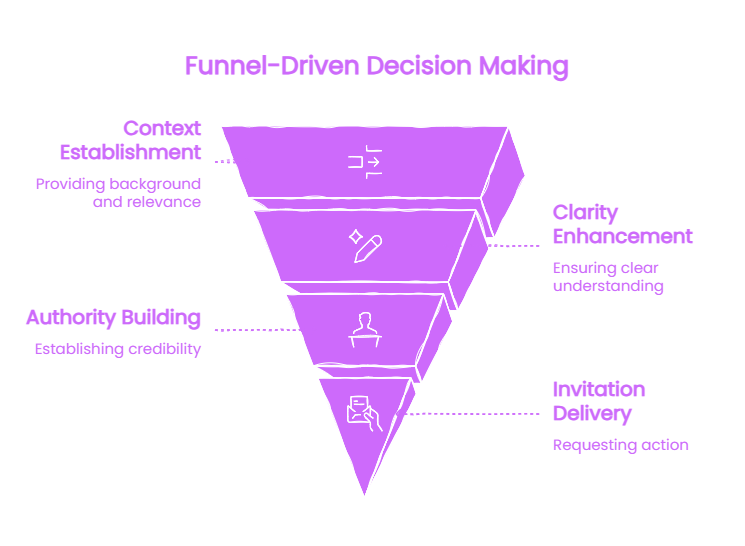
A funnel governs when information is introduced and when action is requested. It determines the order in which a person encounters context, clarity, authority, and invitation. This sequence is not arbitrary. It shapes how understanding is built over time. When the order is aligned, each step prepares the next, allowing comprehension to deepen before a decision is required. The funnel becomes a structured progression rather than a collection of disconnected prompts.
Timing within a funnel is therefore a matter of placement, not intensity. It is not about how strongly something is said, but when it is said in relation to what has already been understood. If an invitation appears before the necessary context has been established, it feels abrupt. If a decision point is introduced before relevance is clear, it feels misaligned. The funnel is not simply delivering information. It is managing the pace at which that information can be received and acted upon.
What “Too Soon” Looks Like
When a funnel asks for a decision too soon, the signs are visible in how people respond. They may read or watch attentively but stop short when action is required. They may revisit the same section more than once, attempting to find clarity that was not fully established. They may leave without interaction, even though initial engagement appeared strong. These are not random behaviors. They are responses to a sequence that has moved ahead of their readiness.
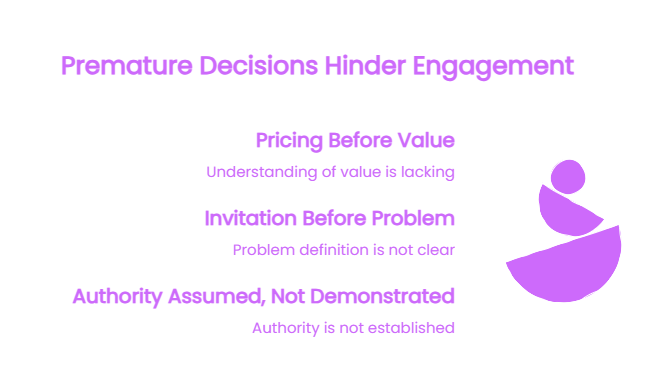
This often occurs when key elements are introduced out of order. Pricing may appear before value is fully understood. An invitation may be presented before the problem has been clearly defined. Authority may be assumed rather than demonstrated. Each of these creates a gap between what is being asked and what has been established. The person is not resisting the offer itself. They are responding to the timing of the request in relation to their current level of understanding.
What Happens When Timing Is Misaligned
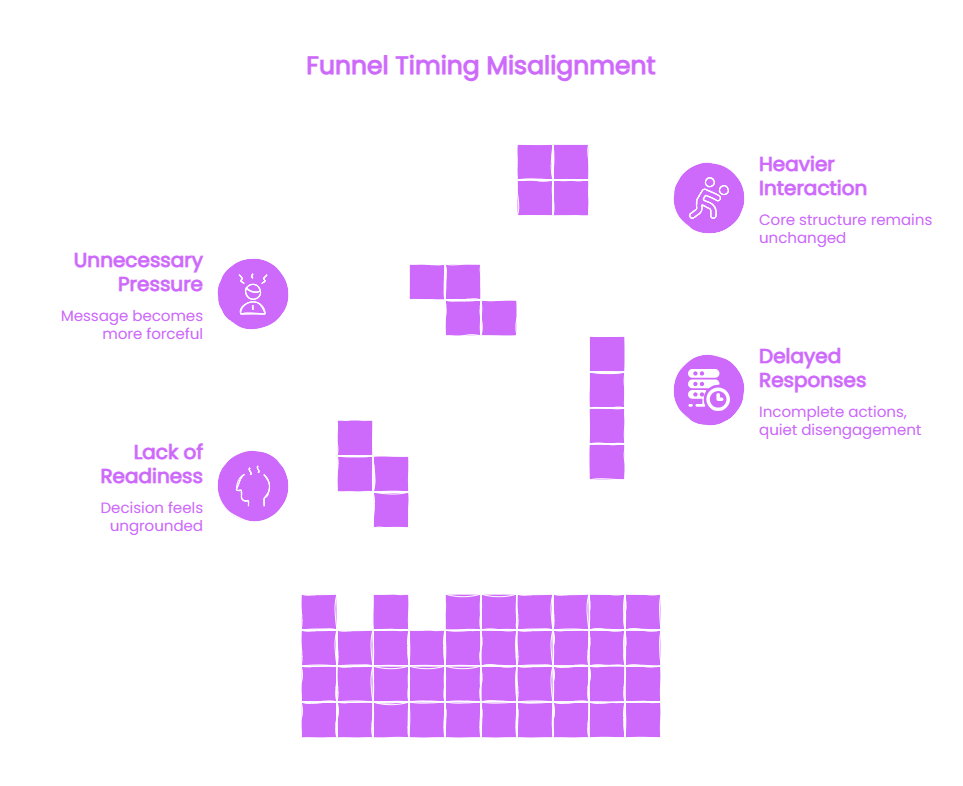
When timing is misaligned, the funnel creates friction that is often misinterpreted. The lack of movement is seen as disinterest, when it is more accurately a lack of readiness. People do not move forward because they have not yet reached a point where the decision feels grounded. This leads to patterns such as delayed responses, incomplete actions, or quiet disengagement. The funnel appears ineffective, but it is accurately reflecting the sequence it has been given.
This misalignment can also create unnecessary pressure within the system. Additional explanation is added, urgency is introduced, and the message becomes more forceful. However, these adjustments do not resolve the underlying issue. They increase the weight of the interaction without correcting the order of progression. The result is a funnel that feels heavier to move through, even though the core structure remains unchanged.
Why More Persuasion Doesn’t Fix It
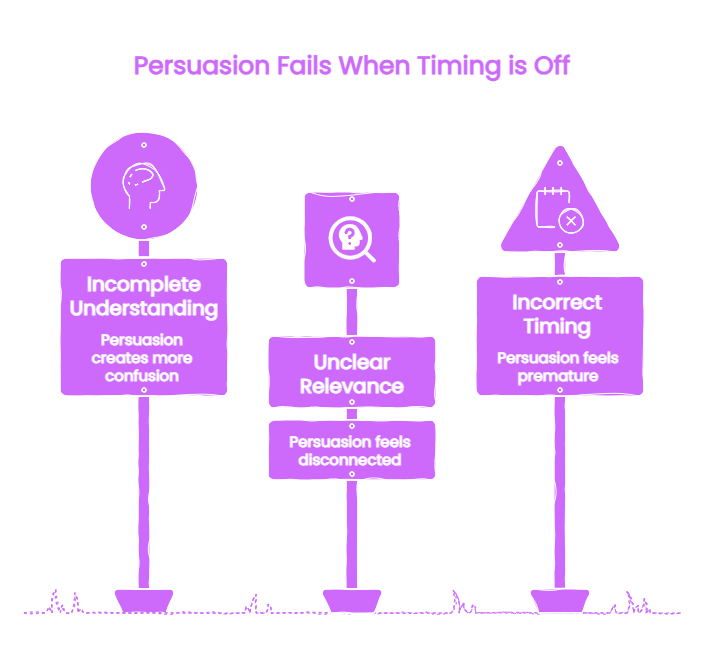
When a decision is being asked too early, increasing persuasion does not create readiness. It introduces tension. Stronger language, added urgency, and extended explanations attempt to compensate for what has not yet been established. The assumption is that if the message is compelling enough, it will overcome hesitation. In reality, persuasion cannot replace sequence. It can only amplify what is already present.
If understanding is incomplete, more persuasion creates confusion. If relevance is unclear, more persuasion feels disconnected. If timing is off, more persuasion feels premature. The funnel becomes louder, but not clearer. This is why efforts to improve performance through intensity often fail. The issue is not that the message lacks strength. It is that the structure does not support the moment in which the decision is being requested.
Restoring Proper Sequence
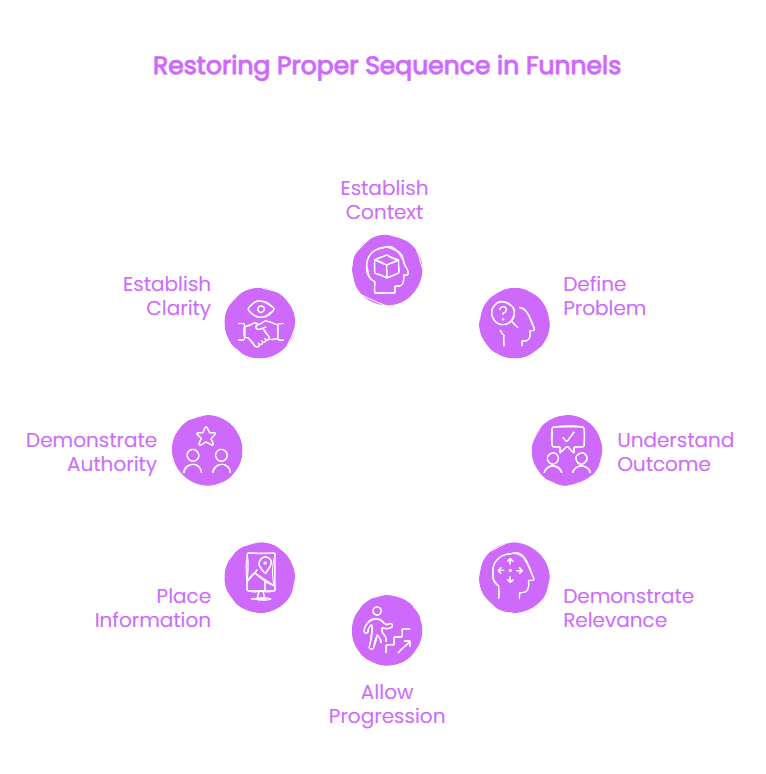
To restore proper sequence, attention must return to when decisions are being introduced within the funnel. This requires examining whether the necessary context has been established before an invitation appears. The problem must be clearly defined, the outcome must be understood, and the relevance must be evident. Without these elements in place, the decision point will always feel premature, regardless of how it is presented.
This also requires allowing progression to unfold at a pace that supports comprehension. Information must be placed where it can be received, not where it is most convenient to present. Authority must be demonstrated before it is relied upon. Clarity must be established before commitment is requested. When sequence is adjusted in this way, the need for persuasion decreases. The funnel begins to guide rather than press, and movement becomes a result of alignment rather than effort.
In Closing
A funnel that asks for a decision too soon is not failing. It is revealing a misalignment in sequence. The lack of movement is not a rejection of the offer. It is a response to the order in which understanding and invitation have been presented. When this is recognized, the focus shifts from increasing pressure to restoring structure. The funnel becomes a tool for clarity rather than a mechanism for force.
When timing is aligned, decisions do not feel abrupt or uncertain. They feel like a natural continuation of what has already been understood. The role of the funnel is to support that progression with precision. When it does, the need to convince disappears. What remains is a clear path where each step leads naturally to the next, and decision becomes an outcome rather than a demand.