Why Some Funnels Feel “Off” Even When They Convert
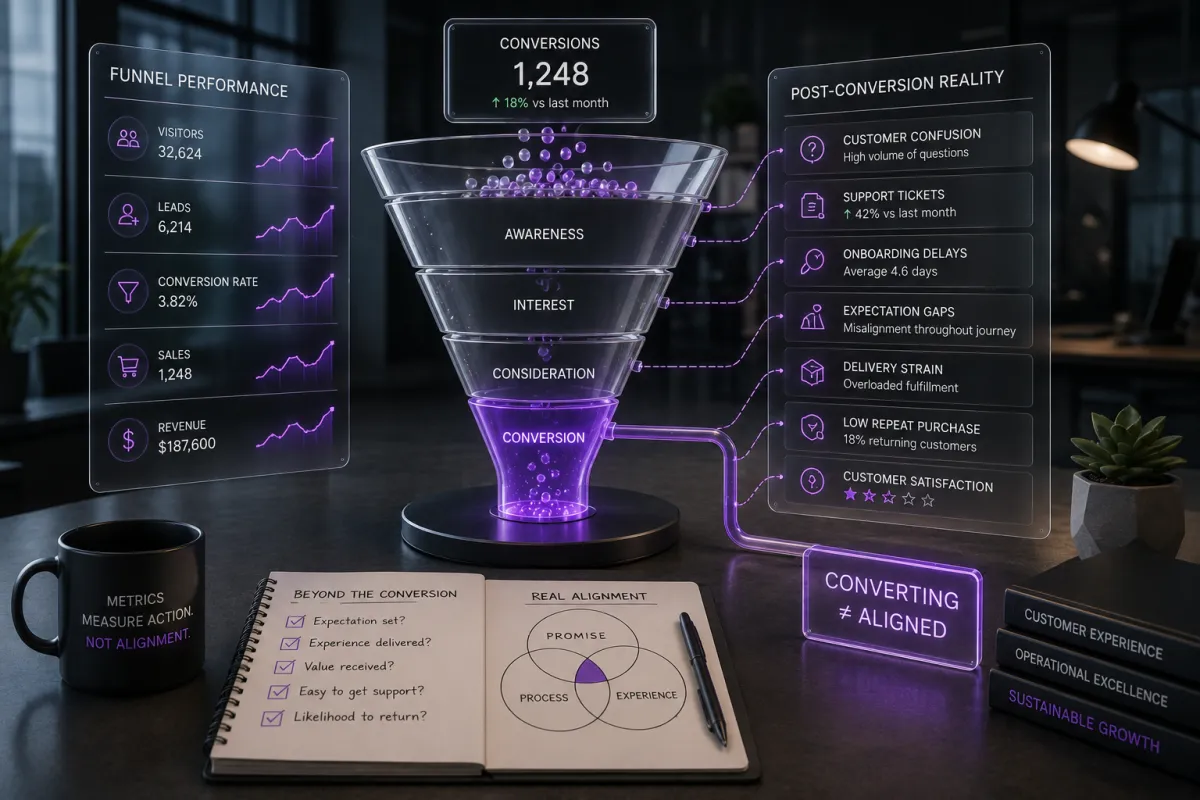
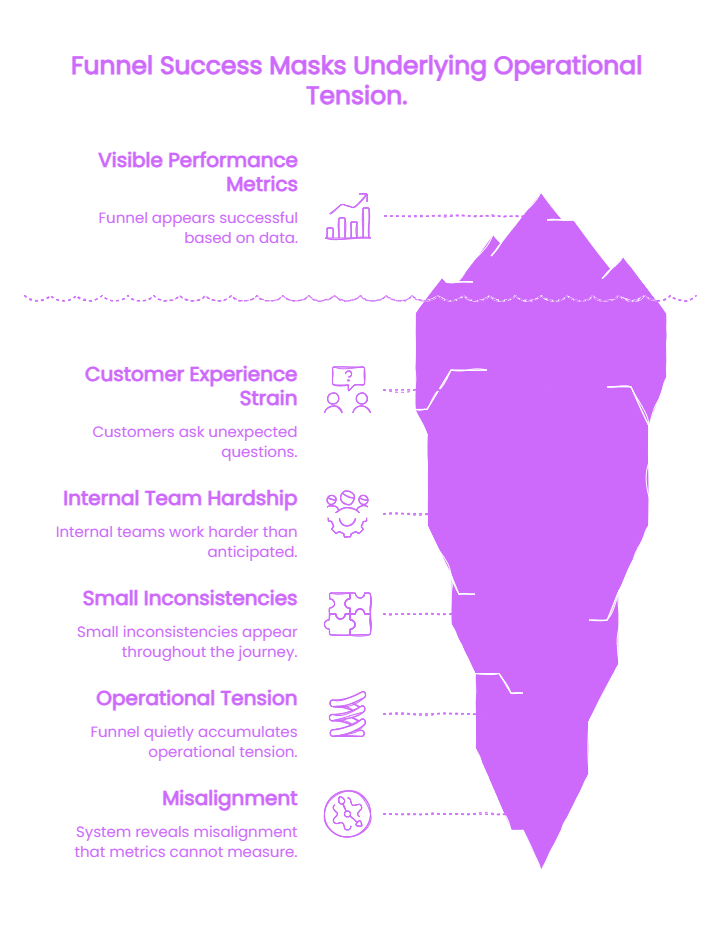
A funnel can appear successful when viewed through performance metrics alone. Leads continue entering the system, conversions remain consistent, and revenue continues being generated over time. Reports suggest that the funnel is functioning as intended. Teams often interpret these numbers as confirmation that the overall system is healthy. Yet the experience surrounding those results may feel noticeably strained beneath the surface. Customers ask unexpected questions, internal teams work harder than anticipated, and small inconsistencies continue appearing throughout the journey. Conversion alone does not confirm that a funnel is fully aligned.
This feeling is often difficult to explain because the visible outcomes appear positive. Decision makers hesitate to investigate further because performance seems acceptable by conventional standards. The assumption becomes that successful conversion validates every other part of the system. However, measurable success and structural health are not identical conditions. A funnel can continue producing results while quietly accumulating operational tension. Those tensions eventually influence customer experience, fulfillment, retention, and long-term sustainability. What feels "off" is often the system revealing misalignment that conversion metrics cannot fully measure.
What "Off" Actually Means
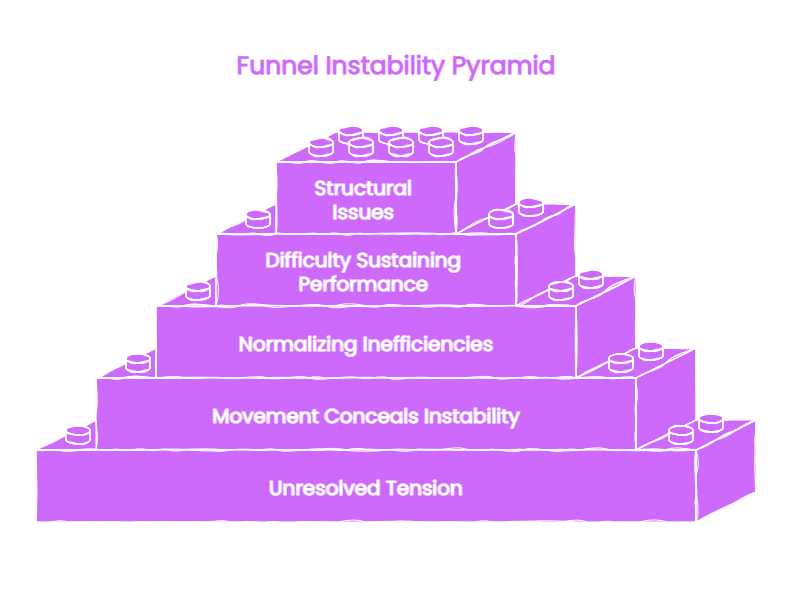
Feeling "off" within a funnel does not necessarily indicate failure or poor performance. It describes unresolved tension between measurable outcomes and systemic coherence. The funnel continues producing movement while underlying inconsistencies remain unresolved. Customers continue progressing despite unnecessary friction throughout their experience. Internal teams compensate for recurring issues through additional effort rather than structural improvement. The system functions, but it requires continual adjustment to maintain that performance. Conversion measures action, but it does not independently measure alignment.
This distinction becomes important because movement can conceal instability. Buyers may continue making purchasing decisions while experiencing unnecessary uncertainty along the way. Employees may continue delivering strong service while relying upon improvised solutions behind the scenes. Customer satisfaction may remain acceptable despite recurring operational strain. The business gradually normalizes inefficiencies because measurable outcomes continue appearing positive. Over time those unresolved tensions become more difficult to sustain consistently. A funnel that feels "off" often signals structural issues that have not yet interrupted conversion performance.
What It Looks Like in Practice
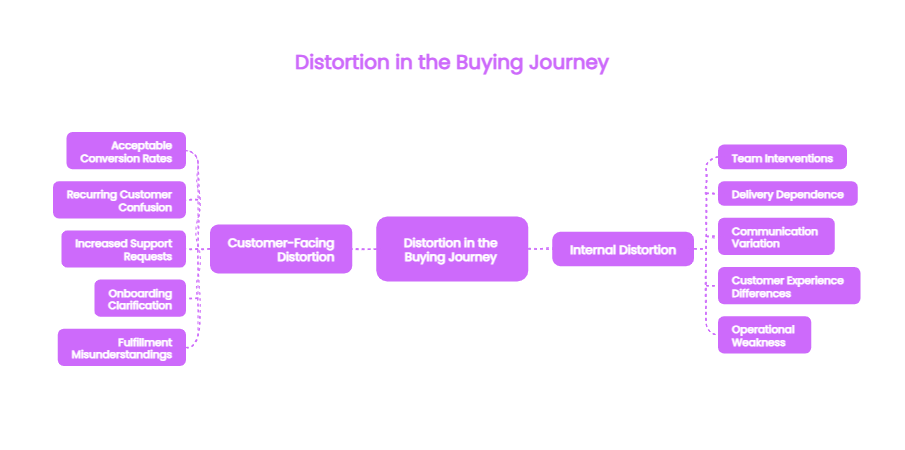
In practice, this distortion often appears through acceptable conversion rates accompanied by recurring customer confusion. Buyers complete purchases but continue asking questions that should have already been answered clearly. Support requests increase because expectations were not consistently established throughout the buying journey. Onboarding requires additional clarification despite carefully written sales messaging. Fulfillment teams repeatedly address similar misunderstandings after conversion has already occurred. Customers receive the intended outcome while experiencing unnecessary uncertainty along the way. Strong performance exists alongside structural weakness.
The same pattern may appear internally as operational strain rather than visible customer dissatisfaction. Team members continually intervene to correct preventable issues after conversion occurs. Delivery becomes increasingly dependent upon individual effort instead of repeatable systems. Communication varies because processes rely upon memory rather than structure. Customer experiences differ depending upon who manages the interaction. Performance reports continue looking healthy while operational consistency gradually weakens. The funnel succeeds statistically while struggling systemically.
How Funnels Reveal This Distortion
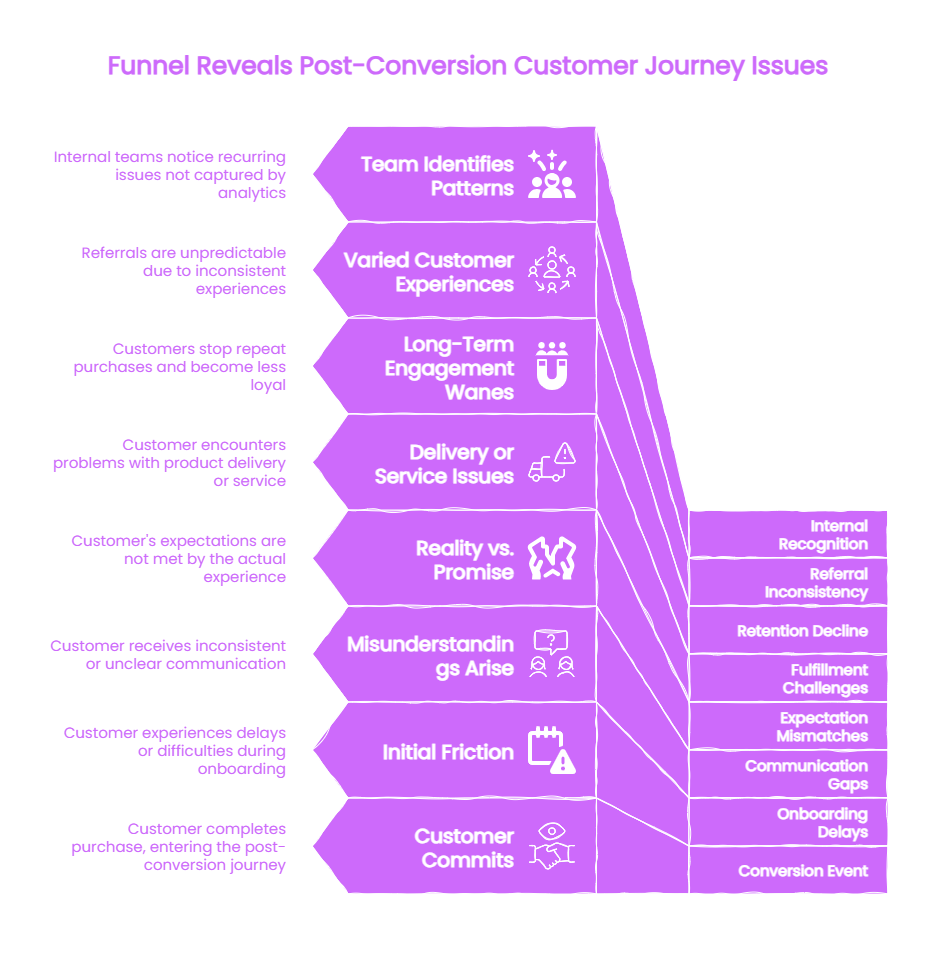
Funnels reveal this distortion most clearly after the conversion event has already taken place. Acquisition may function efficiently while later stages begin exposing hidden inconsistencies. Customers encounter onboarding delays, communication gaps, expectation mismatches, or fulfillment challenges that were not visible during the buying process. These issues often emerge outside traditional conversion reports. The funnel therefore reveals more than purchasing behavior alone. It exposes how effectively the entire customer journey operates after commitment has already occurred. Systemic alignment becomes visible through the experience that follows conversion.
Retention patterns often provide additional evidence of this hidden tension. Customers may complete purchases without becoming long term advocates. Repeat business becomes less predictable despite steady acquisition performance. Referrals remain inconsistent because experiences vary across different customers. Internal teams recognize recurring patterns that analytics alone cannot explain. These observations reveal where operational systems require refinement beyond marketing performance. The funnel becomes a diagnostic tool for the entire customer experience rather than simply a measurement of sales activity.
Why Conversion Data Doesn't Resolve It
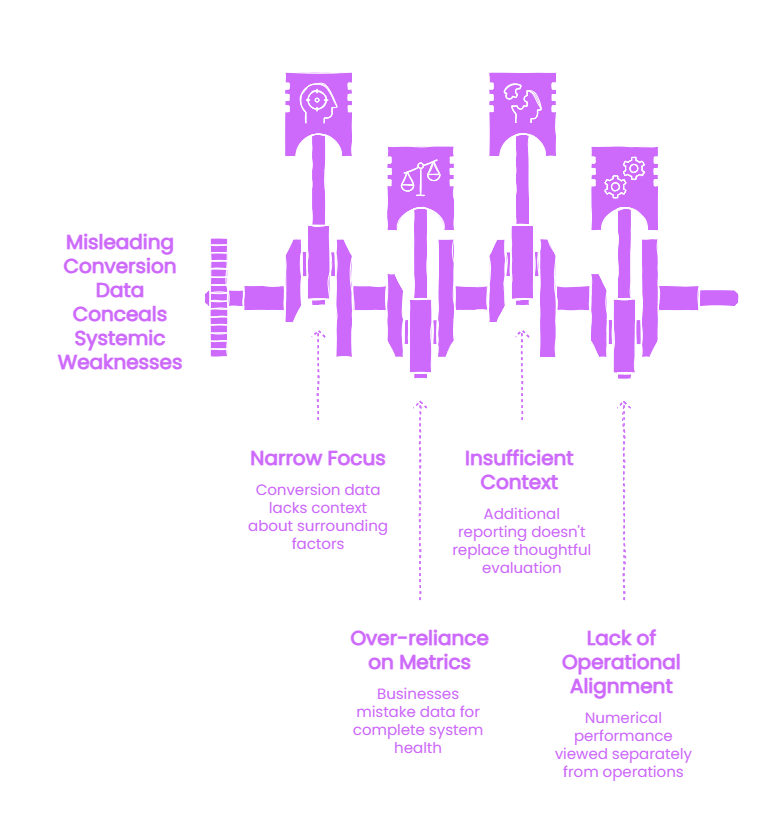
Conversion data measures a specific behavior occurring within a specific moment of the customer journey. It identifies whether a decision was made, but it does not explain the quality of everything surrounding that decision. Metrics alone cannot independently measure trust, operational stability, fulfillment consistency, or customer confidence after purchase. They provide valuable information without providing a complete diagnosis. Businesses sometimes mistake positive conversion data for evidence that every supporting system is equally healthy. This assumption leaves structural weaknesses unaddressed until larger problems eventually emerge. Strong numbers can conceal instability when viewed without broader operational context.
Additional reporting rarely resolves this limitation on its own. More dashboards cannot replace thoughtful evaluation of the customer experience. Increasing the quantity of performance metrics does not automatically improve understanding of systemic health. Context remains necessary for meaningful interpretation of every measurement collected. Operational alignment must be evaluated alongside numerical performance rather than separately from it. Data becomes significantly more valuable when interpreted within the broader structure supporting customer experience. Numbers should inform diagnosis instead of replacing it.
Where Alignment Must Be Evaluated
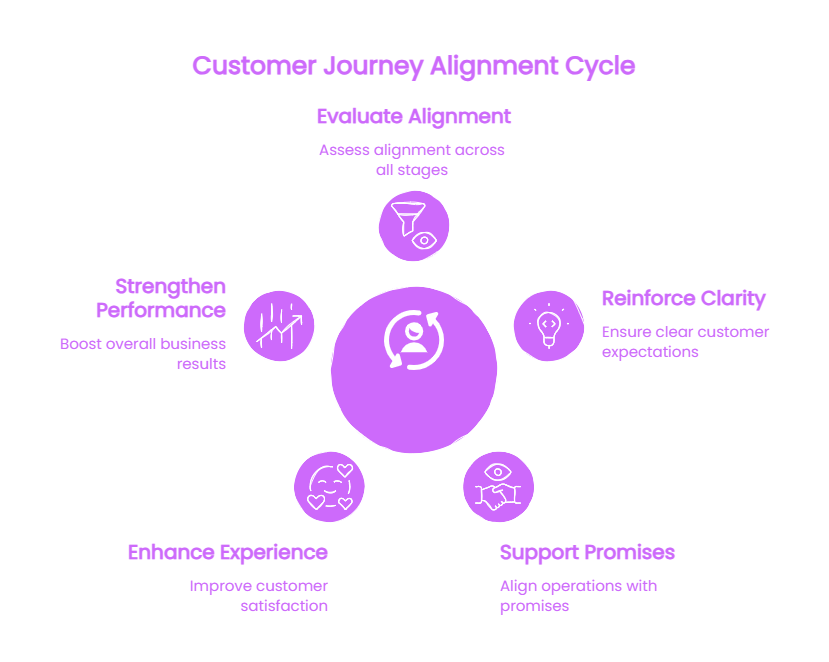
Alignment extends beyond acquisition and conversion into every stage of the customer journey. Expectation formation, onboarding, fulfillment, communication, retention, and long-term experience all contribute to funnel health. Every transition between stages should reinforce clarity rather than introduce uncertainty. Customers should experience continuity from their first interaction through ongoing engagement. Operational systems should consistently support the promises established during the buying process. Funnel health therefore depends upon the integrity of the complete experience rather than isolated performance metrics. Sustainable performance emerges from systemic coherence.
Evaluating alignment requires observing the funnel as one connected system rather than disconnected events. Each stage influences the effectiveness of every stage that follows. Improvements made within one area should strengthen the experience across the entire customer journey. Operational consistency becomes just as important as conversion efficiency. Teams gain clearer insight because performance is evaluated alongside experience rather than independently. The business develops stronger decision making by understanding both movement and meaning. Alignment becomes the foundation supporting every measurable result.
Working With the Funnel
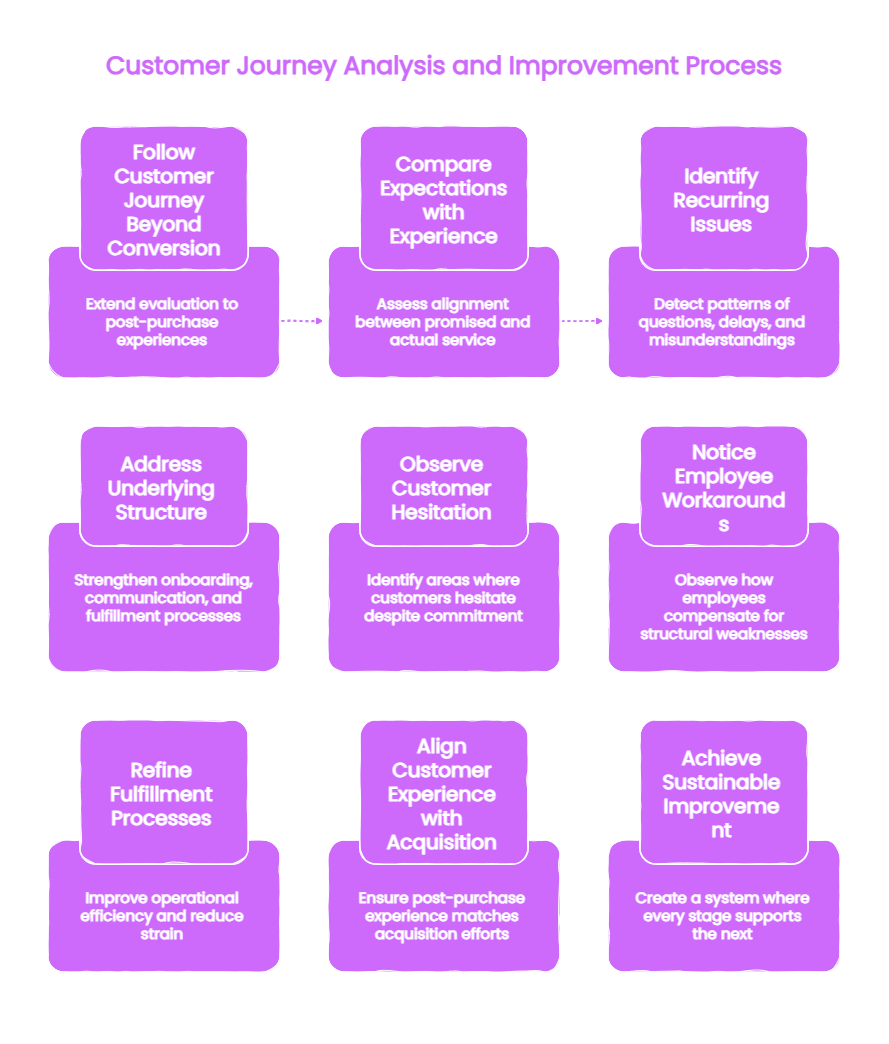
Begin by following the customer journey beyond the point of conversion instead of ending evaluation at the purchase decision. Observe how expectations established during the funnel compare with the experience customers actually receive afterward. Identify recurring questions, delays, misunderstandings, or operational workarounds that repeatedly appear. Pay attention to areas where employees compensate for structural weaknesses through additional effort. Notice where customers hesitate despite already committing to the business. These patterns often reveal friction that traditional conversion reports cannot identify directly. The objective is to understand how the complete system functions rather than how individual metrics perform.
Once these observations become visible, address the underlying structure before attempting to improve conversion further. Strengthen onboarding where expectations consistently become unclear. Improve communication where unnecessary uncertainty continues appearing. Refine fulfillment processes where operational strain repeatedly develops. Allow customer experience to become as intentional as customer acquisition. Sustainable improvement occurs when every stage supports the next with consistency and clarity. The strongest funnels convert effectively because the entire system operates in alignment.
In Closing
Conversion is an important signal within every funnel, but it is not a complete diagnosis of system health. A funnel can perform well while still containing unresolved structural tension beneath the surface. Positive metrics should invite deeper understanding rather than immediate assumptions about overall alignment. Sustainable performance depends upon more than acquiring customers successfully. It requires delivering experiences that consistently support the expectations established before conversion occurred. Operational coherence strengthens every metric because it reduces unnecessary friction throughout the customer journey. Funnels become stronger when performance and alignment exist together.
The healthiest funnels do more than generate measurable movement. They create continuity between expectation, experience, delivery, and long term trust. Customers experience the same level of clarity after conversion that first attracted them to the business. Internal teams operate with greater confidence because systems consistently support execution. Operational strain decreases as alignment replaces compensation. Performance becomes more sustainable because it rests upon structural integrity instead of isolated outcomes. Lasting funnel success is achieved when measurable results and systemic health reinforce one another.