
Why opt in Funnels Fail for Service Based Brands
You built the opt in because it was presented as a reliable way to generate consistent growth. A downloadable guide, checklist, or workshop replay seemed like a strategic exchange for attention. Subscriber numbers began increasing steadily over the first few weeks. On the surface, this growth looked measurable, predictable, and promising. Yet when you examined revenue and consultation requests, the movement felt shallow and inconsistent. Engagement existed, but serious commitment was absent. The system seemed active, yet it was not producing meaningful progression.
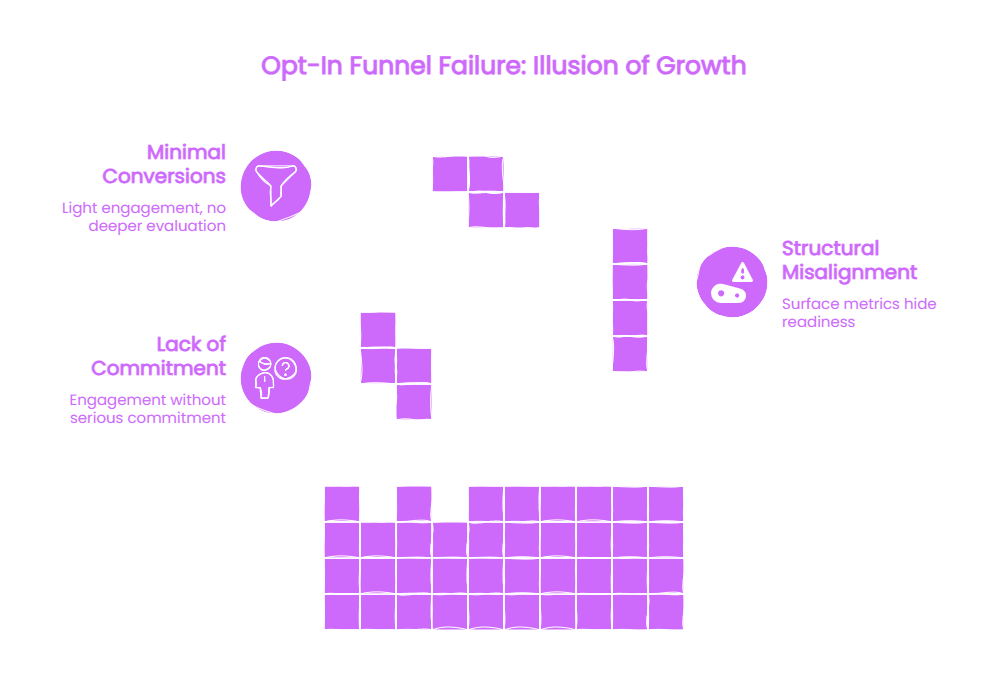
At first, you assumed nurturing simply required more repetition and time. You refined email sequences, optimized subject lines, and adjusted calls to action to increase engagement. Despite these efforts, conversions toward high value services remained minimal. Subscribers engaged lightly but rarely advanced to deeper evaluation. The list expanded, but qualified conversations remained scarce. What appeared to be a tactical issue gradually revealed itself as structural misalignment. Surface level metrics created the illusion of progress while readiness was overlooked entirely.
What an Opt In Funnel Is Designed to Do
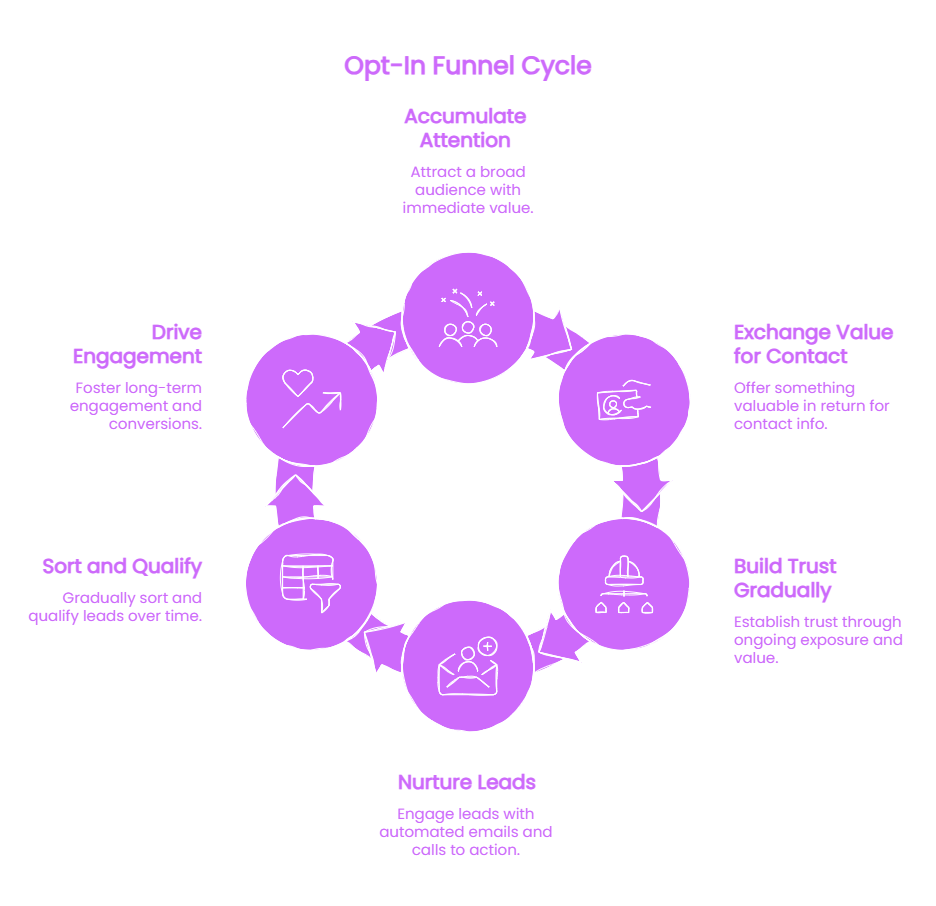
An opt in funnel is engineered to gather attention at scale rather than qualify readiness. Its primary function is to exchange immediate value for contact information while lowering entry resistance. This design assumes trust can be built gradually through repeated exposure over time. The system works best in contexts where volume naturally produces opportunity. The funnel’s success depends on continuous engagement, not immediate decision making. It multiplies awareness before commitment becomes a factor. Its structure is simple to implement but relies on consistent follow up to produce any long term results.
The weight of this funnel exists mainly in the backend nurture sequence rather than at initial entry. Automated emails, ongoing value delivery, and repeated touchpoints carry the persuasive load instead of the opt in itself. The system does not filter for seriousness or capacity to pay immediately. Instead, it gathers broadly and sorts gradually through behavior, engagement, and response signals. When paired with digital products or transactional offers, the structure performs predictably. When applied to high context services, tension arises because readiness is not prequalified. Misalignment appears when the audience is curious but not committed, creating effort without advancement.
Why Service Based Brands Struggle
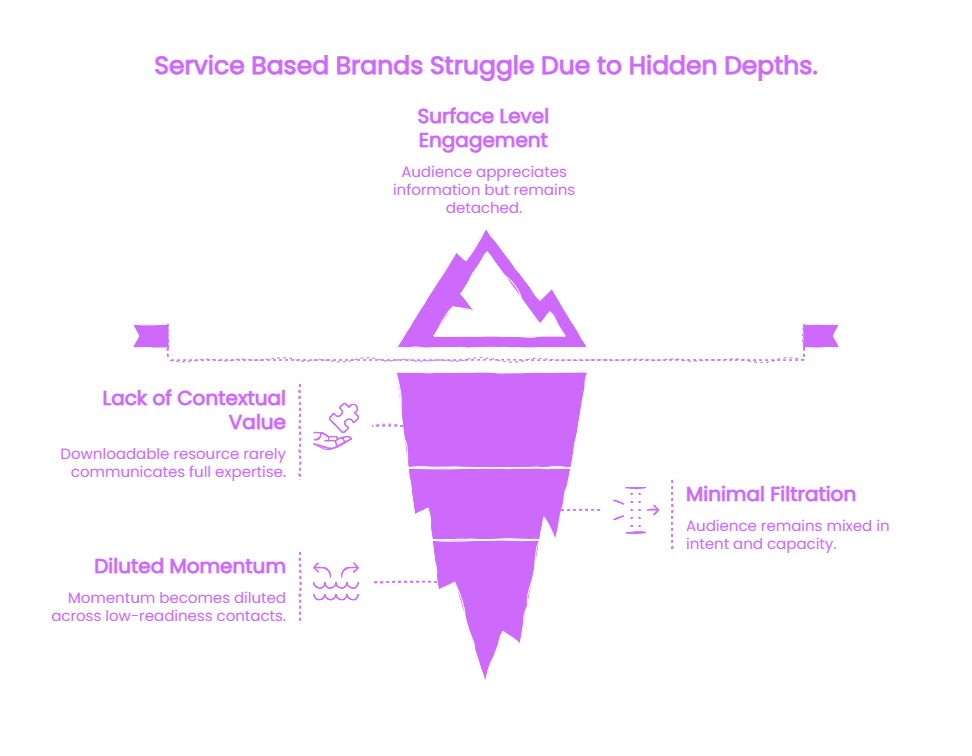
Service based brands rely on relational depth rather than pure volume to generate revenue. Their value is contextual, personalized, and dependent on authority recognition. Trust is built through credibility and discernment, not superficial content or free downloads. A simple guide or checklist rarely communicates the provider’s full expertise. Audiences may consume the information without ever understanding the service’s actual value. Engagement exists at a surface level without advancing toward evaluation. The system collects interest but does not produce progression into meaningful decision making.
This creates a structural mismatch between funnel design and business need. The funnel emphasizes attention accumulation while the service requires early filtration for readiness. Many subscribers enter with curiosity rather than intention, which dilutes meaningful engagement. Because the audience is not prequalified, resources are spent nurturing contacts who are unlikely to convert. Messaging becomes broad instead of targeted, creating friction in progression. Energy is invested without measurable return in quality conversations. Structural misalignment produces visible activity while actual movement toward sales stalls.
Symptoms of Structural Failure
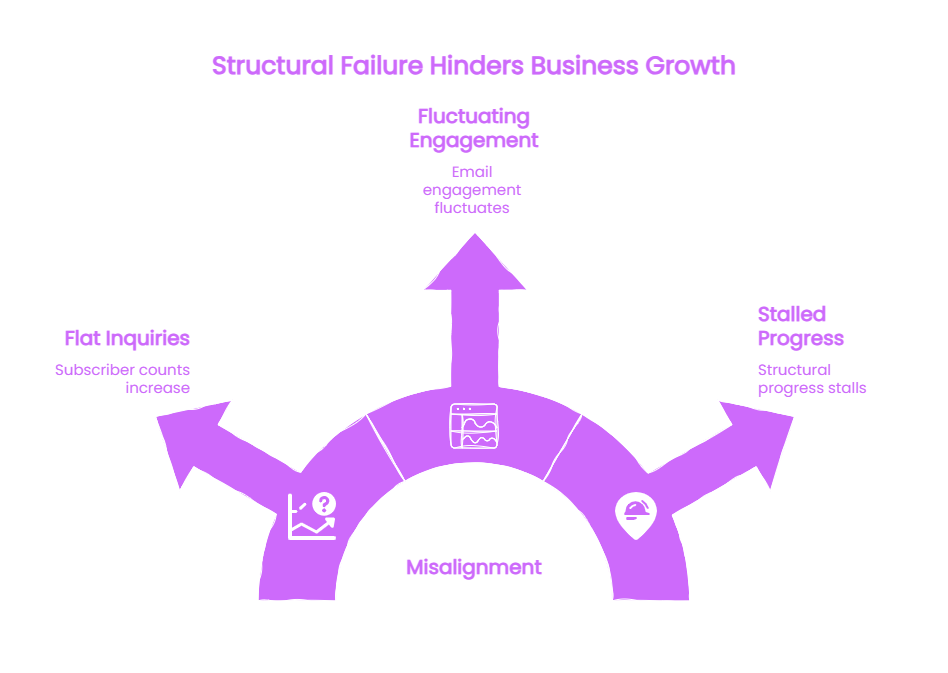
When the funnel is misaligned, measurable patterns emerge across engagement metrics. Subscriber counts increase steadily while consultation requests remain flat or inconsistent. Email open and click rates fluctuate without producing decisive action. Calls to action generate clicks but rarely meaningful follow through. Marketing activity creates a sense of motion without corresponding revenue. This pattern repeats regardless of sequence refinements or incentive layering. The symptoms indicate structural, not tactical, failure within the system.
Internally, the business experiences subtle but persistent frustration. Teams create additional content to stimulate engagement, hoping to generate traction. Incentives and deadlines are layered to create urgency, yet the ceiling remains unchanged. Effort compounds while actual progression stagnates. Energy is diverted into chasing activity rather than addressing the root constraint. The disconnect between accumulation and readiness undermines morale and strategy. Clear recognition of the structural gap is required before further intervention can succeed.
How to Align Structure with Service
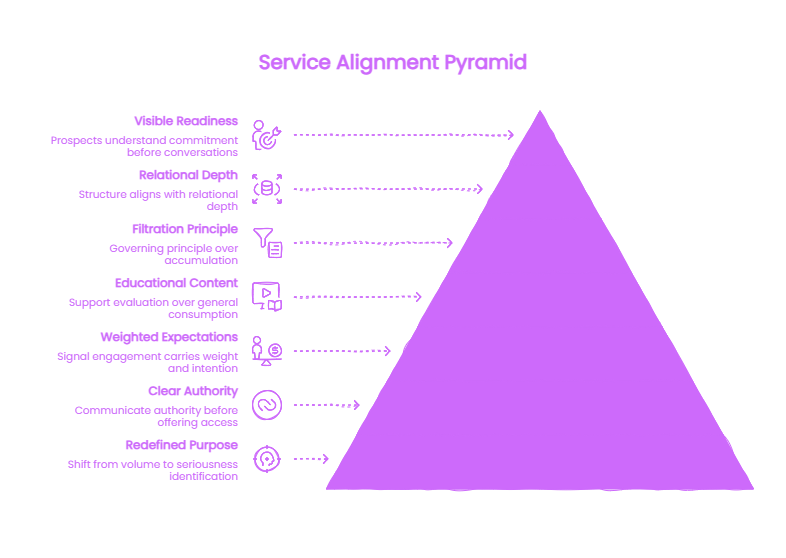
Alignment begins by redefining the purpose of the entry point. Instead of maximizing volume, the focus shifts to identifying readiness early. Authority and clarity must be communicated before offering deeper access. Educational content should support evaluation rather than general consumption. The entry point must signal intentionality and seriousness to filter effectively. Filtration becomes the governing principle rather than accumulation. Structural alignment protects service depth while attracting genuinely qualified prospects.
When readiness is visible earlier, engagement stabilizes naturally without artificial incentives. The audience becomes smaller but significantly more aligned with the service offering. Conversations gain substance even if total numbers decrease. Authority strengthens because expectations are communicated clearly from the outset. Resources previously spent nurturing low intent contacts are concentrated on viable prospects. Movement becomes measurable because prequalified prospects advance systematically. Proper alignment restores progression while reducing wasted energy and effort.
In Closing
Opt in funnels are not inherently flawed, they simply serve a different structural purpose than many service based businesses require. They accumulate attention but do not filter for high context commitment. When applied without adaptation, they produce a list of contacts without meaningful progression. The issue is structural rather than motivational. Increasing effort or intensity will not correct architectural misalignment. Discernment and intentional design must replace assumption to produce real movement. Precision and structural alignment determine measurable advancement within the system.
Funnels function as filters whether intentionally designed that way or not. If the filter is too wide, seriousness becomes diluted and resources are misapplied. Service based brands require structures that protect authority and relational depth. When filtration aligns with readiness, engagement stabilizes naturally. Energy is applied efficiently, and effort produces advancement rather than volume alone. Movement becomes predictable because readiness is visible earlier in the process. Alignment transforms accumulation into measurable growth while reinforcing the brand’s authority and credibility.