
Why More Leads Won’t Fix a Weak Offer
When sales decline, many businesses immediately focus on increasing the number of leads entering their marketing systems. The assumption is that low revenue must be caused by insufficient visibility. More traffic, more advertisements, and more exposure appear to offer a logical solution. While visibility certainly plays a role in business growth, it does not address every problem. If the underlying offer lacks clarity or perceived value, increasing lead volume simply exposes that weakness to a larger audience. Marketing systems distribute offers; they do not strengthen them. This distinction is easy to overlook when marketing tactics promise rapid growth. Businesses may invest heavily in lead generation before evaluating whether the offer itself is compelling.
A strong offer typically demonstrates its strength even with modest traffic. Prospects who encounter it quickly recognize the value being presented. Decisions may not happen instantly, but engagement remains steady and meaningful. A weak offer behaves differently. Visitors may show curiosity, but hesitation appears when it is time to commit. Increasing the number of leads in this situation rarely improves the outcome. Instead, it multiplies the number of prospects who decline the offer. Understanding this dynamic helps businesses redirect their attention toward the true foundation of sustainable growth. Before expanding lead generation efforts, it becomes essential to examine the structure and clarity of the offer itself.
What Actually Makes an Offer Strong
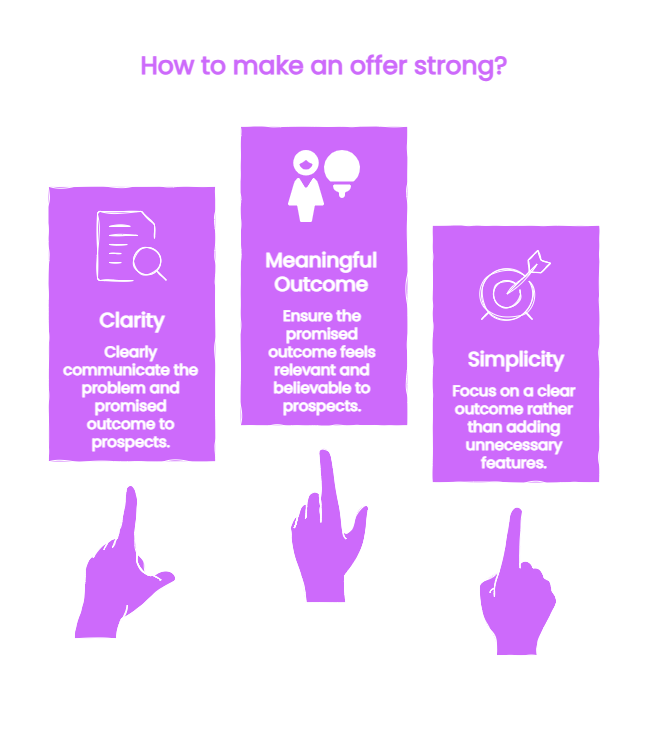
A strong offer clearly communicates the problem it is designed to solve. Prospects should be able to recognize their own situation within that description. The outcome being promised must also feel meaningful and believable. When people understand how their circumstances might improve, the offer begins to feel relevant. Clarity plays a central role in this process. If the benefits are vague or overly complicated, prospects may struggle to evaluate whether the offer is right for them. A well structured offer removes this uncertainty. It presents the transformation in a way that feels both tangible and achievable.
Strength does not necessarily come from adding more features or components. In many cases, simplicity improves decision making. When the offer focuses on a clear outcome, prospects can assess its value quickly. Overly broad offers often dilute the message and create confusion. Instead of understanding what the offer provides, prospects must interpret multiple possibilities. This additional effort increases hesitation. A focused structure allows the value to stand out more clearly. When prospects recognize that value, the decision process becomes much easier to navigate.
When Lead Generation Masks Structural Problems
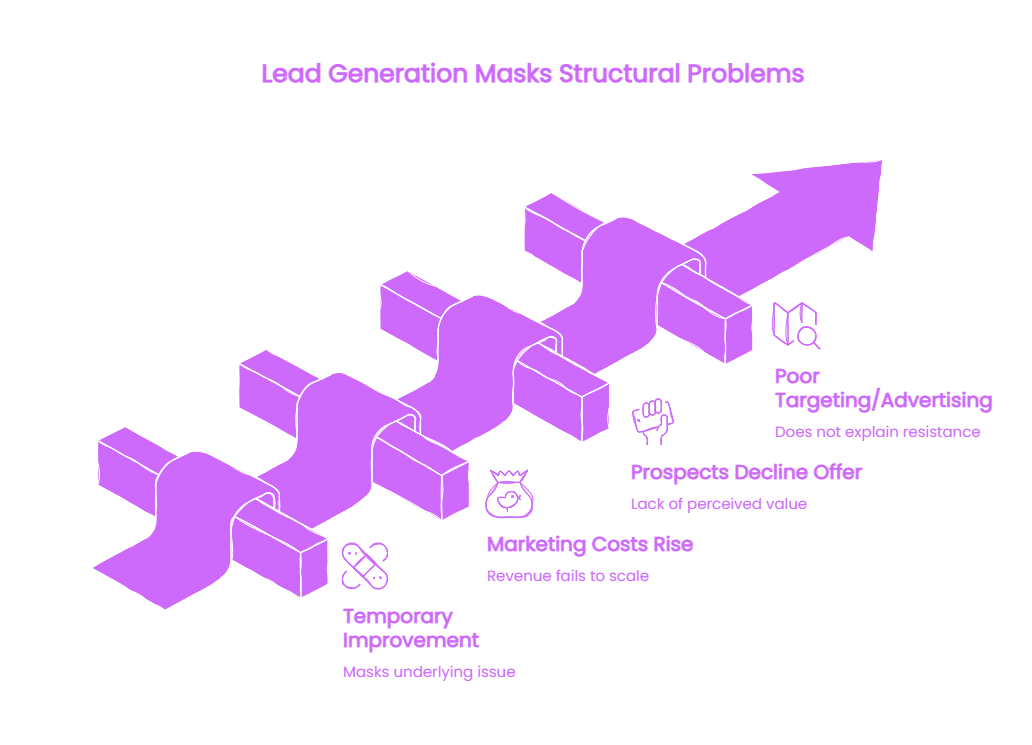
Increasing traffic can temporarily create the appearance of growth even when the offer itself remains weak. More visitors naturally lead to more potential transactions. However, if the conversion rate remains low, the underlying issue has not been resolved. Businesses may interpret the temporary improvement as confirmation that their marketing strategy is working. Over time, however, the imbalance becomes visible again. Marketing costs rise while revenue fails to scale proportionally. At that point, the search for new marketing tactics begins again. This cycle can repeat for long periods when the offer itself is not examined.
Conversion rates often provide the clearest signal in these situations. If large numbers of visitors consistently decline the offer, the issue may not be traffic volume. Instead, prospects may not perceive enough value to justify the decision being requested. Businesses sometimes attribute this pattern to poor targeting or ineffective advertising. While those factors can play a role, they do not always explain persistent resistance. The offer itself remains central to the buying decision. When the offer becomes stronger and clearer, prospects respond differently even before lead volume increases. Marketing efforts then amplify an already compelling proposition.
Structural Application
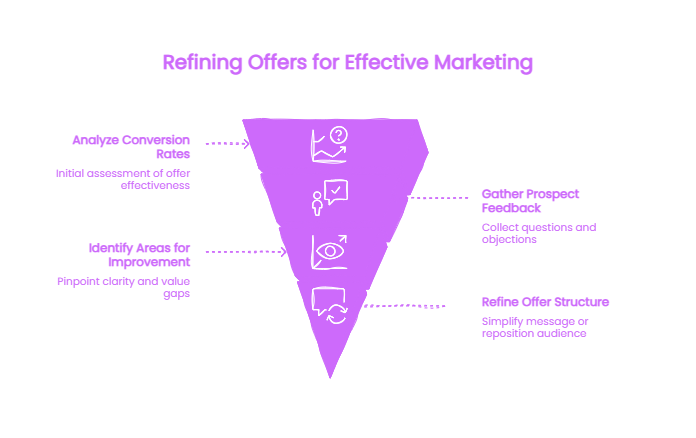
Businesses can evaluate the strength of their offers by examining how prospects respond during the decision process. Conversion rates provide an initial indicator, but additional feedback often reveals deeper insights. Questions from prospects can highlight areas where clarity is missing. Objections may reveal uncertainty about value, timing, or expected outcomes. Reviewing these patterns helps identify where the offer structure needs refinement. Sometimes the adjustment involves simplifying the message. In other cases, it may involve repositioning the offer toward a more specific audience.
Once the offer becomes clearer and more focused, marketing efforts operate much more effectively. Each new lead encounters a proposition that is easier to understand and evaluate. Decision making becomes faster because the value is immediately recognizable. Instead of attempting to persuade reluctant audiences, businesses can concentrate on presenting a compelling solution. Lead generation then becomes a growth multiplier rather than a corrective strategy. Marketing systems perform best when they amplify clarity and value. Strengthening the offer creates the foundation that allows those systems to succeed.
Closing
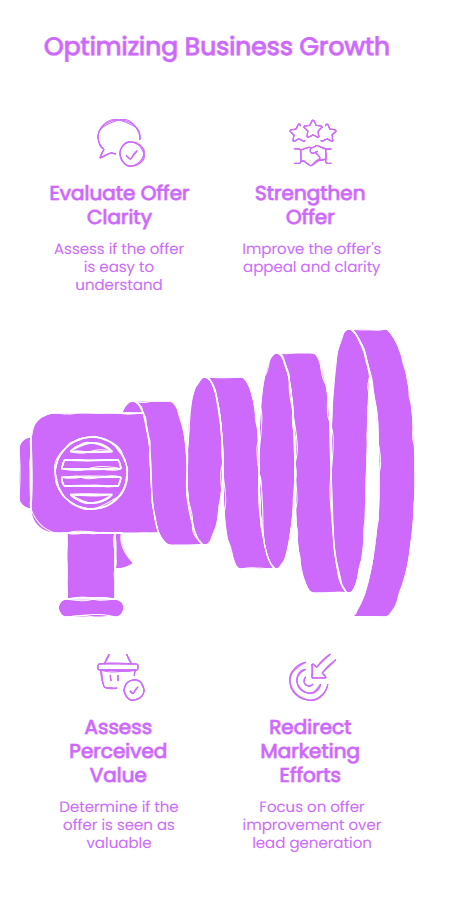
Marketing is often described as the engine that drives business growth. While this description captures its importance, it also highlights a crucial limitation. An engine can accelerate movement, but it cannot determine the direction of travel. If the offer itself lacks clarity or strength, marketing simply amplifies that weakness. Businesses may reach larger audiences without achieving better outcomes. Recognizing this dynamic helps shift attention back to the foundation of the business model. Before scaling lead generation, it becomes wise to evaluate the offer being presented.
When the offer is strong, marketing efforts become far more effective. Prospects recognize the value quickly and respond with greater confidence. Conversion improves because the decision feels logical rather than forced. Lead generation then operates as a tool for expansion rather than repair. Businesses can scale visibility knowing that the offer itself supports growth. This sequence creates a more stable and sustainable marketing system. Instead of chasing endless leads, the business develops an offer that naturally attracts decisions.