Why Luxury Brands Feel Calm and Most Businesses Don't
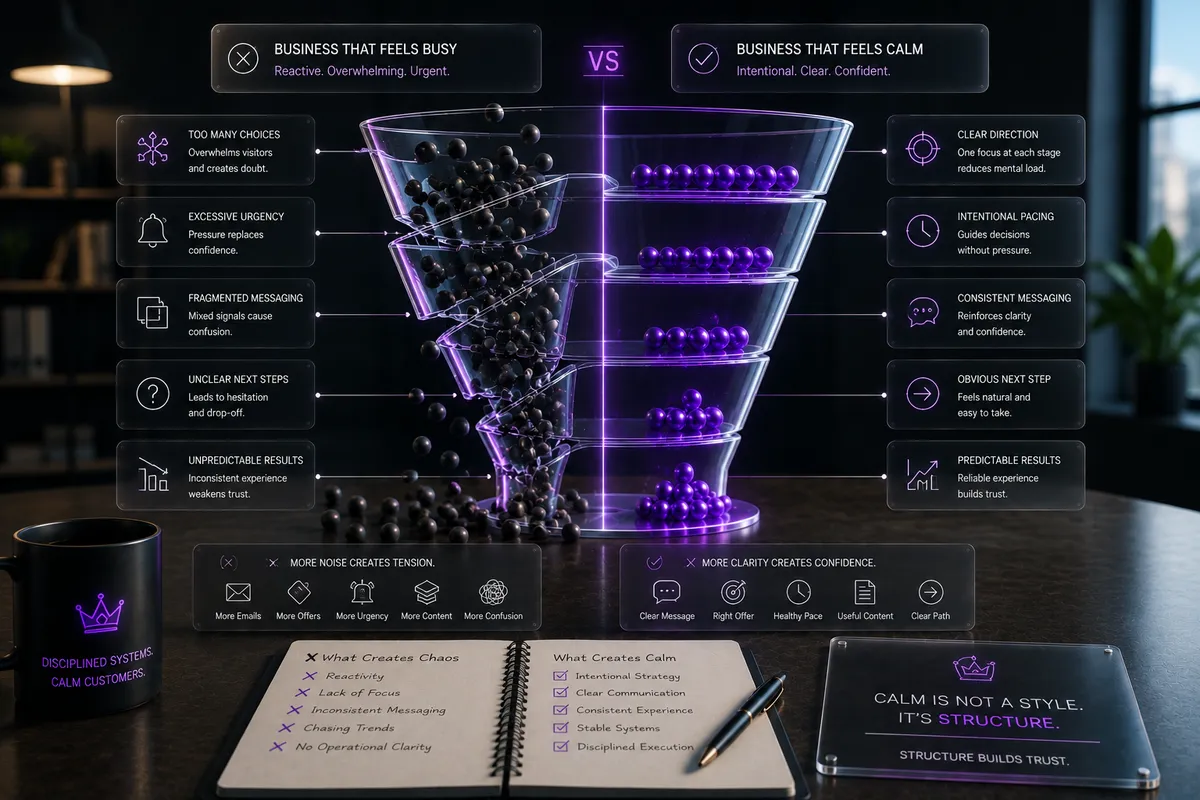
Luxury brands rarely feel rushed. Their messaging is measured, their customer journeys feel intentional, and every interaction appears to unfold with confidence rather than urgency. Customers are rarely overwhelmed by competing offers, constant notifications, or endless persuasion because the experience has been deliberately designed to feel coherent. Many businesses, however, unintentionally communicate the opposite experience. Their funnels feel busy, reactive, fragmented, and constantly in motion as though every visitor must be convinced immediately. The difference is not personality, creativity, or aesthetics. It is the result of operational structure expressed through every customer interaction.
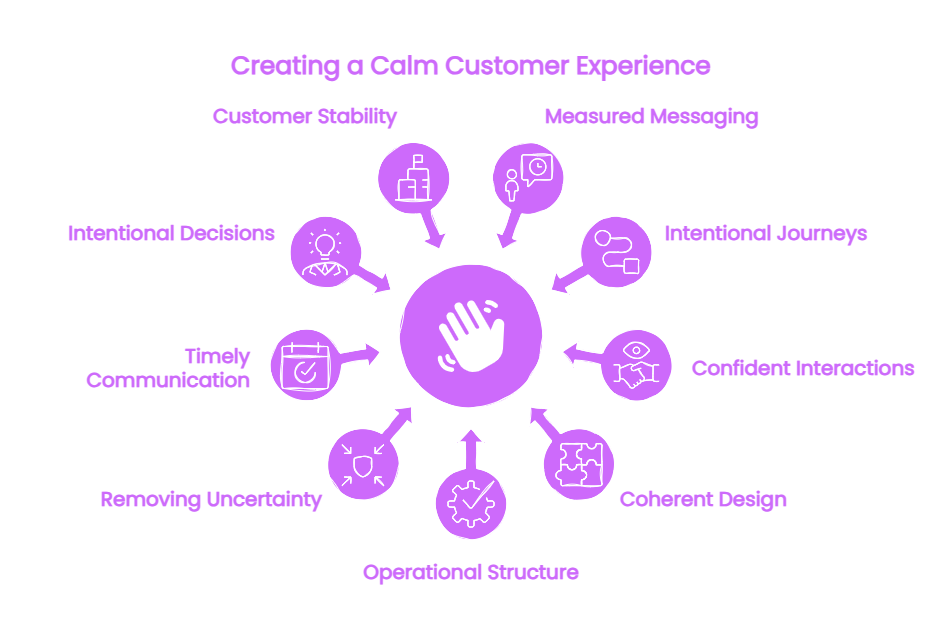
Businesses often assume calm is simply a visual style characterized by neutral colors, elegant typography, or minimalist design. While those elements may contribute to perception, they cannot independently create a calm customer experience. Calm emerges when operational systems consistently remove uncertainty before customers encounter it. Communication feels timely rather than excessive. Decisions feel intentional rather than reactive. Customers sense stability because every stage reinforces confidence instead of urgency. Luxury therefore feels calm because disciplined operations eliminate unnecessary friction throughout the entire experience.
What Calm Actually Communicates
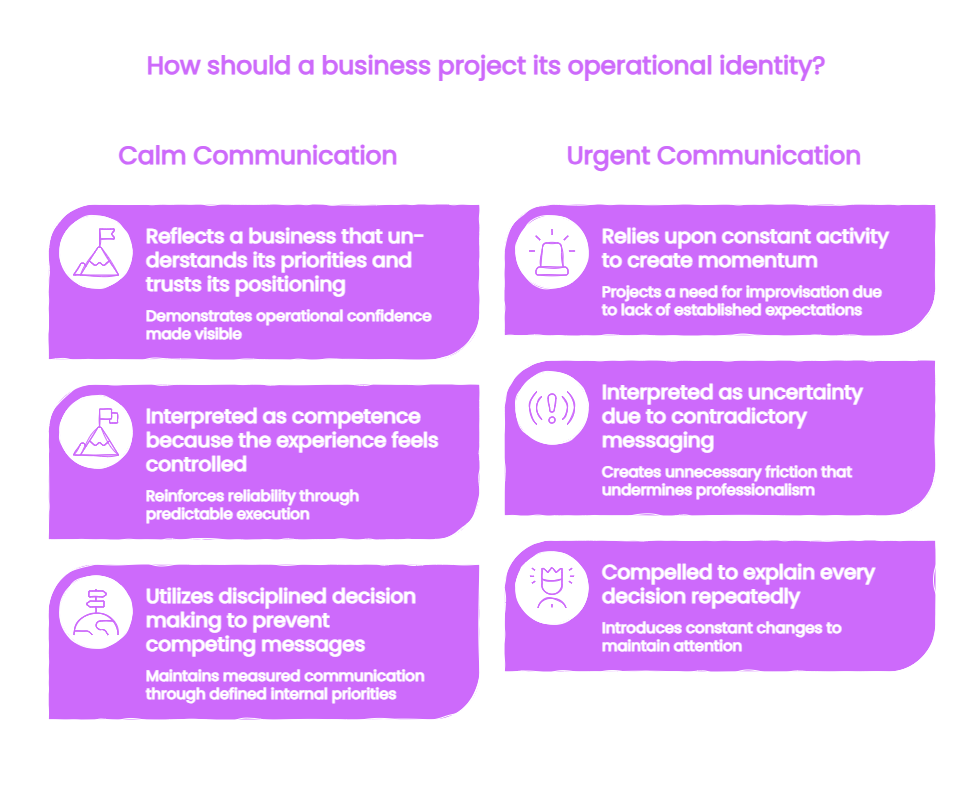
Calm communicates operational confidence made visible. It reflects a business that understands its priorities, trusts its positioning, and does not rely upon constant activity to create momentum. Clear systems reduce the need for improvisation because expectations have already been established. Intentional pacing replaces unnecessary urgency. Disciplined decision-making prevents contradictory messaging from competing for attention. Predictable execution reinforces reliability across every customer interaction. Customers naturally interpret this consistency as competence because the experience feels controlled rather than uncertain.
Calm is not the absence of movement or growth. Instead, it is the presence of disciplined structure that allows movement to remain purposeful. Businesses operating from clarity rarely feel compelled to explain every decision repeatedly or introduce constant changes to maintain attention. Their communication remains measured because internal priorities are already defined. Their customer experience feels stable because operational systems consistently support it. Confidence becomes visible through restraint rather than volume. Customers experience this steadiness as professionalism because unnecessary friction has already been removed.
What It Looks Like in Practice
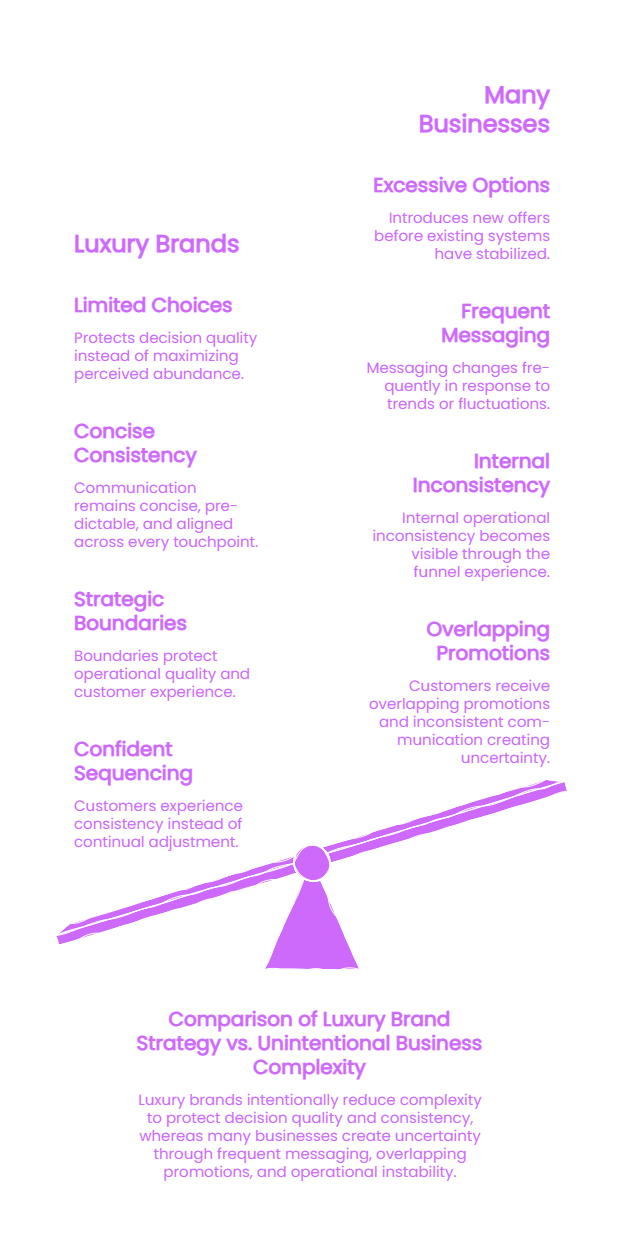
Luxury brands intentionally reduce complexity wherever possible. They limit choices to protect decision quality instead of maximizing perceived abundance. Communication remains concise, predictable, and aligned across every customer touchpoint. Boundaries protect both operational quality and customer experience rather than creating unnecessary restriction. Urgency is used sparingly because confidence does not require constant pressure. Every stage feels connected to the next through thoughtful sequencing. Customers experience consistency instead of continual adjustment.
Many businesses unintentionally create the opposite experience. They introduce new offers before existing systems have stabilized. Messaging changes frequently in response to trends, competitors, or temporary performance fluctuations. Discounts become recurring strategies rather than intentional positioning decisions. Customers receive overlapping promotions, competing calls to action, and inconsistent communication that creates uncertainty instead of confidence. Internal operational inconsistency gradually becomes visible through the funnel experience. Activity increases while coherence steadily declines.
How Funnels Reveal This Difference
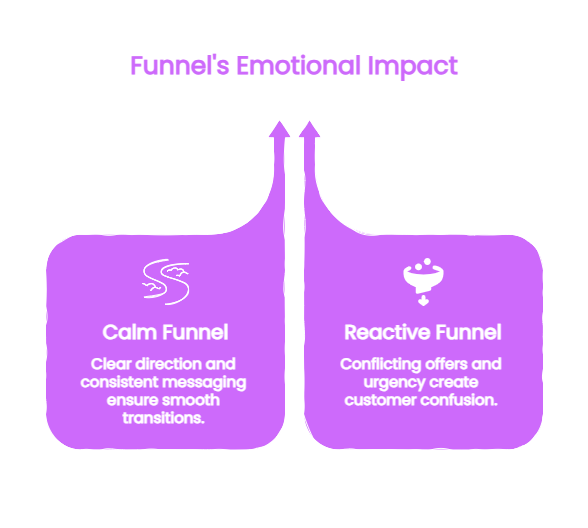
Funnels communicate emotional states through structure long before customers consciously recognize them. A calm funnel presents one clear direction at each stage of the journey. Messaging remains consistent across advertisements, landing pages, emails, and customer onboarding. Decision pathways feel intuitive because unnecessary options have already been removed. Each transition prepares customers for what happens next without creating confusion. The experience encourages confidence through clarity rather than persuasion through pressure. Structure quietly communicates stability throughout the buying journey.
Reactive funnels reveal a very different operational reality. Visitors encounter multiple offers competing for attention at the same time. Urgency appears throughout nearly every section regardless of context or necessity. Messaging shifts between emotional appeals without establishing consistent positioning. Calls to action multiply instead of becoming more intentional. Customers expend additional mental effort trying to determine the correct next step. The funnel exposes operational inconsistency because the structure itself feels unsettled.
Why More Energy Doesn't Create Confidence
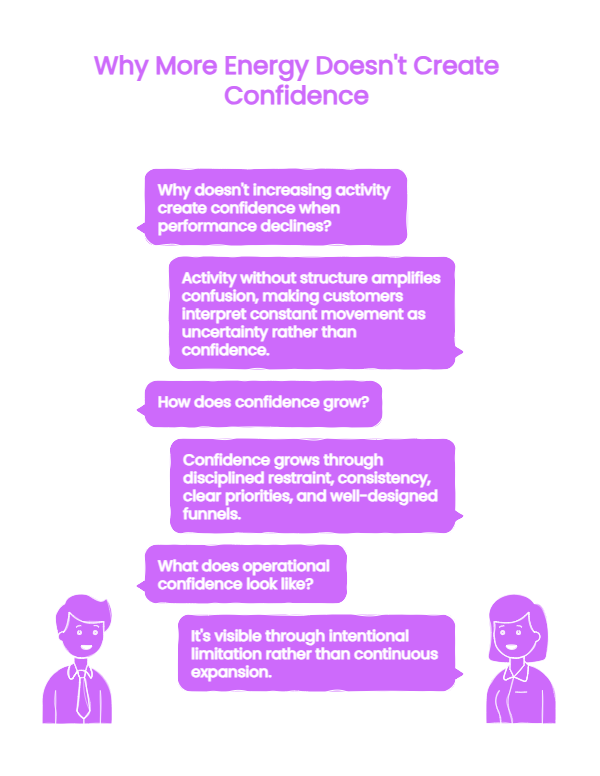
When businesses experience declining performance, the instinct is often to increase visible activity. More emails are sent to encourage engagement. Additional offers are introduced to stimulate conversions. More urgency is layered into copy to accelerate decisions. Extra bonuses are added to create perceived value. Marketing activity increases because it appears to create momentum. Unfortunately, activity without structure frequently amplifies confusion instead of resolving it. Customers begin interpreting constant movement as uncertainty rather than confidence.
Confidence grows when businesses demonstrate disciplined restraint instead of continual reaction. Customers rarely associate excessive communication with operational maturity. They recognize stability through consistency rather than volume. Clear priorities eliminate the need for constant adjustments because the underlying strategy remains intact. Well-designed funnels guide visitors deliberately instead of repeatedly redirecting their attention. Operational confidence therefore becomes visible through intentional limitation rather than continuous expansion. More movement cannot compensate for the absence of structural clarity.
Where Calm Must Be Established
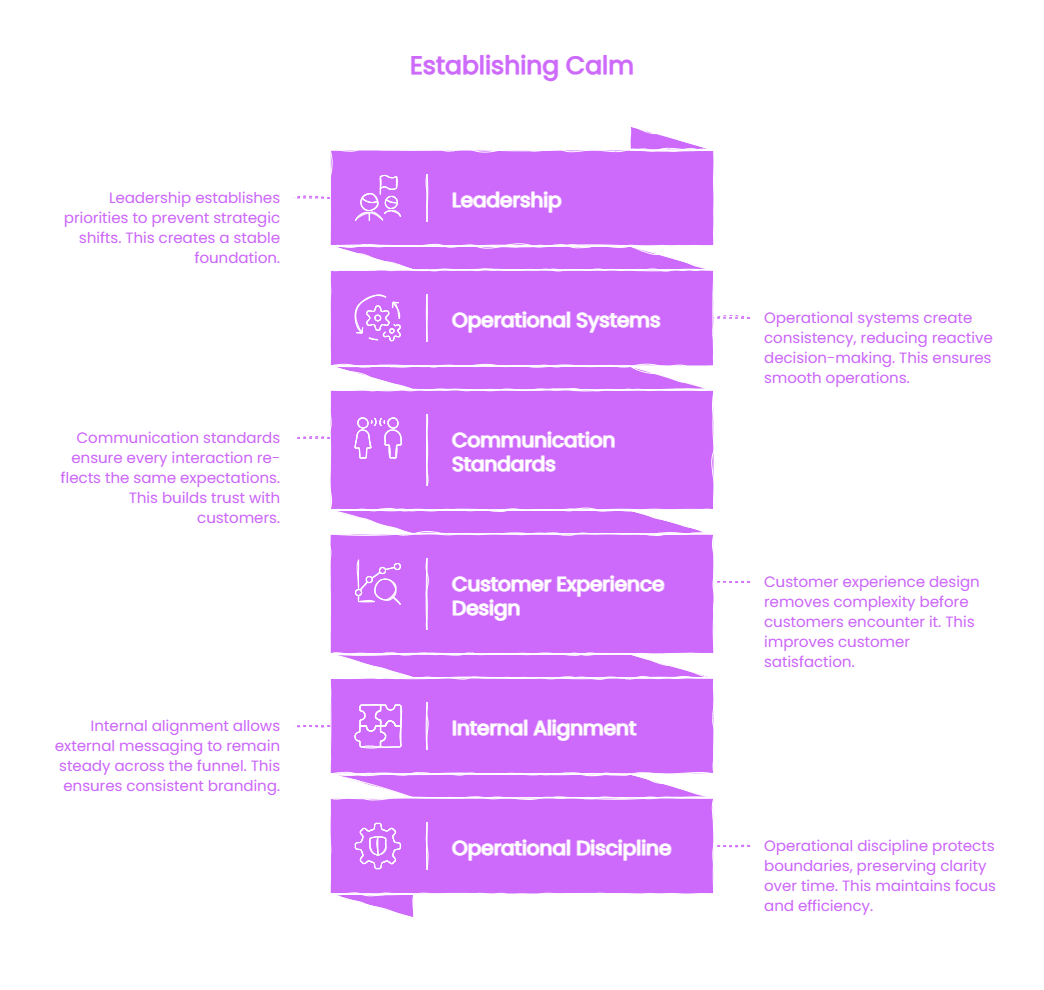
Calm begins inside the business before customers ever experience it externally. Leadership establishes priorities that prevent constant strategic shifts. Operational systems create consistency that reduces reactive decision-making. Communication standards ensure every interaction reflects the same expectations and level of care. Customer experience design removes unnecessary complexity before customers encounter it. Internal alignment allows external messaging to remain steady across every stage of the funnel. Emotional consistency is therefore the visible result of structural consistency.
Operational discipline also requires protecting boundaries that preserve clarity over time. Teams need defined responsibilities that reduce confusion during execution. Processes should remain repeatable without becoming rigid or impersonal. Strategic priorities should guide decisions instead of temporary emotional reactions. Every operational improvement should strengthen continuity rather than introduce unnecessary variation. Calm becomes sustainable because the system itself consistently reinforces stability. Customers experience confidence naturally because operational discipline quietly supports every interaction.
Working With the Funnel
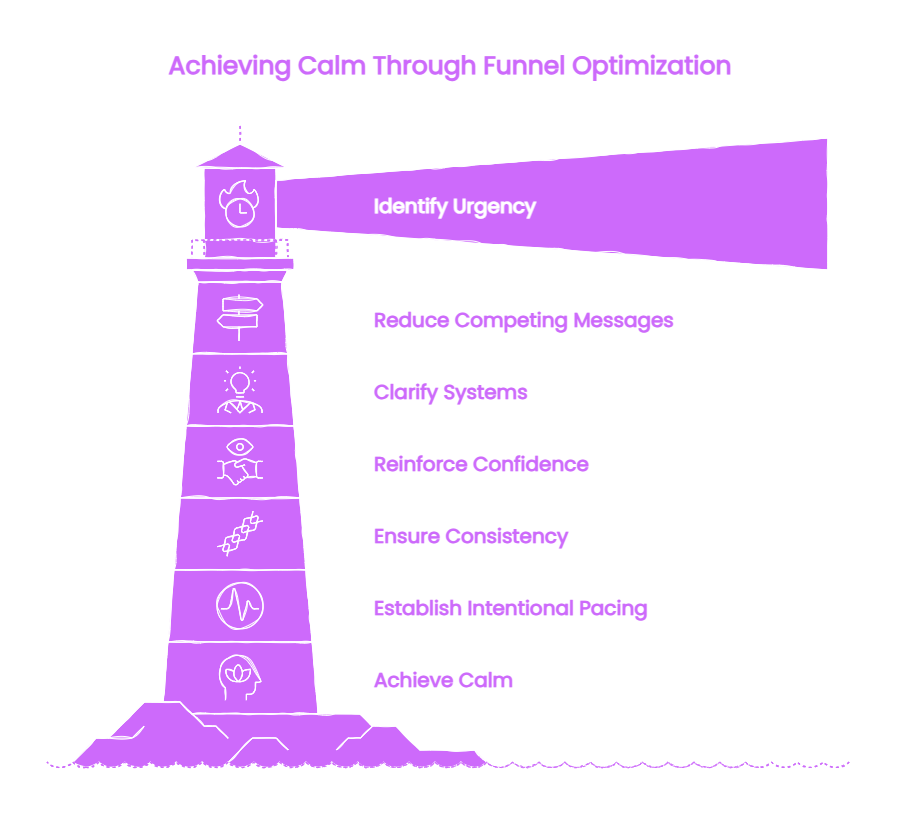
Walk through your funnel from the perspective of someone encountering your business for the first time. Notice where urgency appears and determine whether it serves a genuine strategic purpose or simply fills uncertainty. Look for competing messages that require customers to choose between multiple directions simultaneously. Identify moments where additional explanation exists because systems are unclear rather than because customers genuinely need more information. Observe whether communication reinforces confidence or creates additional pressure. Evaluate how consistently each stage prepares customers for what follows. The funnel will reveal where unnecessary movement has replaced intentional structure.
Simplify wherever unnecessary complexity has accumulated over time. Reduce competing calls to action until each stage communicates one primary decision. Remove urgency that exists only because operational confidence is missing. Strengthen communication standards so expectations remain consistent across every customer interaction. Allow pacing to become intentional instead of reactive. As structural clarity improves, customers will begin experiencing greater confidence without requiring additional persuasion. Calm emerges naturally when disciplined systems replace operational noise.
In Closing
Luxury is often recognized by what it intentionally excludes rather than what it continuously adds. Calm communication, measured pacing, disciplined priorities, and consistent execution create experiences that feel trustworthy without demanding attention constantly. Customers associate this steadiness with competence because every interaction reinforces operational confidence. Beautiful branding may introduce the experience, but disciplined systems allow it to endure. Luxury therefore becomes recognizable through coherence rather than performance. Operational maturity quietly communicates itself without requiring continual explanation. Calm is the natural consequence of disciplined structure expressed consistently over time.
Funnels communicate confidence most effectively when unnecessary friction has already been removed before customers encounter it. Every operational decision either strengthens or weakens the emotional experience created by the journey. Businesses that rely upon urgency alone eventually exhaust customer attention instead of earning lasting trust. Businesses that prioritize clarity, consistency, and intentional restraint create experiences customers remember as effortless and reliable. Calm is not a branding style that can be applied after the fact. It is evidence that disciplined operations consistently support every promise the business makes. When structure eliminates unnecessary pressure, customers move forward with confidence instead of hesitation.