Why a Gold Package Doesn't Make Your Business Luxury
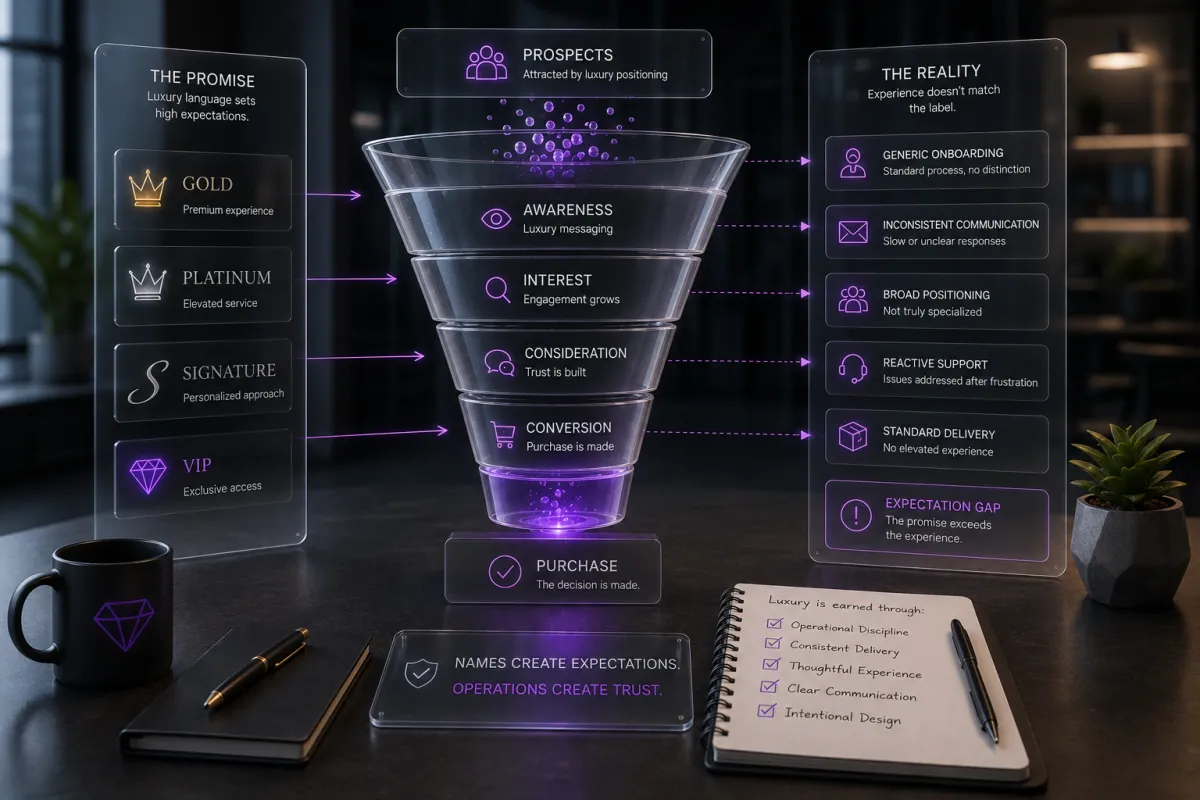
Businesses frequently rename their offers using labels such as Gold, Platinum, Elite, Signature, Executive, or VIP with the expectation that the language itself will communicate luxury. The words immediately suggest exclusivity, elevated service, and a more refined customer experience. From the outside, these names appear capable of transforming an ordinary offer into something that feels more distinguished. Yet once customers begin interacting with the business, the experience often resembles every other standard service available within the market. Communication follows familiar patterns, delivery remains unchanged, and the customer journey reflects little difference beyond the title itself. The language has changed, but the operational experience has remained largely the same. Luxury cannot emerge simply because an offer receives a more prestigious name.
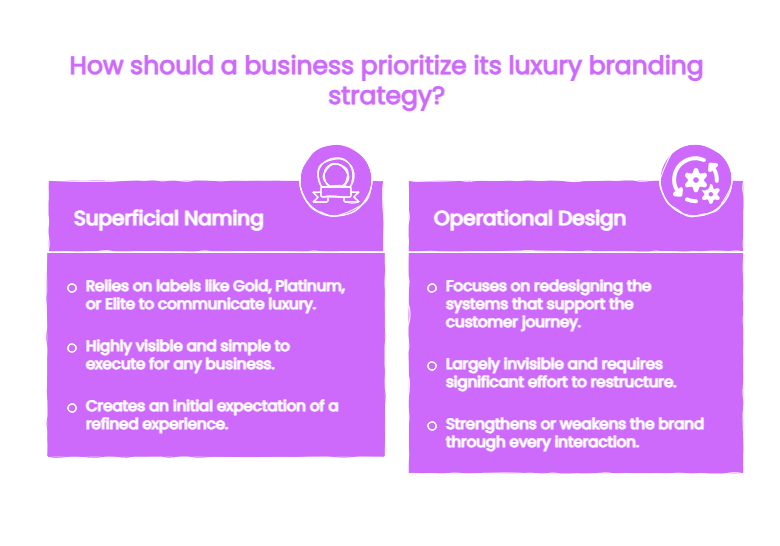
This misunderstanding appears throughout modern marketing because naming is highly visible while operational design is largely invisible. It is much easier to rename an offer than to redesign the systems that support it. Businesses often assume customers are purchasing labels when they are actually evaluating experiences. Every interaction after the initial purchase either strengthens or weakens the expectation established by the name. A luxury label introduces a promise before a single service has been delivered. Whether that promise becomes trust depends entirely upon operational consistency. Luxury positioning begins where naming ends.
What Luxury Labels Actually Communicate
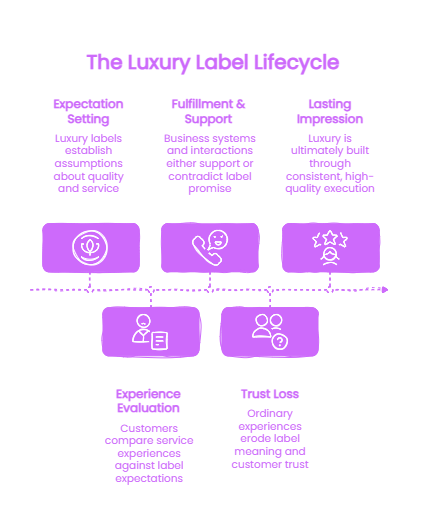
Offer names function primarily as expectation setters rather than classification makers. They shape how customers interpret value before they experience the service itself. Words such as Gold, Platinum, Signature, and Elite establish assumptions about quality, responsiveness, personalization, and consistency. These assumptions influence how every subsequent interaction will be evaluated. Customers begin measuring the experience against the expectation communicated by the label. The title becomes a reference point for judging whether the experience fulfills its implied promise. Labels therefore establish responsibility long before they establish credibility.
A luxury label does not declare that an experience is luxurious. Instead, it commits the business to delivering the operational realities commonly associated with that classification. Every email, conversation, onboarding process, support interaction, and fulfillment experience becomes evidence supporting or contradicting that commitment. If those systems remain ordinary, the label gradually loses meaning. Customers do not abandon trust because the name was ambitious. They lose trust because the experience failed to justify the expectation the name created. Language introduces belief, but operations determine whether belief continues. Classification is ultimately demonstrated through execution rather than terminology.
What It Looks Like in Practice
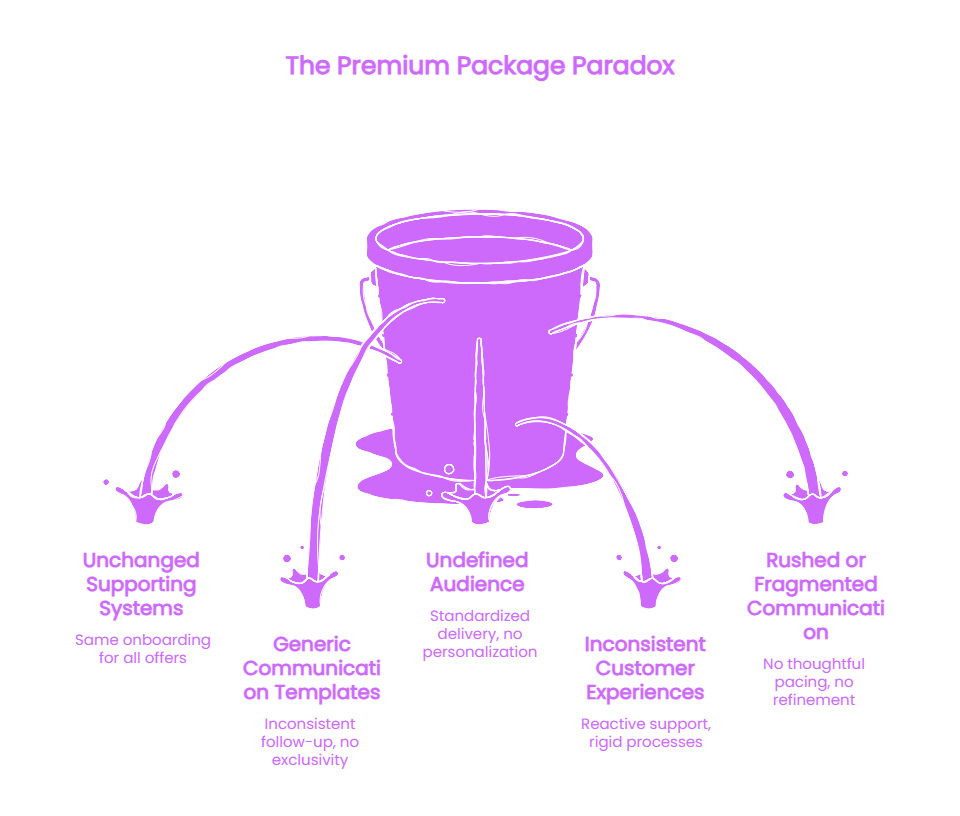
This distortion commonly appears when businesses introduce elevated package names while leaving every supporting system unchanged. A Gold package may still receive the same onboarding process as every other offer. A Platinum experience may rely on generic communication templates and inconsistent follow up. A Signature program may promise exclusivity while serving an undefined audience through standardized delivery. The customer encounters premium terminology but ordinary operational practices. The experience feels familiar despite the elevated language. The distinction exists primarily within branding rather than within execution.
Other businesses unintentionally create this same disconnect through inconsistent customer experiences. Marketing materials promise refinement while support becomes reactive and unpredictable. Messaging emphasizes personalization while delivery follows rigid processes that cannot accommodate individual needs. Premium language suggests thoughtful pacing while communication remains rushed or fragmented. Customers begin noticing the difference between what was described and what actually occurs. The label gradually becomes disconnected from operational reality. The funnel reveals that expectation has exceeded execution.
How Funnels Reveal This Distortion
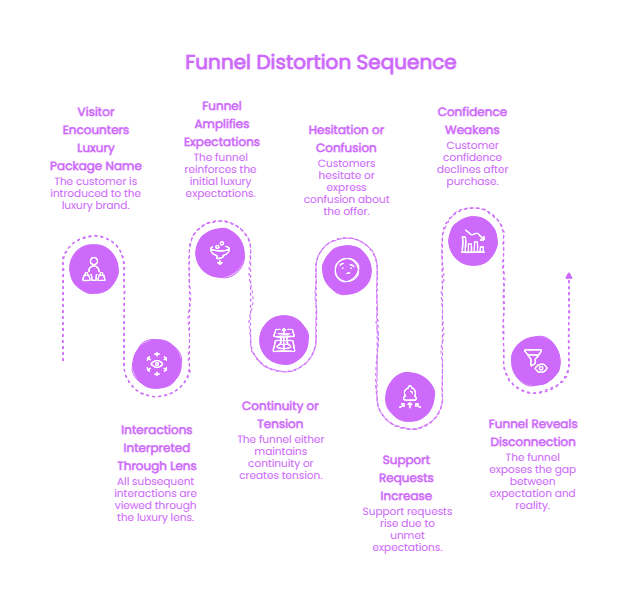
Funnels amplify expectations because every stage builds upon the assumptions introduced at the beginning of the customer journey. Once a visitor encounters a luxury package name, each subsequent interaction is interpreted through that lens. The copy, visuals, onboarding process, communication style, and purchase experience collectively reinforce or weaken the original expectation. A well-aligned funnel creates continuity between language and experience. A misaligned funnel creates subtle tension that customers often recognize before they can fully explain it. The funnel exposes operational inconsistency by making expectations increasingly visible. Every stage either strengthens credibility or gradually erodes it.
This distortion often appears through hesitation rather than immediate rejection. Prospective customers spend more time evaluating the offer because something feels incomplete beneath the presentation. Others convert successfully but express confusion or disappointment after engaging with the business. Support requests increase because expectations were not clearly supported operationally. Customer confidence begins weakening after purchase rather than before it. The funnel does not create this misalignment. It simply reveals where expectation has become disconnected from operational truth.
Why Better Naming Doesn't Fix It
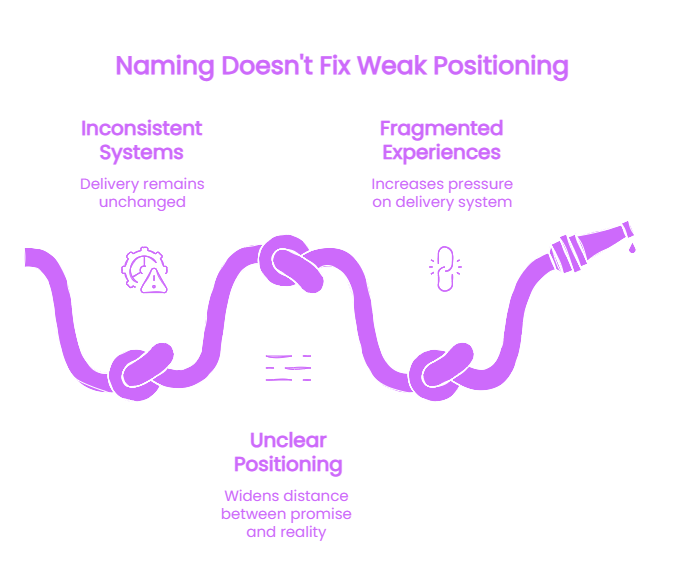
Businesses frequently respond to weak positioning by introducing increasingly sophisticated naming conventions. Gold becomes Platinum, Platinum becomes Elite, and Elite eventually becomes Signature or Executive. The assumption is that stronger language will strengthen perception. In reality, each new label raises customer expectations without changing the underlying operational experience. The presentation becomes more ambitious while the delivery remains unchanged. This widens the distance between promise and reality. Better naming amplifies unsupported positioning rather than correcting it.
Language cannot compensate for inconsistent systems, unclear positioning, or fragmented customer experiences. Customers ultimately evaluate what they experience instead of what they were promised. Sophisticated terminology may increase initial curiosity, but sustained trust depends upon operational consistency. Every unsupported claim introduces additional pressure on the delivery system. Over time the business spends more effort maintaining perception than improving execution. This creates instability throughout the funnel. Sustainable positioning always grows from operational substance rather than branding language alone.
Where Luxury Must Actually Be Built
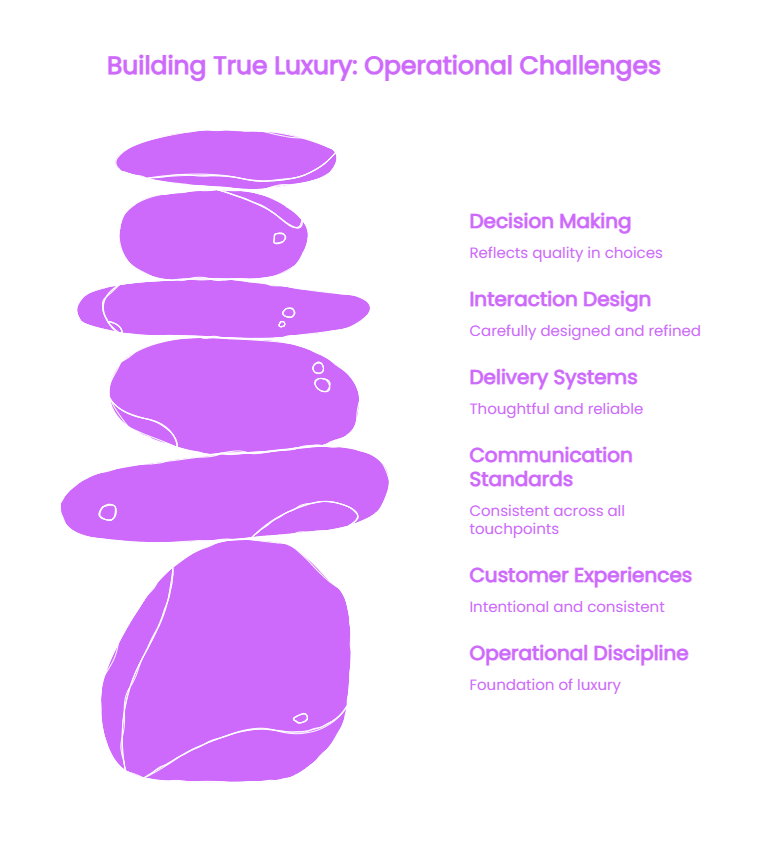
Luxury begins within operational discipline long before it appears within marketing language. It is established through intentional customer experiences, consistent communication standards, thoughtful delivery systems, and carefully designed interactions. Every operational decision contributes to how the customer interprets quality. Precision becomes visible through reliability rather than promotion. The experience feels refined because unnecessary friction has been intentionally removed. Consistency replaces unpredictability across every touchpoint. Customers experience luxury before they are asked to believe it.
This foundation extends across positioning, fulfillment, communication, boundaries, pacing, and service design. Luxury is reflected in how decisions are made as much as in what decisions are made. Businesses that consistently protect quality naturally develop stronger positioning over time. Labels then become accurate descriptions rather than aspirational branding. The operational system creates the classification before the marketing communicates it. Branding simply introduces what the business has already built. Luxury becomes credible because experience consistently supports expectation.
Working With the Funnel
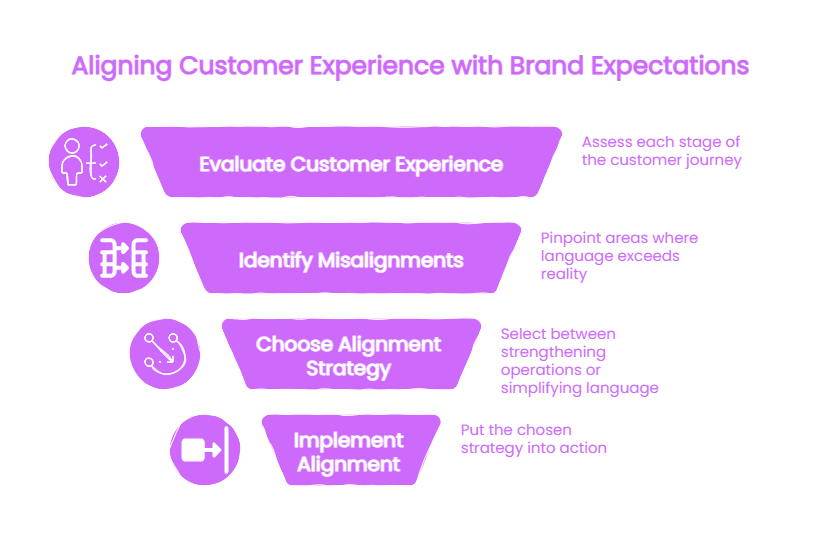
Evaluate each offer name by comparing it directly against the customer experience it introduces. Ask whether every stage of the funnel consistently supports the expectations established by the title. Examine onboarding, communication, delivery, follow-up, fulfillment, and customer interactions as one connected system. Identify where elevated language is unsupported by operational reality. Notice where expectations exceed execution rather than where branding appears attractive. These observations reveal whether the funnel communicates truth or aspiration. Honest evaluation creates the foundation for meaningful alignment.
When unsupported language is discovered, two paths become available. The business can strengthen operational systems until they genuinely support the existing positioning. Alternatively, the language can be simplified until it accurately reflects the current customer experience. Neither option reduces value because both increase alignment. Customers respond more positively to consistency than exaggeration. Trust grows when expectations and experiences remain connected from beginning to end. The strongest funnels describe reality instead of attempting to replace it.
In Closing
Customers experience luxury before they believe luxury. Labels introduce expectations, but operations determine whether those expectations mature into trust. Every stage of the funnel either confirms or contradicts the promise established by the offer name. Businesses that prioritize operational alignment rarely need exaggerated terminology because the experience communicates quality naturally. Positioning becomes more credible as consistency becomes more visible. Luxury emerges through disciplined execution rather than elevated vocabulary. The experience ultimately defines the classification.
Offer names have value because they frame expectations, not because they manufacture reality. A Gold package can represent extraordinary quality when it accurately reflects an exceptional customer experience. The same title becomes meaningless when operations remain ordinary and inconsistent. Funnels reveal this distinction by exposing where expectation and experience separate. Businesses strengthen trust by allowing operations to define positioning before branding communicates it. Customers remember how an experience felt long after they forget what it was called. Operational truth remains the strongest form of luxury positioning.