When "High End" Is Just High Price
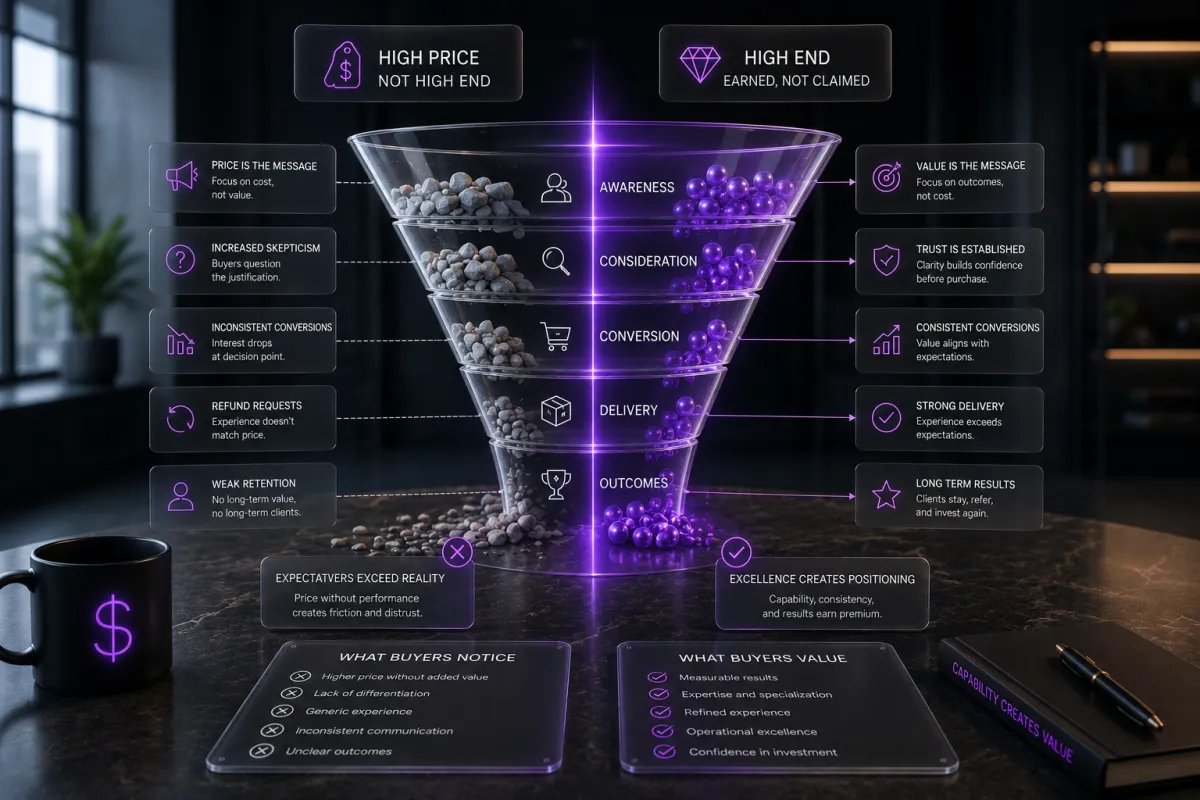
Businesses frequently assume that increasing price automatically elevates positioning. A higher price is expected to communicate greater quality, stronger expertise, and more meaningful outcomes without requiring substantial operational change. Marketing begins emphasizing investment, exclusivity, and premium pricing while offering little additional evidence for why those prices exist. The funnel becomes centered around the cost of the offer instead of the substance behind it. Customers encounter pricing as the primary message rather than the value the pricing is intended to represent. This creates a buying experience where financial commitment becomes more visible than operational excellence. High end positioning cannot be established by price alone because pricing communicates expectations rather than capability.
This misunderstanding develops because pricing is highly visible while operational excellence is often invisible until after engagement begins. Raising prices is significantly easier than strengthening delivery systems, refining customer experiences, or increasing measurable expertise. Businesses sometimes mistake higher pricing for higher positioning because both influence perception before purchase. Customers, however, evaluate far more than numerical cost when determining whether an offer truly feels high end. They compare promises against execution, positioning against experience, and expectations against outcomes. The funnel ultimately exposes whether higher pricing reflects greater capability or simply greater ambition. Price and classification are connected, but they are never interchangeable.
What High End Actually Signals
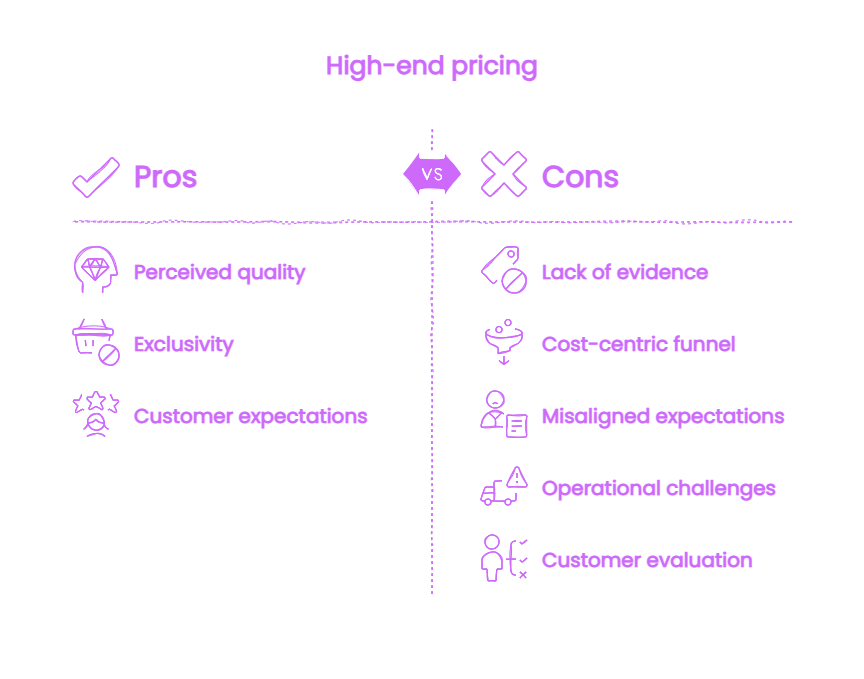
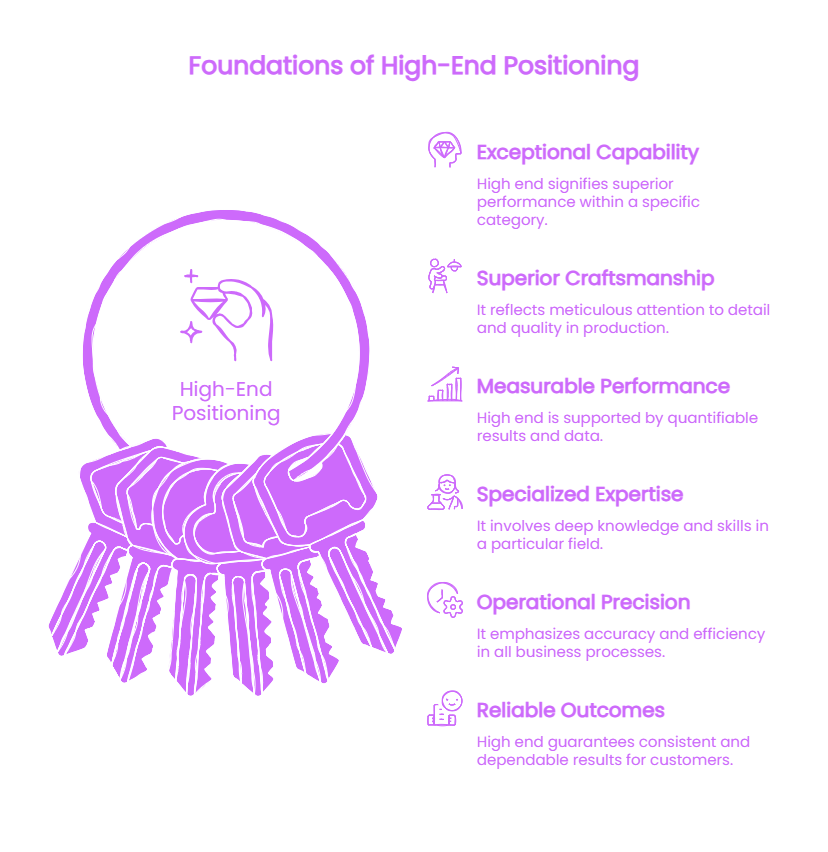
High end communicates exceptional capability within a defined category. It signals superior craftsmanship, measurable performance, specialized expertise, operational precision, and consistently reliable outcomes. Customers interpret high end as evidence that the business performs beyond ordinary market expectations. They expect greater depth rather than greater decoration. They expect refined execution rather than louder promotion. High end positioning therefore represents operational distinction that customers can consistently experience. Price reflects this distinction, but it does not create it.
The strongest high end businesses rarely depend on pricing as their primary message. Their positioning is supported by systems that repeatedly demonstrate measurable excellence. Every interaction reinforces capability through consistency, responsiveness, precision, and dependable execution. Customers recognize the quality before they fully evaluate the price because operational excellence is visible throughout the experience. Confidence develops through evidence rather than assumption. The price simply reinforces what the customer has already begun to believe. High end is therefore communicated operationally before it is communicated financially.
What It Looks Like in Practice
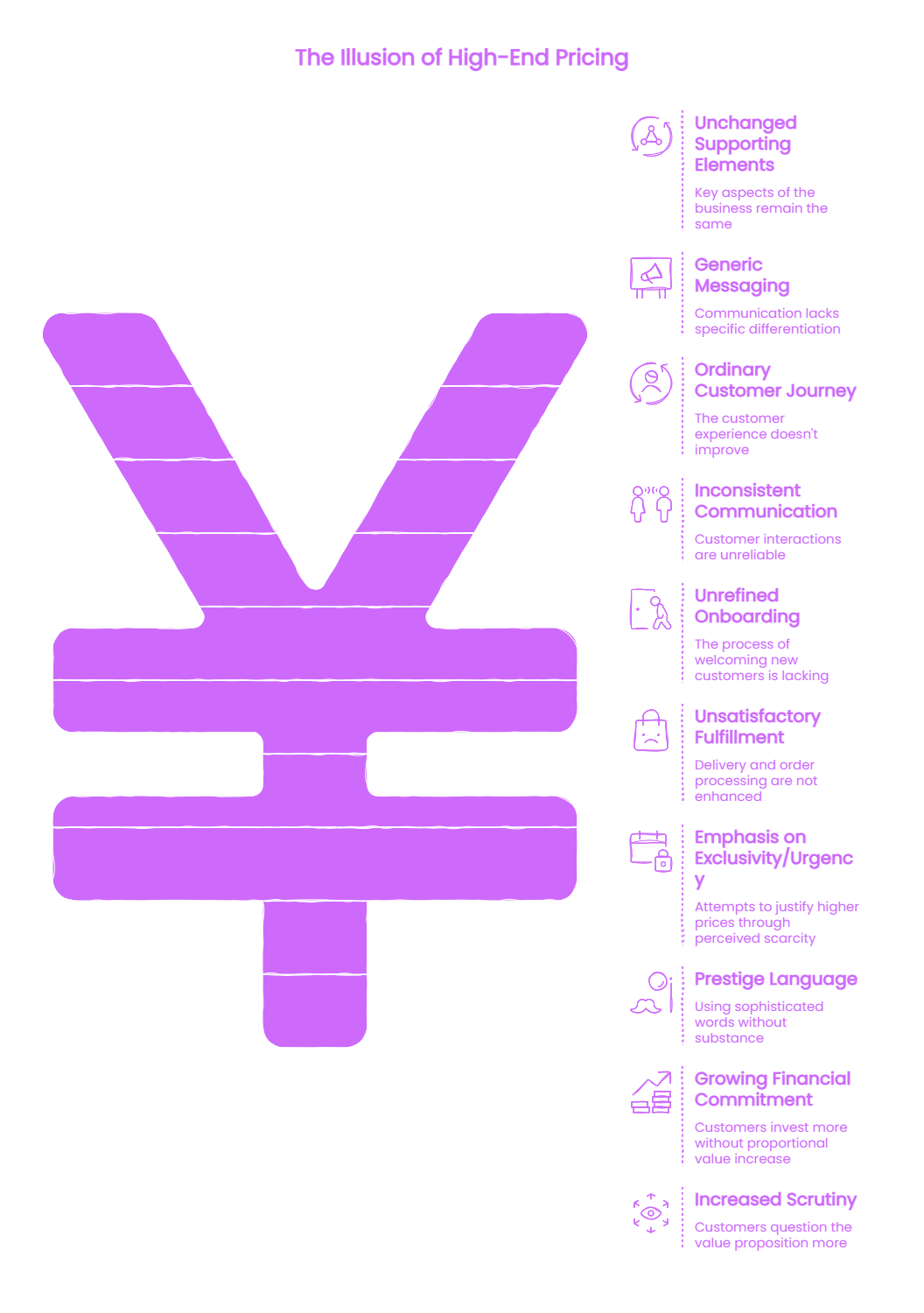
This distortion appears when businesses increase pricing while leaving every supporting element unchanged. The offer remains broad, the messaging remains generic, and the customer journey follows the same process it always has. Delivery systems continue producing ordinary experiences despite elevated financial expectations. Customer communication remains inconsistent, onboarding lacks refinement, and fulfillment reflects no meaningful operational improvement. Pricing becomes the most obvious difference because little else has actually changed. The funnel begins asking customers to believe in differentiation that the experience cannot consistently demonstrate.
Some businesses attempt to compensate by emphasizing exclusivity or urgency alongside higher pricing. Others rely on prestige language while leaving operational quality relatively unchanged. The result is a customer journey where financial commitment grows faster than perceived value. Buyers become increasingly focused on justifying the investment because the experience provides limited structural reassurance. Instead of reinforcing confidence, pricing introduces additional scrutiny. Every inconsistency becomes more noticeable as expectations increase. The funnel reveals that differentiation has been communicated more strongly than it has been built.
How Funnels Reveal This Distortion
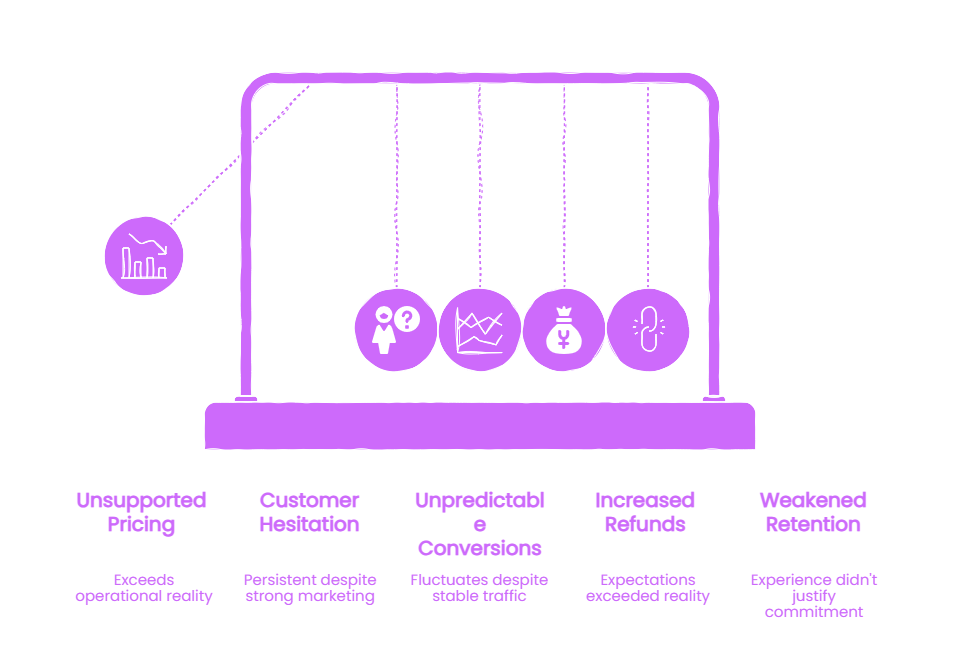
Funnels reveal unsupported pricing through customer behavior rather than customer opinion alone. Visitors spend longer evaluating offers despite expressing genuine interest in the solution. Questions increasingly focus on justification rather than implementation. Conversion rates fluctuate unpredictably even when traffic quality remains relatively stable. Refund requests become more common because expectations exceeded operational reality. Customer hesitation becomes more persistent despite strong marketing presentation. These behavioral patterns expose the distance between pricing and perceived value.
The distortion often continues after purchase has already occurred. Customers begin comparing the experience against the expectations established by the investment they made. Minor inconsistencies become significantly more important because pricing elevated the standard by which every interaction is judged. Retention weakens when customers feel the experience did not fully justify the commitment required. Referrals become less consistent because enthusiasm remains limited despite successful delivery. Satisfaction becomes more difficult to sustain over time. The funnel exposes where operational substance falls short of financial expectation.
Why Raising Prices Doesn't Create High End Positioning
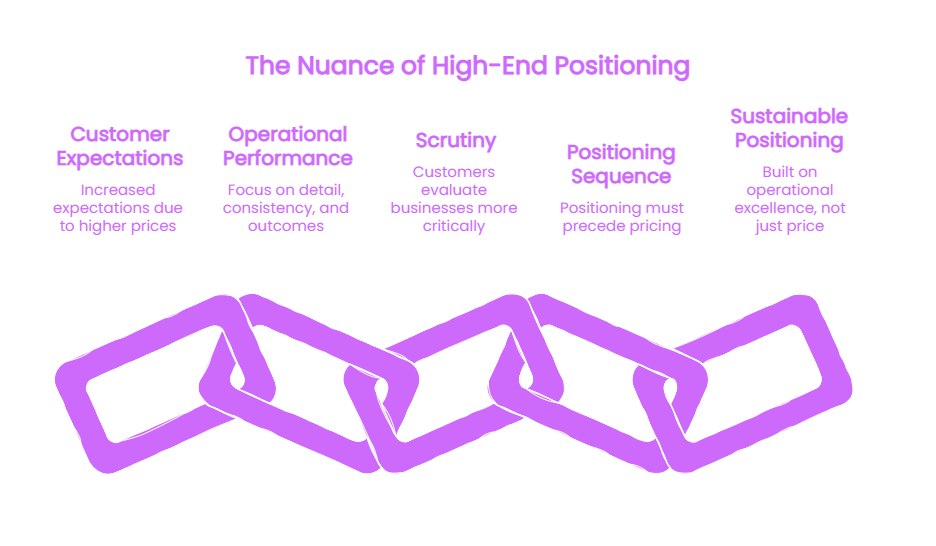
Increasing price raises customer expectations before it raises customer value. Every pricing adjustment changes how buyers interpret the experience they expect to receive. Higher investment naturally increases attention to detail, consistency, communication, and measurable outcomes. Customers become more observant because they expect stronger operational performance. The business is therefore evaluated through a more demanding lens. Price increases amplify scrutiny rather than authority. Without operational refinement, higher pricing simply magnifies existing weaknesses.
Positioning must always exist before pricing attempts to communicate it. Businesses become high end because their systems consistently produce exceptional experiences. Pricing then reflects those operational realities instead of attempting to manufacture them. When the sequence is reversed, businesses depend on perception rather than substance. Customers eventually recognize this imbalance through experience rather than marketing. Sustainable positioning cannot be purchased through pricing strategy alone. Operational excellence must remain the foundation that pricing communicates.
Where High End Must Be Established
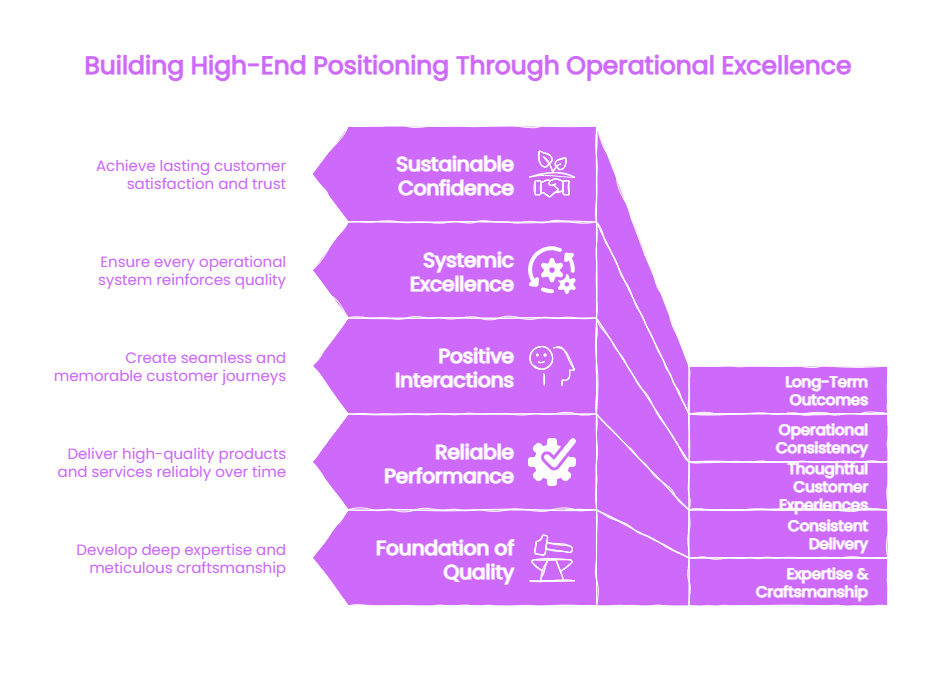
High end positioning begins inside measurable operational excellence. It is established through expertise, consistent delivery, precision, craftsmanship, thoughtful customer experiences, and dependable performance over time. Every system contributes to the perception of quality because every interaction reinforces customer expectations. High end businesses demonstrate excellence repeatedly rather than describing it continuously. Capability becomes visible through execution instead of promotion. Customers experience confidence because the system consistently validates its own positioning. Operational consistency becomes the strongest evidence of high end classification.
This foundation extends beyond the immediate transaction itself. Communication standards, fulfillment quality, responsiveness, documentation, support, and long-term outcomes all reinforce the positioning established before purchase. Every operational decision contributes to customer confidence. Excellence becomes sustainable because it is embedded within the structure of the business rather than isolated within marketing language. Pricing reflects this reality instead of compensating for its absence. The classification becomes credible because it is supported by consistent operational evidence. High end positioning is therefore experienced before it is explained.
Working With the Funnel
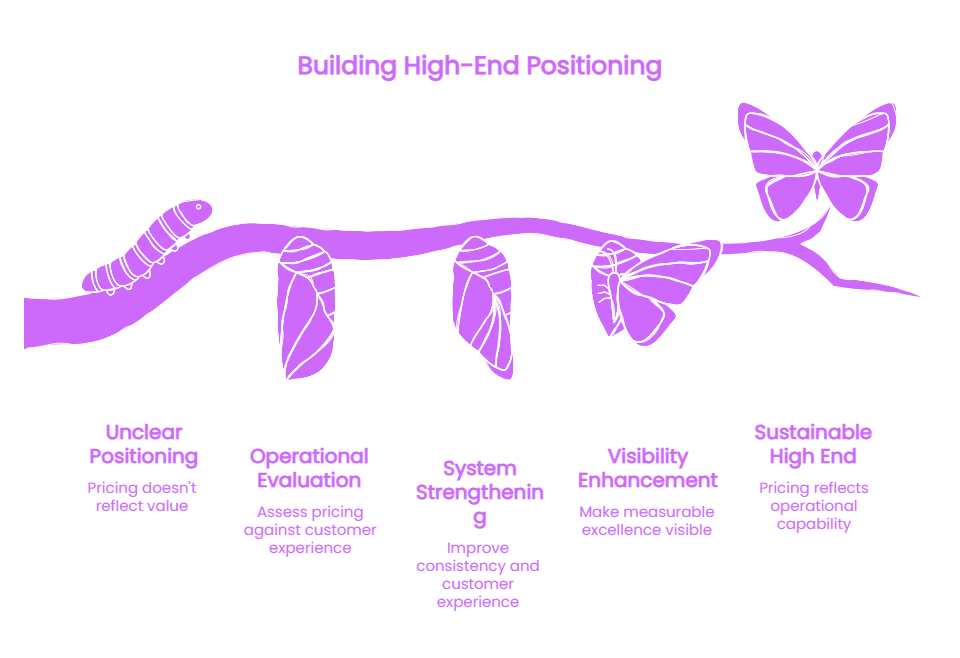
Begin by evaluating whether your pricing is communicating genuine operational differentiation or compensating for unclear positioning. Compare your pricing against customer experience, delivery quality, communication standards, and measurable outcomes. Identify where expectations may exceed what the business currently supports consistently. Observe whether customers are questioning price because they misunderstand value or because the value has not yet been demonstrated structurally. Separate pricing concerns from operational concerns before attempting to solve either one. This distinction allows the funnel to communicate reality instead of aspiration. Alignment begins with honest operational evaluation.
Once those observations are complete, strengthen the operational systems that create genuine differentiation. Improve consistency before increasing exclusivity. Refine customer experiences before expanding premium positioning. Allow measurable excellence to become increasingly visible throughout the entire funnel. Revisit pricing only after operational improvements consistently support higher expectations. Pricing should reinforce value that customers are already beginning to recognize independently. High end positioning becomes sustainable when pricing reflects capability instead of attempting to replace it.
In Closing
High end is earned through measurable capability rather than declared through financial positioning alone. Price communicates expectations, but operational excellence determines whether those expectations become trust. Every stage of the funnel either reinforces or weakens the relationship between investment and experience. Businesses strengthen high end positioning by allowing operational quality to become unmistakably visible. Customers remember how consistently excellence was delivered more than they remember the number attached to the offer. Sustainable positioning grows from execution rather than perception. Capability remains the strongest foundation for premium pricing.
Funnels become stronger when pricing accurately reflects operational reality instead of attempting to compensate for structural weakness. Customers respond confidently when measurable value consistently supports financial investment. Trust becomes easier to establish because expectations and experiences remain aligned throughout the journey. Positioning gains credibility through repetition rather than persuasion. Operational excellence transforms pricing from a point of resistance into a natural reflection of value. High end classification becomes believable because the business continually demonstrates it. Price ultimately communicates what the system has already proven.