
When a High Ticket Funnel Is the Wrong Tool
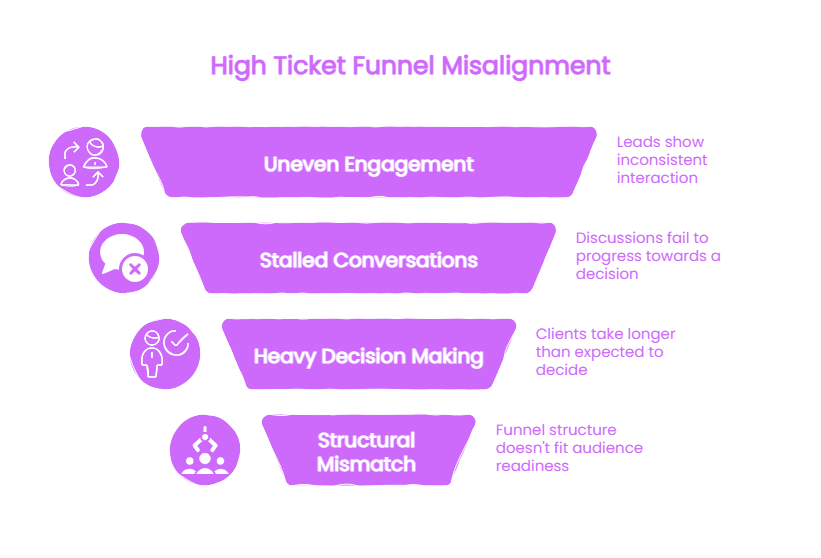
You have invested time, energy, and resources into a high ticket funnel, anticipating swift client acquisition and a smooth progression from interest to sale. Yet when the results arrive, a subtle tension lingers. Leads may arrive, but engagement feels uneven, conversations stall, and the decision making process seems heavier than expected. You tell yourself this is temporary, that effort will eventually align with results, but a quiet frustration persists. Each interaction reveals that energy is expended without proportional advancement. You begin to notice the invisible gaps: readiness is uneven, authority is assumed rather than recognized, and the structure intended to guide decision making seems to resist flow. Recognition comes first, the tool is precise, and misalignment does not indicate failure. It indicates a structural mismatch.
This is the point where clarity begins. High ticket funnels are designed for a specific audience those ready to evaluate, decide, and commit at a high level. They are not universal solutions for every stage of readiness or every type of offer. Misalignment produces motion without movement, energy without outcome, and effort without structural support. The funnel does not fail, the audience funnel alignment does. Understanding this distinction allows leaders to see where intervention is meaningful and where restraint is strategic. High ticket funnels are not merely about tactics or copy. They are about structure, timing, and the readiness of the audience. Structural precision, not intensity, governs advancement.
What a High Ticket Funnel Is Designed to Do
A high ticket funnel functions as a selective pathway. Its purpose is to filter high readiness leads, protect the time and authority of the business, and guide decision making from evaluation to commitment. Unlike broad funnels, it presumes that context, awareness, and trust are already established. Each stage is deliberate, with energy invested in clarity, persuasion, and alignment rather than volume. The funnel amplifies readiness, sequencing evaluation and engagement to ensure only qualified participants progress. Structural load is concentrated on authority, positioning, and offer clarity. Misuse with an unprepared audience produces friction, as the system operates precisely as designed but with insufficient alignment.
This funnel governs advancement rather than multiplication. Where broad funnels gather attention, the high ticket funnel filters it, producing predictable progression for qualified leads. Its design assumes participants have sufficient context and trust to move without further warming. Misapplication, however, magnifies friction. Low engagement, drop off, and frustration occur not because the funnel fails, but because readiness and structure are misaligned. Precision, sequencing, and alignment govern outcome. Effort alone cannot replace readiness, and structural integrity, not intensity, ensures energy translates into meaningful decision-making.
Indicators a High Ticket Funnel Is Misaligned
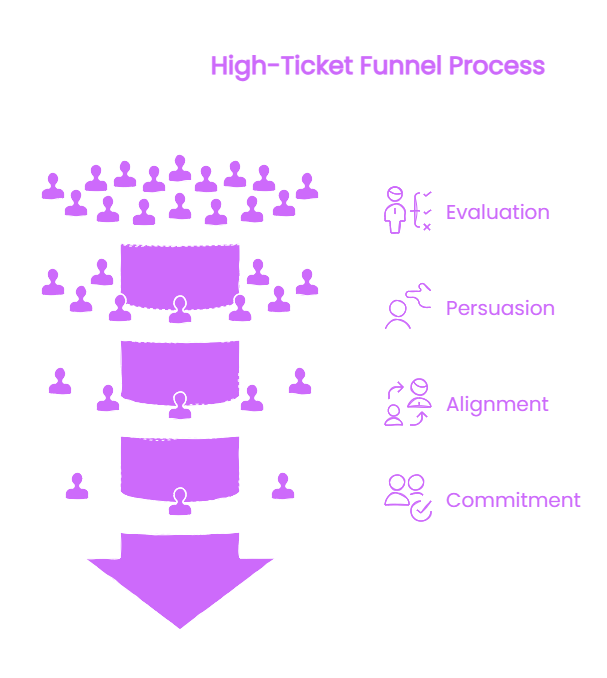
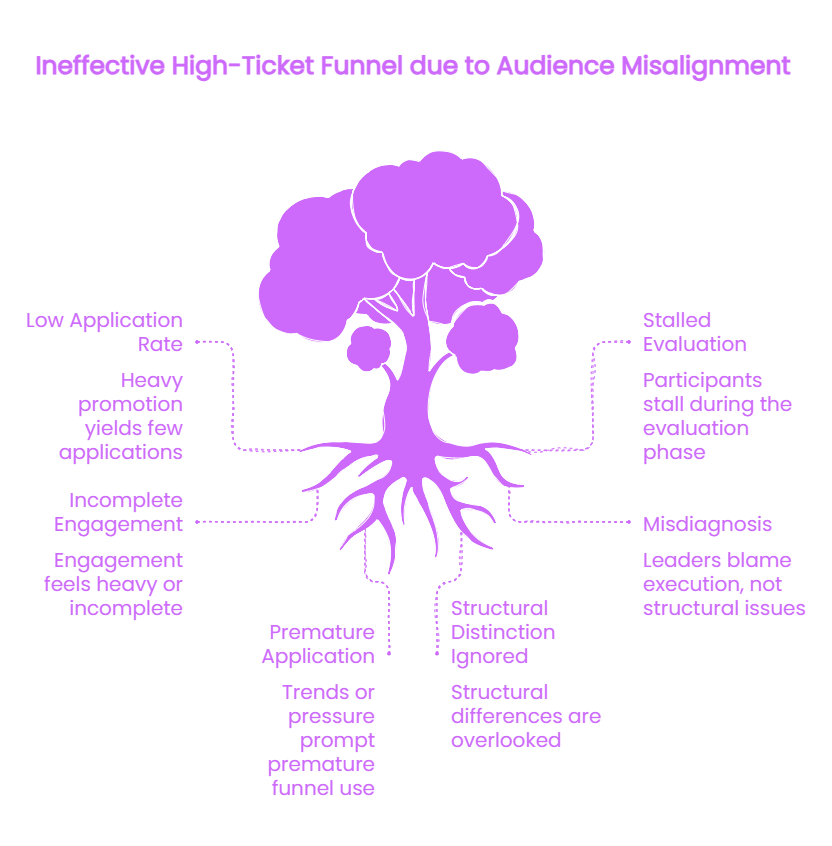
Misalignment is subtle yet measurable. Applications may remain low despite heavy promotion, participants may stall during evaluation, and engagement may feel heavy or incomplete. Effort is multiplied, yet advancement does not follow. Leaders may rationalize results with timing, promotion, or perceived audience interest, but the structural misalignment is the true cause. The funnel functions as intended, but the audience funnel fit is off. Recognizing these indicators is the first step toward recalibration. Misdiagnosis leads to increased effort without structural correction, producing fatigue and inefficiency.
Confusion arises because high ticket funnels resemble other funnels superficially. Leaders see forms, sequences, and calls to action and assume the problem is execution rather than readiness. Trends, competitor tactics, or revenue pressure may prompt premature application of the tool. Structural distinction is ignored, and reactive adjustments replace deliberate alignment. Motion is mistaken for progress, and misalignment amplifies frustration. Recognition of these signs allows for intervention that honors readiness and restores natural progression.
The Readiness and Alignment Gap
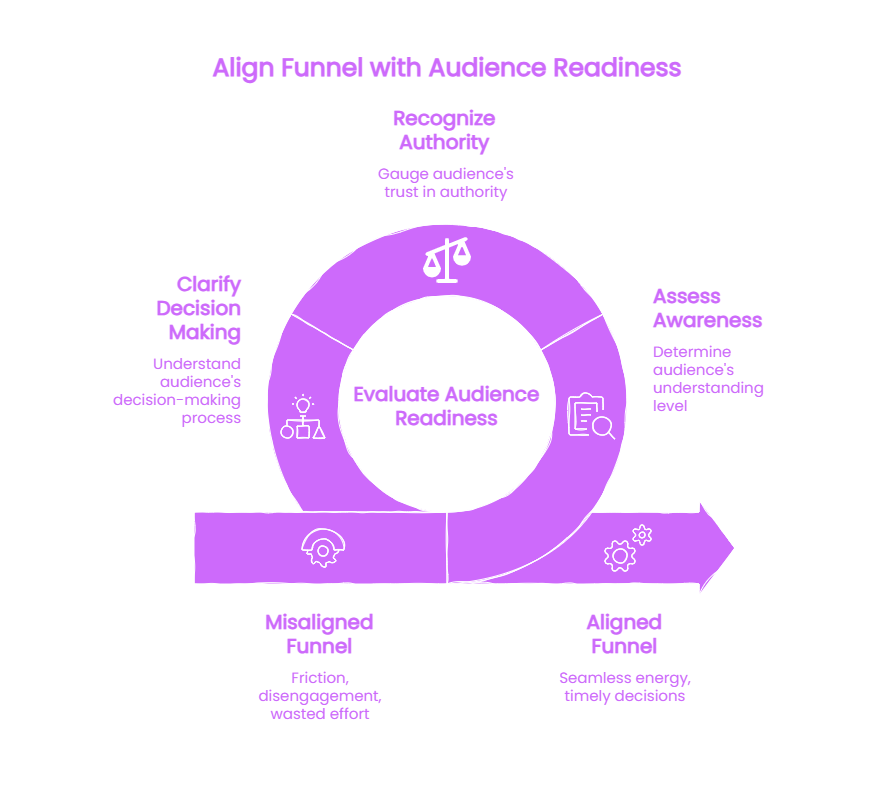
High ticket funnels presuppose audience readiness. Awareness, authority recognition, and clarity of decision making prerequisites are assumed. When applied to an audience that has not reached this stage, friction emerges. Participants may disengage, hesitate, or fail to complete evaluation, producing energy loss and wasted effort. Structural misalignment is not a flaw of the funnel itself, it is a mismatch between filter and readiness. Movement depends on alignment, not effort. Misapplication amplifies inefficiency and obscures the true constraint.
When the funnel aligns with readiness, progression becomes natural. Energy flows seamlessly, decisions are timely, and engagement produces measurable advancement. Misalignment produces either exhaustion or emptiness, depending on whether the effort is too broad or too selective for the audience stage. Leaders must evaluate readiness before increasing intensity or revising elements. Structural understanding precedes action. Recognition of readiness and alignment ensures that effort translates into momentum rather than motion.
When Intervention Is Appropriate
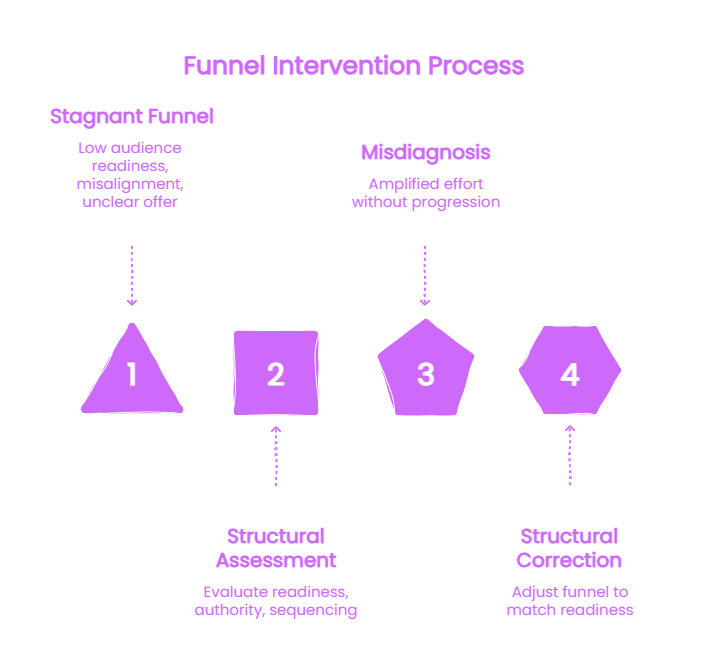
Intervention begins with structural assessment. Before adding budget, rewriting copy, or adjusting messaging, evaluate readiness, authority, and sequencing. Determine whether stagnation is caused by low audience readiness, misalignment of authority, or gaps in offer clarity. Misdiagnosis leads to amplified effort without progression, and structural correction is the only path to meaningful results.
Correct intervention involves adjusting the funnel to match readiness. This may include prequalification, educational touchpoints, authority reinforcement, or sequencing changes. Effort is applied deliberately, not reactively. Energy translates into movement because structural alignment precedes action. Precision restores flow. Misalignment corrected at the right layer produces sustainable advancement.
In Closing
High ticket funnels are precise tools, not universal solutions. Misalignment produces motion without movement, and energy without outcome. The system is designed to work, but only when readiness, authority, and structure align. Structural recognition, not intensity, governs success. Success comes from distinguishing between audience readiness and funnel function. Intervention must match the constraint. High ticket funnels are effective when the audience is prepared, authority is clear, and sequencing is intentional. Structural alignment, rather than effort alone, ensures energy produces natural movement, progression, and ultimately, high value conversion.