When a Brand Sounds Bigger Than Its Operations
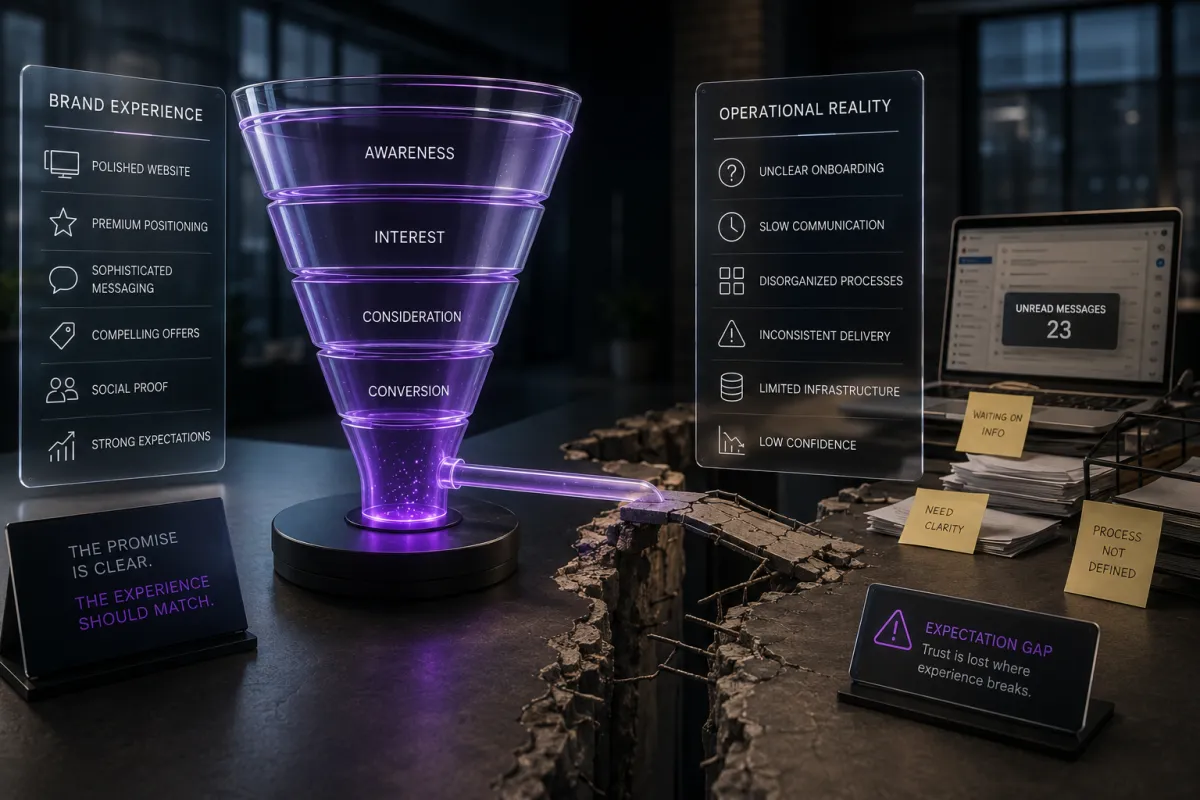
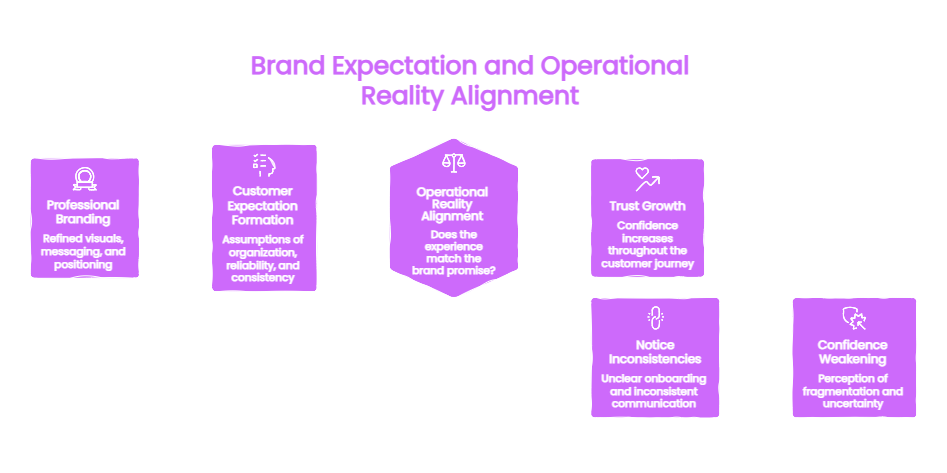
A strong brand has the ability to shape expectations long before a customer ever experiences the business itself. Professional messaging, refined visuals, confident positioning, and consistent presentation communicate maturity and capability immediately. Readers naturally begin forming assumptions about the experience that will follow. They expect organized communication, reliable processes, thoughtful delivery, and operational consistency. When those expectations are met, trust continues growing throughout the customer journey. When they are not, confidence begins weakening despite the quality of the branding. The issue is not ambitious branding, but the disconnect between communicated capability and operational reality.
This disconnect often becomes visible only after engagement begins. Initial interest may remain high because the presentation successfully establishes credibility. However, onboarding feels unclear, communication becomes inconsistent, or delivery lacks the refinement that the brand initially suggested. Customers begin noticing small inconsistencies that gradually reshape their perception of the business. What first appeared highly established now feels fragmented beneath the surface. The experience creates uncertainty because expectation and execution no longer align. The brand sounds larger than the operations supporting it.
What This Disconnect Actually Is
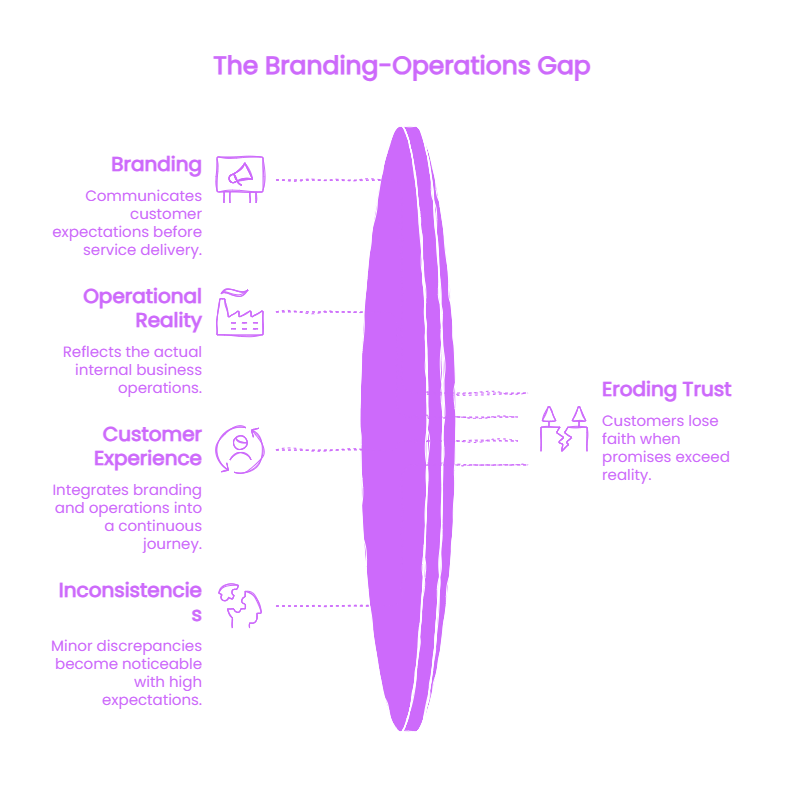
This disconnect is the gap between projected capability and actual execution. Branding communicates what customers should reasonably expect before any service has been delivered. Every visual element, message, promise, and positioning statement contributes to that expectation. Customers interpret these signals as indicators of how the business operates internally. Strong branding therefore creates responsibility as well as attention. It establishes a standard that the operational experience must consistently support. The issue is not perception itself, but unsupported perception.
Branding should function as an accurate representation of operational reality rather than an aspirational replacement for it. When communication consistently exceeds execution, trust begins eroding with every interaction. Customers rarely evaluate branding and operations separately because they experience them as one continuous journey. They naturally expect the organization behind the message to reflect the message itself. Even minor inconsistencies become more noticeable when expectations have been elevated significantly. Credibility weakens because the experience no longer confirms what the brand originally communicated. The gap between promise and delivery becomes increasingly difficult to ignore.
What It Looks Like in Practice
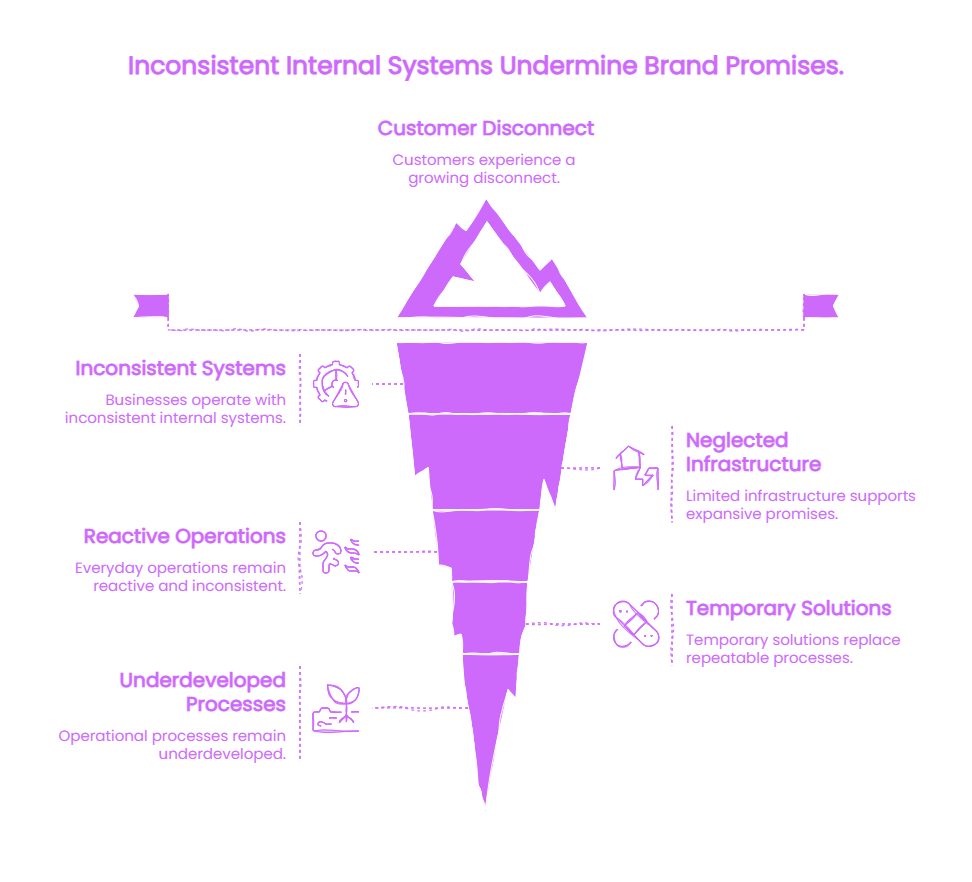
In practice, this distortion appears through businesses that communicate sophistication while operating with inconsistent internal systems. A polished website may lead into an onboarding process that feels incomplete or disorganized. Premium positioning may be followed by delayed communication or unclear next steps. Messaging may emphasize precision while everyday operations remain reactive and inconsistent. Expansive promises may be made despite limited infrastructure supporting fulfillment. Customers experience a growing disconnect between what was communicated and what is consistently delivered. Expectations exceed what the operational system can reliably sustain.
This pattern often develops gradually as businesses invest heavily in external presentation before strengthening internal execution. Marketing improves faster than fulfillment systems evolve behind the scenes. Customer facing experiences become increasingly refined while operational processes remain underdeveloped. Teams work hard to compensate for inconsistent systems through additional effort rather than structural improvement. Temporary solutions replace repeatable processes until inconsistency becomes normal. Customers begin noticing variability instead of reliability across their experience. The brand communicates stability while operations continue struggling to sustain it.
How Funnels Reveal This Distortion
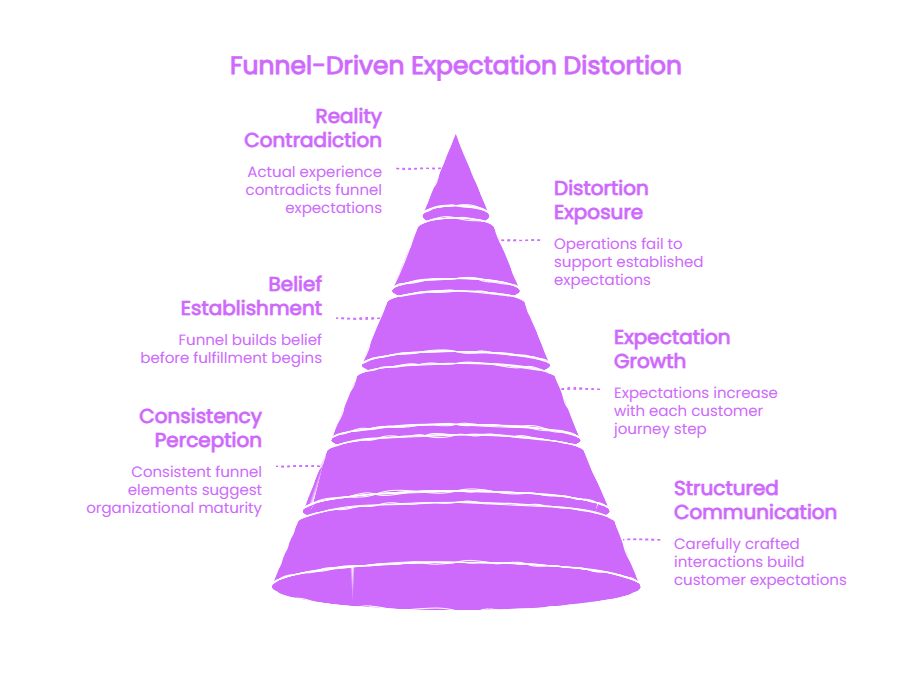
Funnels accelerate expectation formation because they introduce customers to the business through carefully structured communication. Every page, email, offer, and interaction contributes to a developing picture of what the experience will become. Readers interpret consistency within the funnel as evidence of consistency throughout the organization. Confidence grows because the funnel suggests operational maturity behind the scenes. Expectations continue increasing with each step of the customer journey. The funnel establishes belief before fulfillment ever begins. It therefore exposes distortion whenever operations fail to support those expectations.
This becomes visible after conversion when customers begin interacting with the actual business. Communication patterns may change unexpectedly once the purchase is complete. Delivery timelines may become inconsistent despite promises of precision earlier in the funnel. Support processes may appear improvised rather than intentional. Customer confidence begins shifting because the operational experience contradicts the expectations already established. The funnel reveals where branding and operations stop moving together. It exposes the exact point where expectation separates from reality.
Why Better Branding Doesn't Fix It
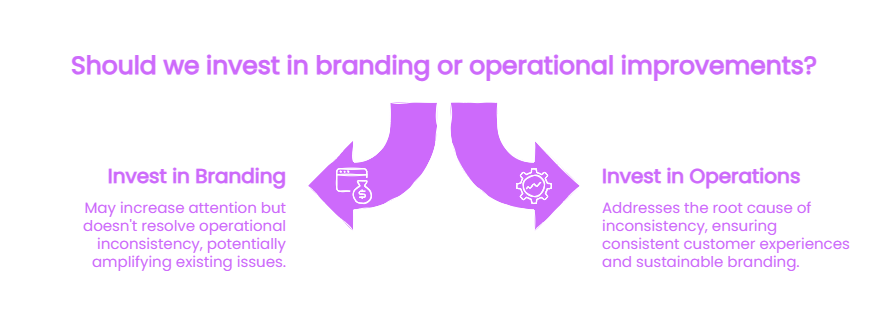
Many businesses respond to this problem by investing further into branding improvements. They redesign websites, refine messaging, elevate visuals, and strengthen positioning across every customer touchpoint. While these improvements may increase attention, they do not resolve operational inconsistency beneath the presentation. Greater visibility often places additional pressure on systems that are already struggling. Stronger branding increases expectations that operations must now sustain consistently. The disconnect becomes more noticeable because more customers experience the same inconsistency. Better branding amplifies unsupported capability instead of correcting it.
This occurs because presentation can only communicate what operations are ultimately responsible for delivering. Branding cannot create consistency where repeatable systems do not yet exist. Messaging cannot compensate for unclear communication processes after conversion. Visual refinement cannot replace dependable fulfillment or organized customer experiences. Every improvement to perception increases the importance of operational alignment. Trust continues depending upon execution rather than appearance alone. Branding becomes sustainable only when operations consistently support it.
Where Credibility Must Be Established
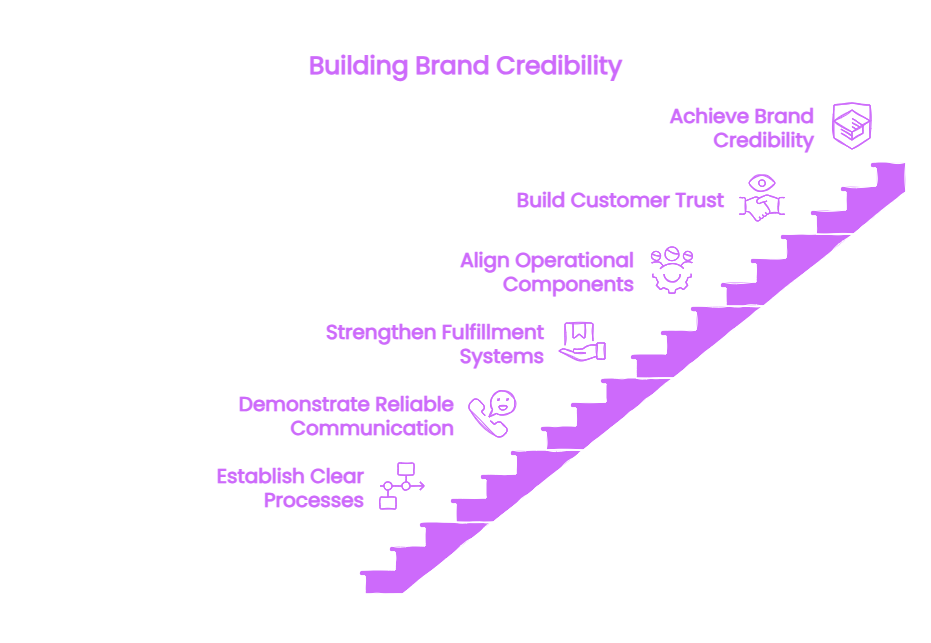
Credibility is established operationally before it is amplified through branding. Clear processes create confidence because customers experience consistency across every interaction. Reliable communication demonstrates professionalism long before impressive messaging becomes necessary. Fulfillment systems strengthen trust because expectations continue matching reality after conversion occurs. Customer experience becomes the evidence supporting every positioning statement the brand communicates. Operational discipline provides the foundation upon which branding can confidently expand. Credibility grows because experience consistently confirms expectation.
This alignment requires every operational component to reinforce the same promise being communicated externally. Internal systems, delivery standards, communication rhythms, and customer support should all reflect the positioning established within the funnel. Customers should experience continuity rather than contrast throughout the journey. Each interaction should strengthen the confidence established during earlier stages of engagement. Branding becomes more believable because every operational touchpoint confirms it naturally. Trust compounds as consistency replaces uncertainty across the experience. Credibility becomes the product of alignment rather than presentation.
Working With the Funnel
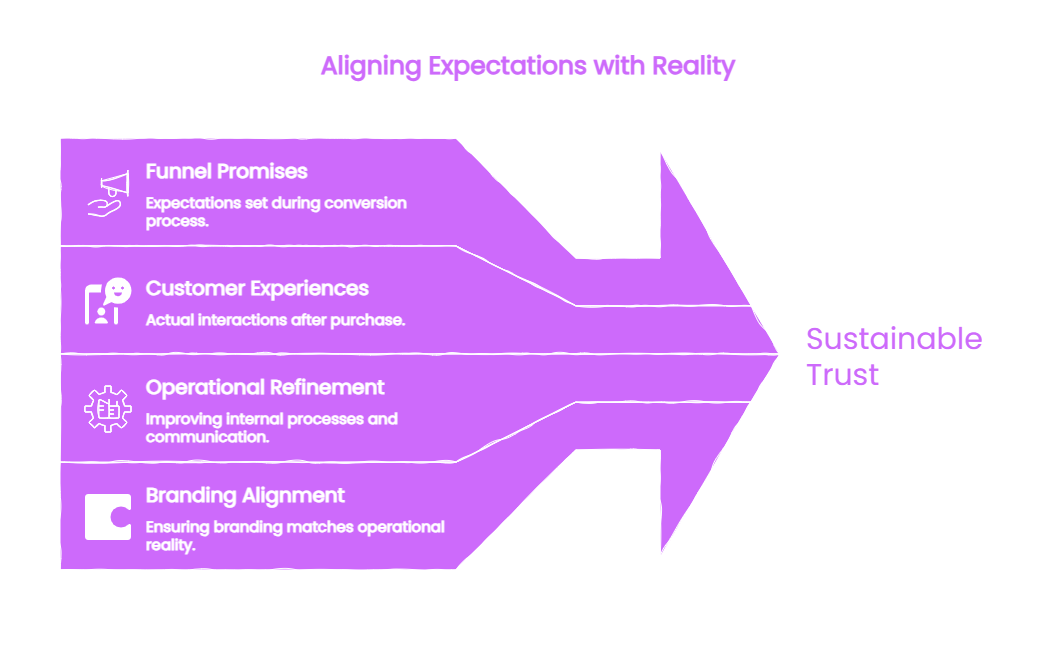
Working with this distortion begins by comparing funnel promises against actual customer experiences. Review every expectation established before conversion and compare it with operational delivery afterward. Identify moments where customers receive less clarity, consistency, or responsiveness than anticipated. Observe where communication becomes fragmented or processes become less structured after purchase. These transition points often reveal where branding has advanced beyond operational readiness. The objective is not reducing ambition but strengthening execution. Alignment begins by making the experience as consistent as the message.
Once those gaps become visible, operational refinement should take priority over additional promotional refinement. Strengthen communication standards before expanding messaging further. Improve onboarding before increasing visibility through larger campaigns. Build repeatable delivery systems before making broader promises about the experience. Allow branding to reflect the level of operational consistency already established internally. As operations mature, branding naturally becomes stronger because it accurately represents reality. Sustainable trust grows when execution consistently fulfills expectation.
In Closing
Branding communicates reality at scale by shaping expectations before customers ever experience the business itself. Every promise establishes a responsibility that operations must consistently fulfill afterward. Strong positioning creates confidence only when execution continues supporting it throughout the customer journey. Customers remember the experience more than the presentation that introduced it. When a brand sounds larger than its operations, confidence gradually gives way to uncertainty. The issue is not ambitious branding but unsupported operational maturity. Trust becomes difficult to sustain because experience cannot support expectation.
When branding and operations develop together, the entire customer journey becomes more coherent. Expectations remain realistic because they accurately reflect operational capability. Customers experience consistency from first impression through final delivery. Confidence continues growing because every interaction reinforces what the brand originally communicated. Marketing becomes more effective because fulfillment strengthens rather than weakens credibility. The business scales on the foundation of operational integrity instead of presentation alone. Strong brands are ultimately sustained by experiences that consistently validate their promises.