
What Pricing Actually Signals (And What It Cannot Fix)
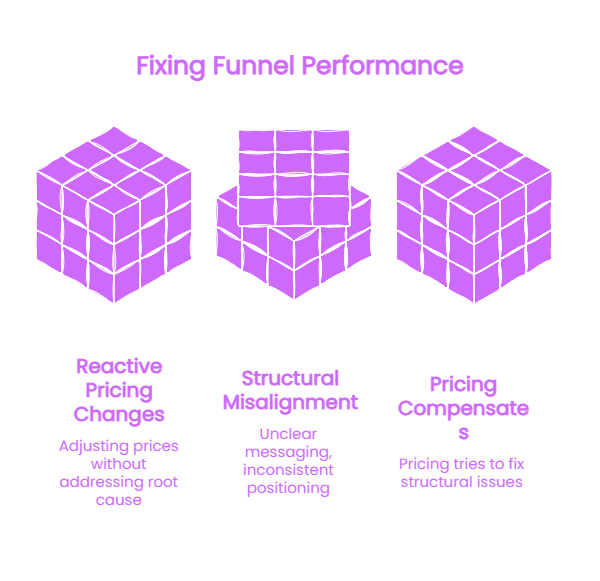
Funnels struggling with inconsistent performance often begin adjusting pricing in response. Prices are raised, lowered, bundled, discounted, and repositioned repeatedly across the system. The expectation is that conversion problems can be resolved through numerical adjustment alone. Pricing becomes the most visible lever because it appears easier to change than the structure beneath it. However, the instability usually exists deeper within the funnel itself. Messaging may remain unclear, positioning may feel inconsistent, and the experience may lack operational coherence entirely. Pricing communicates positioning, but it cannot repair structural misalignment within the system.
This creates a cycle where pricing changes become increasingly reactive over time. Lower conversion rates lead to discounts intended to reduce resistance quickly. Weak buyer quality leads to price increases intended to strengthen positioning and exclusivity. Bundles are added in an attempt to increase perceived value without addressing clarity beneath the offer. Temporary shifts in behavior may occur, but the underlying instability remains unresolved. The funnel continues struggling because pricing is being asked to compensate for problems it cannot actually solve. The issue is not pricing itself, but the expectation that pricing independently creates alignment, trust, and clarity.
What Pricing Actually Signals
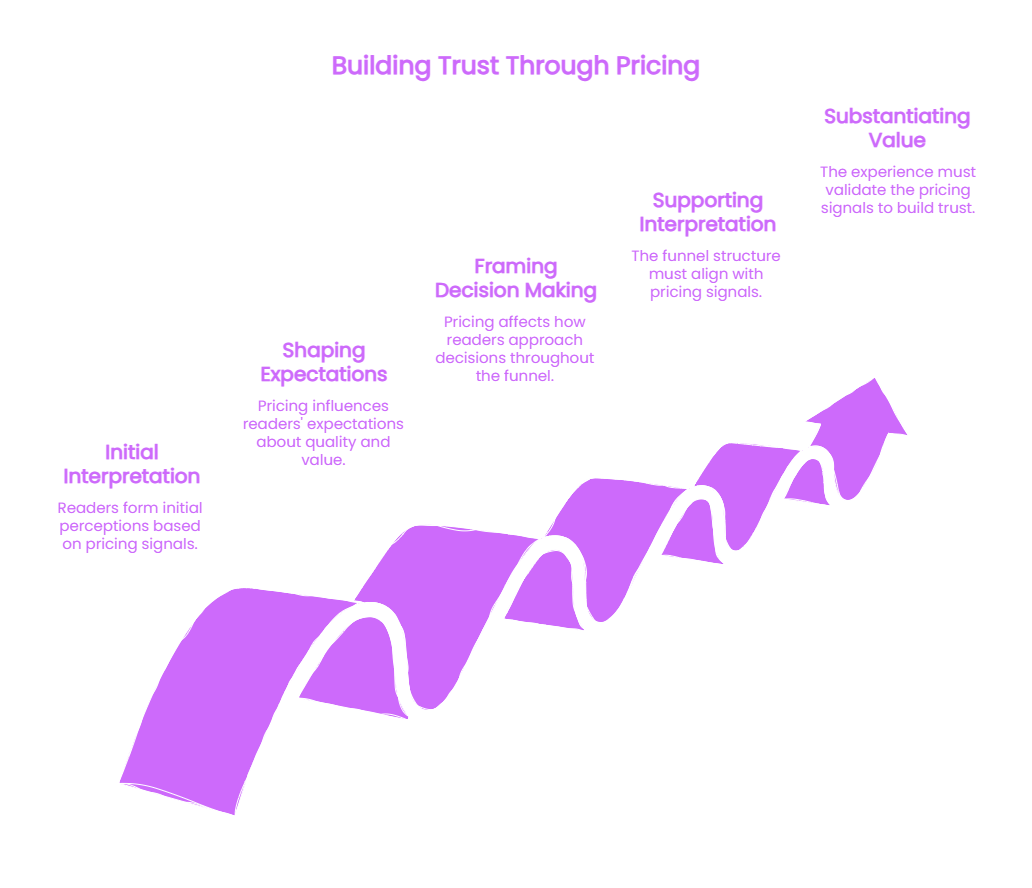
Pricing functions primarily as a signal within a funnel system. It communicates perceived relevance, market placement, expected depth, and positioning before the experience itself fully begins. Readers immediately interpret pricing as information about quality, seriousness, exclusivity, and transformation potential. Pricing also shapes how readers frame decision making throughout the funnel experience. Higher pricing often increases scrutiny and expectation, while lower pricing may influence perceived accessibility or risk differently. These interpretations occur before the offer is fully experienced operationally. Pricing shapes perception early, but it does not independently determine value or trust.
This distinction matters because readers evaluate the entire funnel through the lens pricing establishes initially. Expectations surrounding support, delivery, transformation, and clarity increase or decrease depending on pricing signals. The funnel must then structurally support the interpretation the pricing creates from the beginning. If the experience feels inconsistent with the positioning being communicated, confidence weakens quickly. Readers begin sensing a disconnect between expectation and operational reality. Pricing frames interpretation, but the system itself must substantiate the signal through experience. Meaning cannot be sustained through pricing language alone.
What It Looks Like in Practice
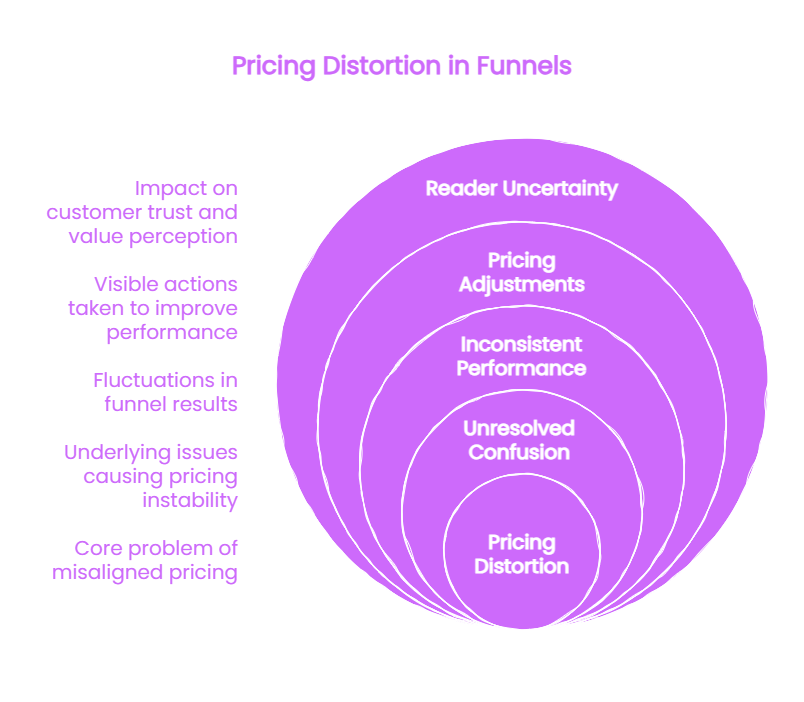
In practice, this distortion often appears through constant pricing adjustments while deeper structural problems remain untouched. Funnels repeatedly experiment with discounts, bonuses, payment plans, and repositioned offers in response to inconsistent performance. However, unclear messaging, fragmented positioning, and weak transformation clarity frequently remain unchanged beneath the adjustments. Delivery inconsistencies may continue despite pricing being modified continuously. The funnel attempts to stabilize behavior numerically while operational instability persists structurally. Pricing becomes the visible mechanism used to compensate for unresolved confusion throughout the system. The result is a funnel that changes price repeatedly without establishing stronger alignment.
This often creates environments where readers become increasingly uncertain about the true value of the offer itself. Frequent discounts may weaken trust because pricing appears unstable or negotiable without clear reasoning. Sudden increases may create additional scrutiny without improving confidence or clarity operationally. Readers begin evaluating the pricing behavior itself instead of focusing on the transformation being offered. The funnel shifts attention toward numerical positioning rather than experiential coherence. Instability becomes visible because the structure beneath the pricing lacks consistency and definition. Pricing changes expose deeper uncertainty within the system itself.
How Funnels Reveal This Distortion
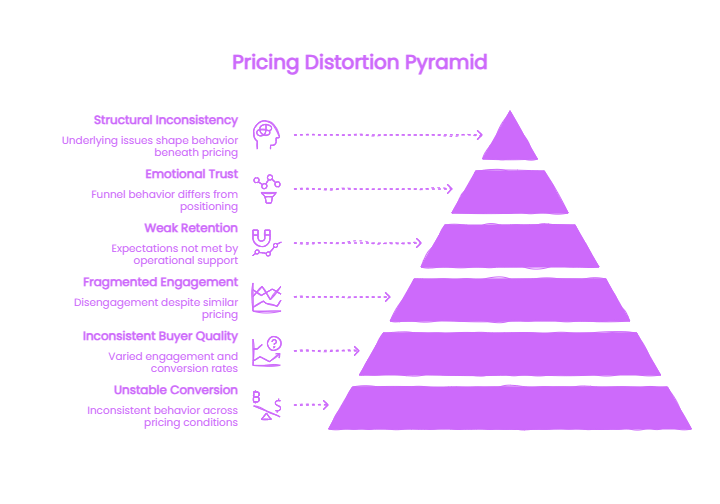
Funnels reveal this distortion through unstable conversion behavior across different pricing conditions. Hesitation may continue regardless of whether prices are raised or lowered significantly. Discounts may temporarily increase attention while simultaneously reducing trust or attracting poorly aligned buyers. Higher pricing may create stronger exclusivity signals while amplifying skepticism surrounding value and delivery. The funnel struggles to stabilize because the issue exists beyond numerical pricing itself. Readers continue sensing inconsistency within messaging, positioning, or operational structure despite the adjustments being made. The system exposes that pricing alone cannot resolve deeper alignment problems.
This distortion also appears through inconsistent buyer quality and fragmented engagement patterns. Some readers may convert quickly while others disengage despite similar pricing conditions. Retention may weaken because expectations established through pricing are not consistently supported operationally. Emotional trust fluctuates because the funnel behaves differently than the positioning suggests it should. Readers begin questioning whether pricing reflects genuine structure or reactive compensation instead. The funnel exposes instability because pricing adjustments are being used without resolving the underlying causes of hesitation and misalignment. Structural inconsistency continues shaping behavior beneath the numerical changes.
Why Pricing Adjustments Don’t Resolve It
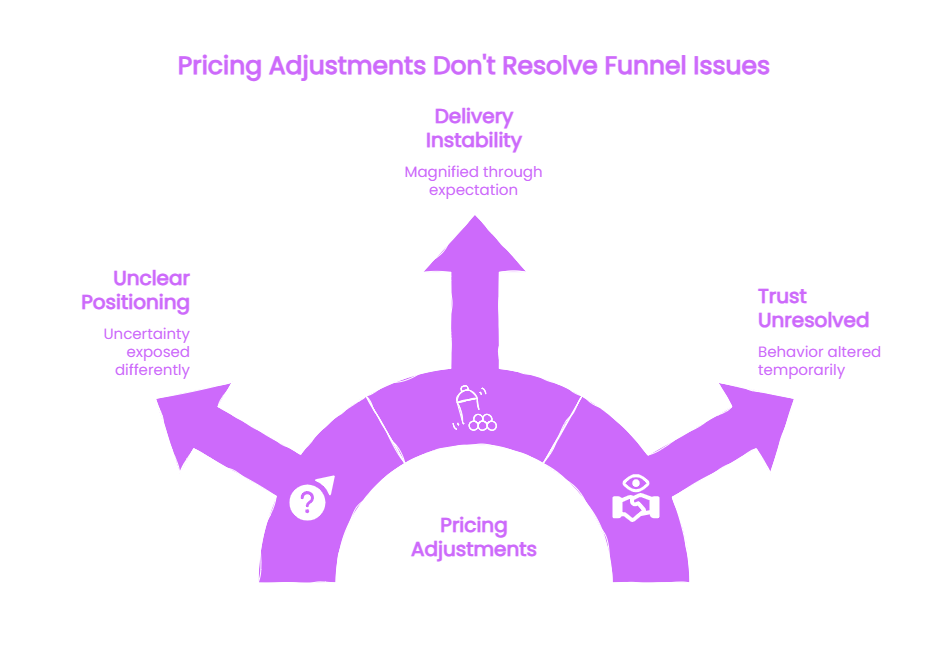
Pricing adjustments cannot independently create clarity, trust, transformation, or operational alignment within a funnel. Lowering prices may temporarily reduce resistance by decreasing perceived risk for some readers. However, reduced resistance does not automatically create stronger positioning or clearer transformation understanding. Increasing prices may strengthen exclusivity signals while simultaneously increasing scrutiny and expectation. Neither direction resolves confusion surrounding messaging, audience relevance, or delivery consistency structurally. Pricing changes influence interpretation, but they do not repair fragmented systems beneath the surface. Structural confusion remains regardless of the numerical strategy being applied.
This occurs because readers evaluate the entire experience rather than the number alone. If positioning remains unclear, lower pricing simply exposes the uncertainty differently. If delivery lacks coherence, higher pricing magnifies the instability through increased expectation and scrutiny. Pricing may alter behavior temporarily while leaving trust unresolved beneath the surface. The funnel continues struggling because operational clarity has not actually been established consistently. Readers require coherence between positioning, messaging, transformation, and delivery throughout the system. Pricing cannot manufacture alignment where structural inconsistency still exists.
Where Pricing Must Be Anchored
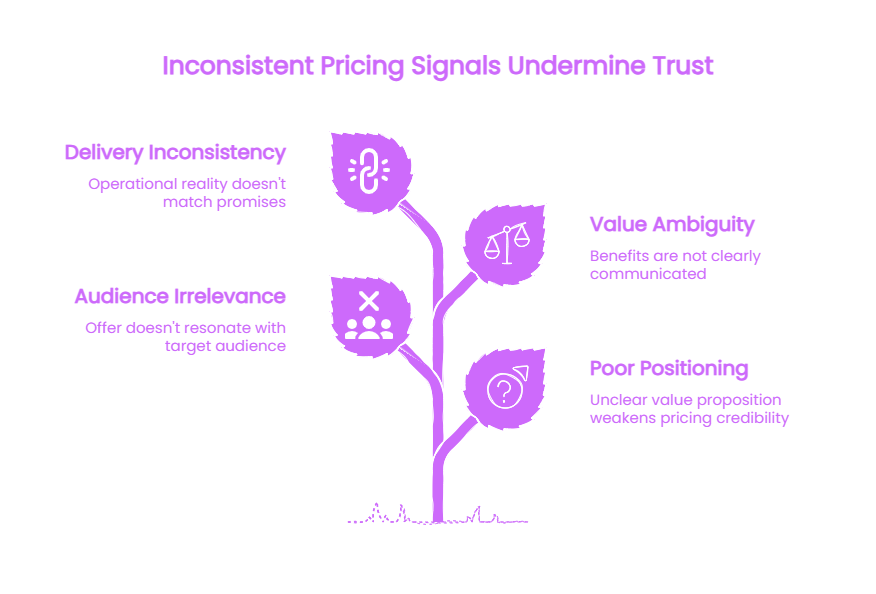
Pricing must emerge from clearly defined positioning, audience relevance, value clarity, and delivery integrity within the funnel. The system should already communicate transformation, trust, and operational coherence before pricing reinforces those signals numerically. Readers should understand who the offer serves, what outcome it produces, and why the experience matters before evaluating cost. Pricing should reflect the structure rather than compensate for weaknesses within it. The funnel becomes more stable when pricing is aligned with actual experiential depth and positioning consistency. Readers experience greater confidence because the numerical signal matches operational reality throughout the system. Pricing becomes reinforcement instead of substitution within the funnel.
This creates an environment where meaning remains stable across every stage of the experience. Readers no longer rely exclusively on pricing behavior to interpret significance or trustworthiness. Messaging, transformation clarity, delivery consistency, and audience alignment reinforce the same positioning continuously. The funnel behaves coherently because the system itself is coherent beneath the surface. Pricing feels appropriate because the structure sustains the level of significance being communicated. Trust strengthens when operational reality and numerical positioning remain aligned consistently. Pricing becomes credible because it reflects an already stable system.
Working With the Funnel
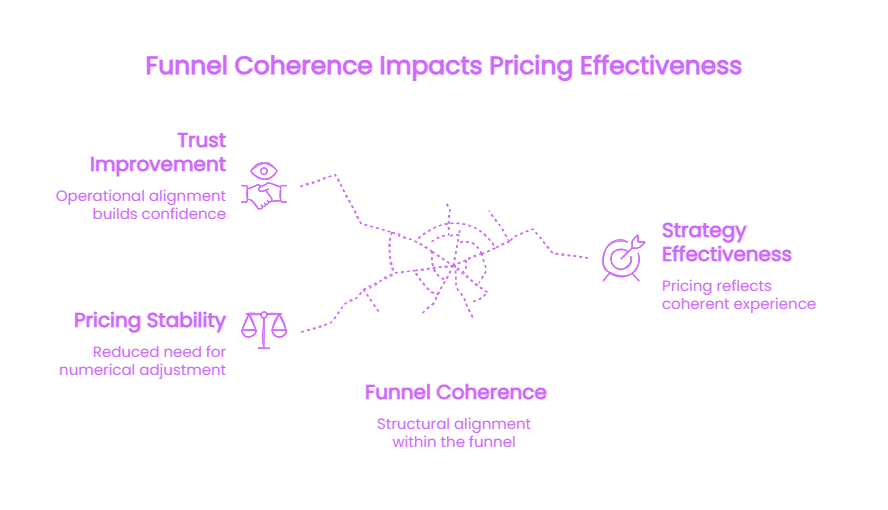
Working with this distortion requires evaluating what pricing is currently being asked to solve within the funnel. The system should be examined to determine whether hesitation originates from pricing or from deeper structural confusion instead. Messaging clarity, positioning consistency, and transformation definition should be evaluated separately from numerical strategy. Delivery alignment should also be examined to ensure expectations are operationally supported throughout the experience. Readers should not be expected to resolve structural uncertainty through pricing interpretation alone. The funnel must first establish coherence before pricing can reinforce it effectively. Alignment should be rebuilt before numerical adjustments become the primary focus.
This process often requires separating pricing problems from clarity problems entirely. Weak conversion behavior does not automatically indicate incorrect pricing within the system. Inconsistent trust may originate from fragmented messaging, unstable positioning, or unclear transformation instead. Readers interpret pricing through the context the funnel creates around it operationally. Strengthening structure frequently improves pricing stability without requiring significant numerical adjustment. The funnel becomes easier to trust because operational alignment exists independently of pricing tactics. Pricing strategy becomes more effective when it reflects a coherent and structurally aligned experience.
In Closing
Pricing communicates meaning within a funnel system, but it cannot manufacture meaning independently. Funnels become unstable when pricing is used to compensate for unresolved structural problems beneath the surface. Readers quickly sense when numerical positioning exceeds the clarity or coherence of the actual experience. Trust weakens because the system asks pricing to perform work that belongs to structure instead. The issue is rarely pricing itself, but the instability pricing is attempting to conceal operationally. Conversion problems continue because messaging, positioning, transformation, and delivery remain misaligned beneath the adjustments. Pricing cannot repair fragmentation within the system.
When pricing is anchored to operational clarity and experiential coherence, the funnel behaves differently entirely. Readers interpret the numerical positioning through a structure that already feels trustworthy and aligned. Confidence increases because expectation and delivery remain consistent across the experience. Pricing reinforces meaning instead of attempting to generate it artificially. The funnel becomes more stable because the system itself is structurally stable beneath the pricing. Readers no longer evaluate numbers in isolation from the experience surrounding them. Pricing becomes credible when it reflects a coherent and aligned operational system.