What “Luxury” Actually Means in a Funnel Context
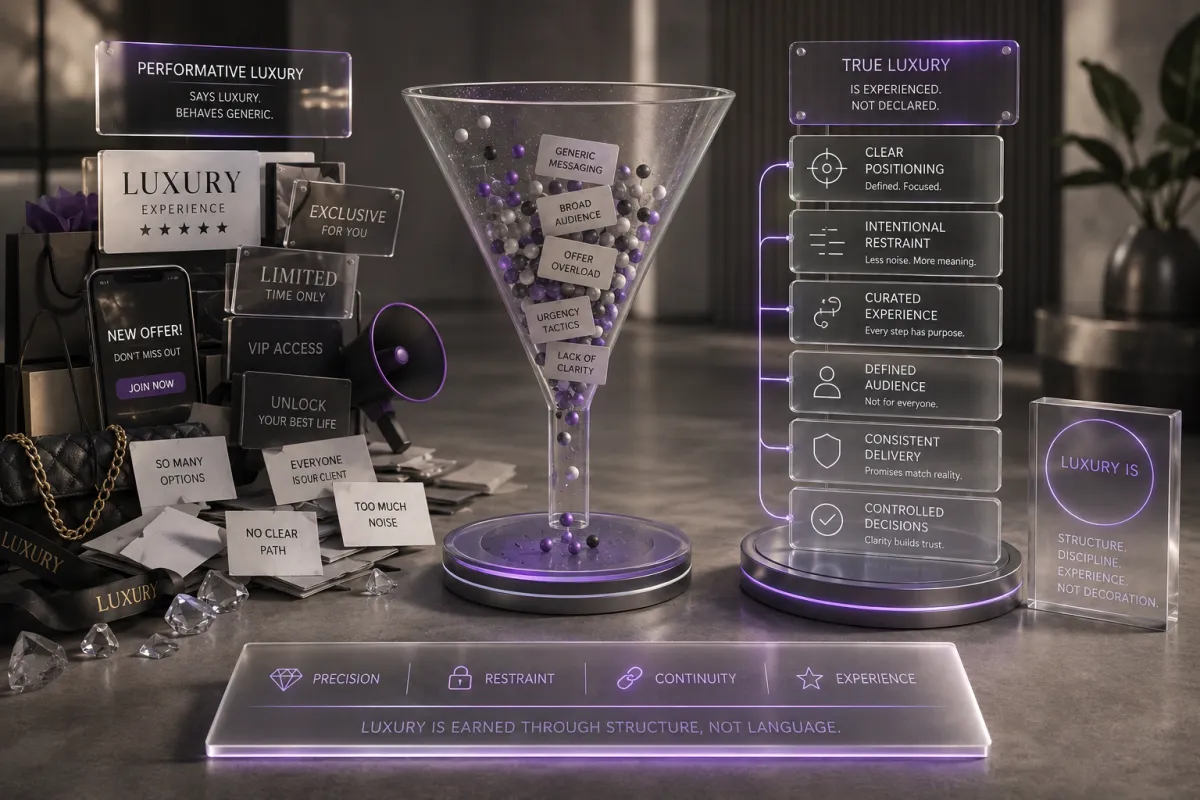
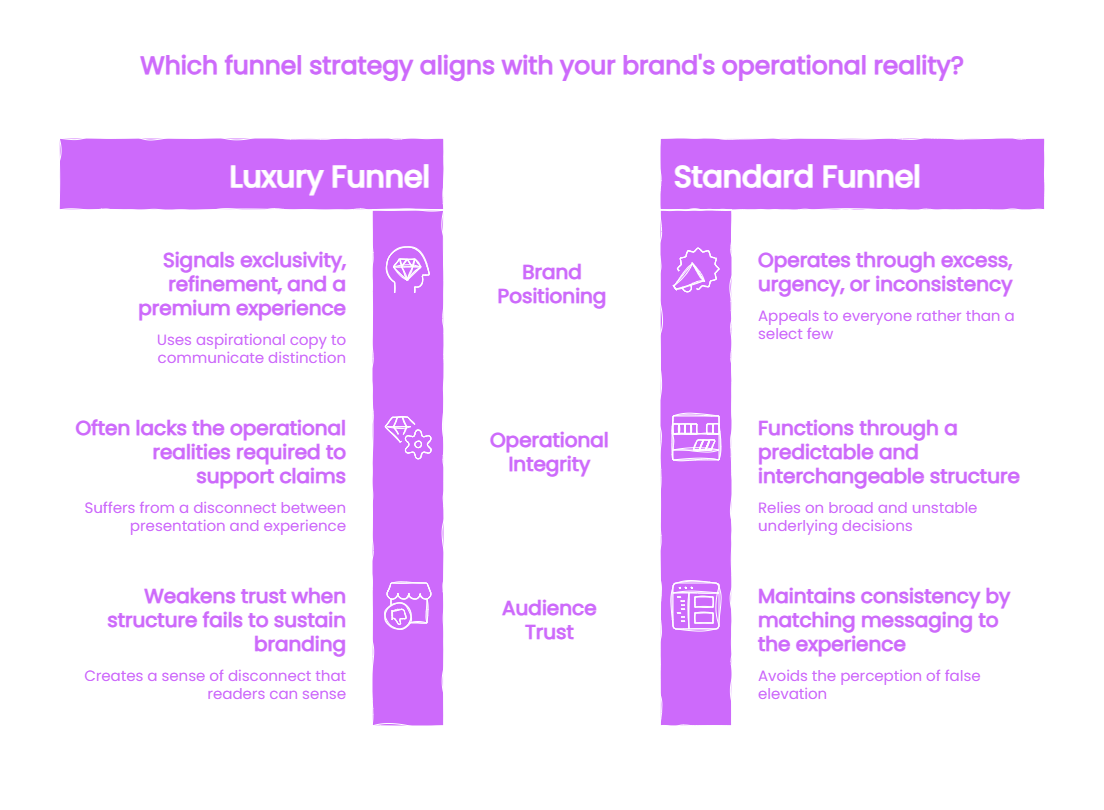
When encountering funnels positioned as luxury, the presentation often appears elevated at first glance. The language signals exclusivity, refinement, and premium experience across the entire sequence. Visuals are polished, copy is aspirational, and the environment attempts to communicate distinction. However, the structure beneath the presentation frequently feels familiar and interchangeable. The funnel behaves like countless others despite the language attempting to separate it. Readers sense the disconnect even when they cannot immediately articulate it. The issue is not the use of the word luxury itself, but the absence of the operational realities required to support it.
This disconnect becomes visible through the relationship between presentation and experience. The funnel promises precision while structurally operating through excess, urgency, or inconsistency. Positioning attempts to establish exclusivity while simultaneously appealing to everyone. The experience signals elevation while the underlying decisions remain broad and unstable. Readers encounter messaging that sounds premium but does not feel disciplined or contained. Trust weakens because the structure beneath the branding does not sustain the claim being made. Luxury cannot exist as language detached from behavior, structure, and experience.
What “Luxury” Actually Means in a Funnel Context
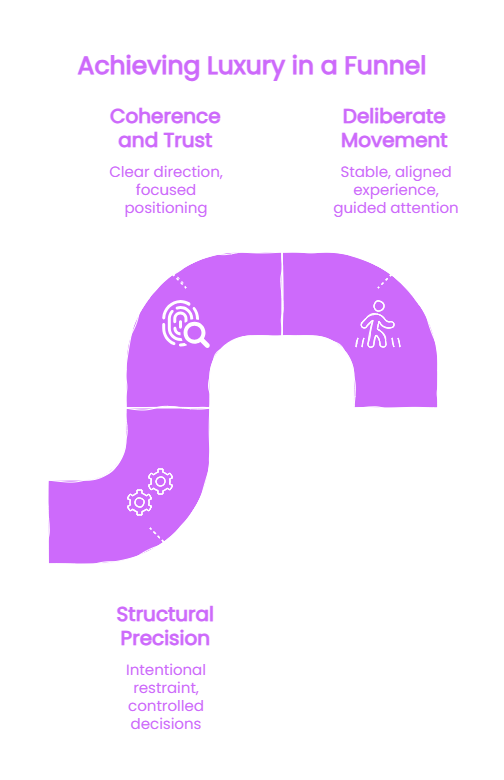
Luxury within a funnel context is not defined primarily through aesthetics or expensive language. It is established through structural precision, intentional restraint, and controlled decision environments. A luxury funnel removes unnecessary friction while increasing coherence and trust throughout the experience. Each element exists with purpose and supports a clearly defined direction. The system communicates clarity without relying on excessive explanation or pressure. Positioning remains focused because the funnel understands exactly who it is designed for. Luxury is expressed operationally before it is expressed visually.
This creates an experience where movement feels stable, deliberate, and aligned. Readers are not overwhelmed with competing offers, scattered messaging, or forced urgency. The funnel guides attention carefully through hierarchy, pacing, and continuity. Confidence is communicated through discipline rather than accumulation. Every stage reinforces the same level of clarity and refinement. The experience feels intentional because the underlying structure has been intentionally governed. Luxury communicates through precision, not excess.
What It Looks Like in Practice
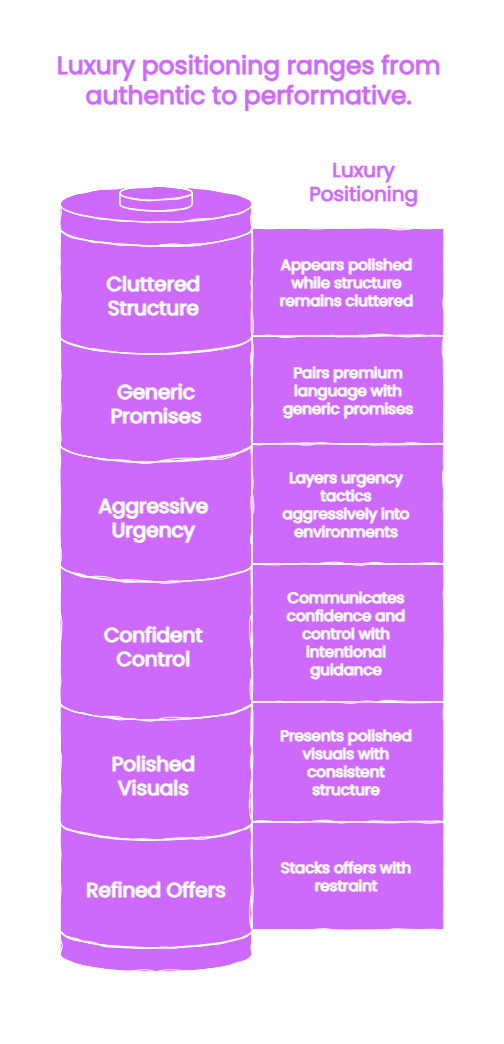
In practice, distorted luxury positioning often appears through contradiction within the funnel itself. Messaging speaks about exclusivity while targeting undefined or overly broad audiences. Offers are stacked excessively despite claiming refinement and restraint. Visual presentation may appear polished while the overall structure remains cluttered or inconsistent. Urgency tactics are layered aggressively into environments attempting to feel elevated. The funnel attempts to signal premium positioning while structurally behaving like mass market marketing. The result feels performative rather than precise.
This contradiction becomes more visible as readers move deeper into the experience. Premium language is often paired with generic promises that could apply almost anywhere. Design elements compete for attention instead of guiding it intentionally. Calls to action may pressure aggressively despite the brand attempting to communicate confidence and control. The funnel says luxury while behaving from instability beneath the surface. Readers sense the mismatch between what is being presented and how the system actually operates. The experience loses distinction because the structure does not support the positioning.
How Funnels Reveal This Distortion
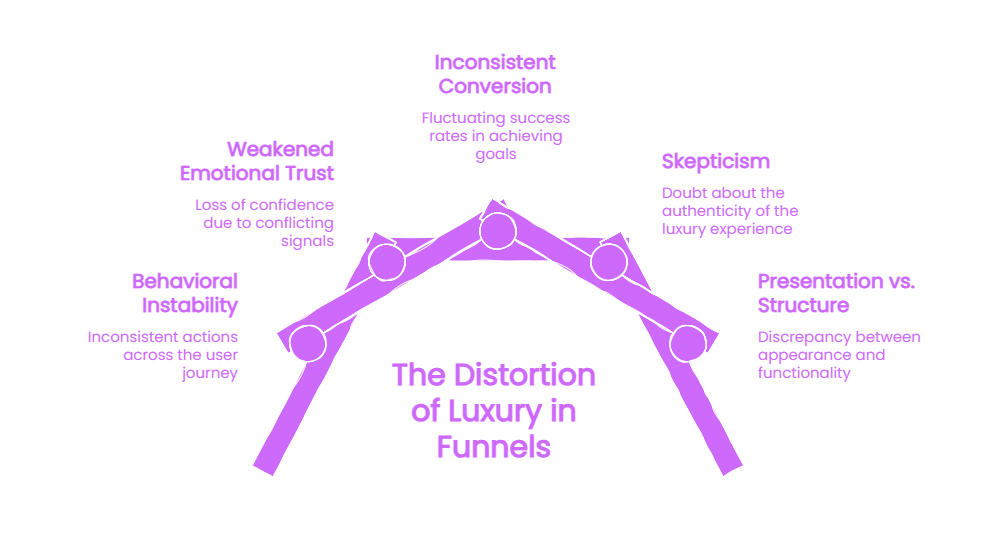
Funnels reveal this distortion through behavioral instability across the experience. Readers may initially engage because the presentation appears elevated and aspirational. However, hesitation increases as the structure fails to sustain belief. Emotional trust weakens when positioning and behavior begin to conflict with one another. The funnel creates expectation but struggles to maintain alignment with it. Readers sense that the experience is attempting to appear premium rather than naturally functioning that way. Conversion becomes inconsistent because confidence within the system is inconsistent.
This often appears through skepticism that is difficult to measure directly but visible through behavior. Readers pause longer at decision points despite polished presentation. Interest may exist initially without progressing into meaningful commitment. The funnel attracts attention but struggles to maintain trust throughout the sequence. Presentation generates perception while structure undermines it simultaneously. Readers interpret the disconnect as instability even when the visuals appear refined. The funnel reveals that luxury cannot be sustained through aesthetics alone.
Why Better Branding Doesn’t Fix It
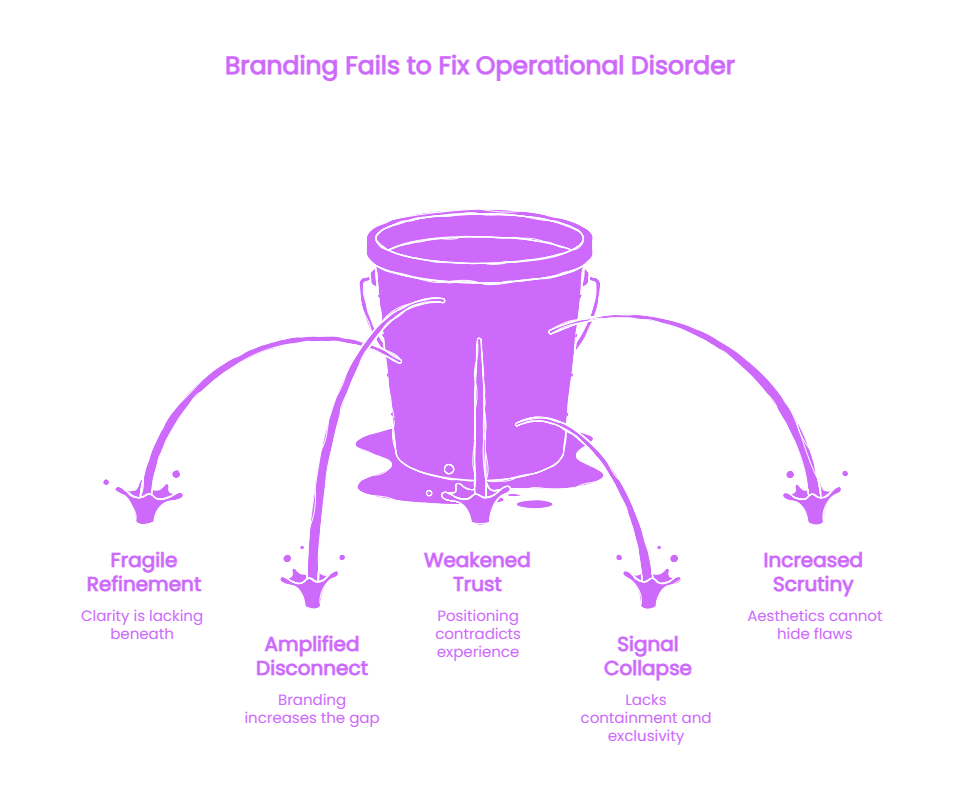
Attempts to resolve this issue often focus on improving branding elements alone. Visuals become more polished, copy becomes more elevated, and presentation becomes more stylized. These changes assume that stronger aesthetics will establish stronger positioning. However, luxury cannot be layered onto operational disorder successfully. When the system beneath the funnel lacks clarity, refinement becomes fragile rather than convincing. Presentation may improve temporarily while structural instability remains unresolved. Better branding amplifies the disconnect when the underlying experience remains inconsistent.
This occurs because branding communicates expectation before experience confirms it. The more elevated the presentation becomes, the more precise the structure beneath it must be. Readers begin evaluating continuity between what is promised and what is experienced. If positioning communicates restraint while the funnel behaves through excess, trust weakens quickly. If exclusivity is claimed while the system lacks containment, the signal collapses. Luxury presentation increases scrutiny rather than reducing it. Structural inconsistency cannot be hidden beneath aesthetics indefinitely.
Where Luxury Must Actually Be Established
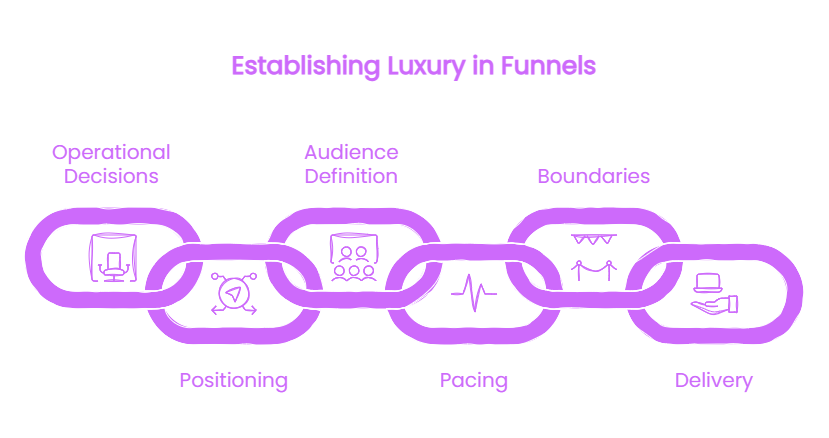
Luxury must first be established through operational decisions rather than presentation alone. Positioning must be clearly defined and intentionally maintained across the funnel. Audience definition must remain disciplined rather than broadly expansive. Pacing must support confidence instead of urgency driven instability. Boundaries must exist around offers, messaging, and progression within the experience. Delivery must align with the level of refinement being communicated. Luxury begins in governance before it appears in branding.
This creates structural consistency that readers can feel throughout the experience. Every stage reinforces the same level of clarity, pacing, and intentionality. The funnel becomes easier to trust because its behavior remains coherent. Precision within the system communicates confidence naturally. Readers no longer need to reconcile contradiction between presentation and operation. The experience feels elevated because it is structurally aligned from beginning to end. Luxury is established operationally before it is communicated visually.
Working With the Funnel
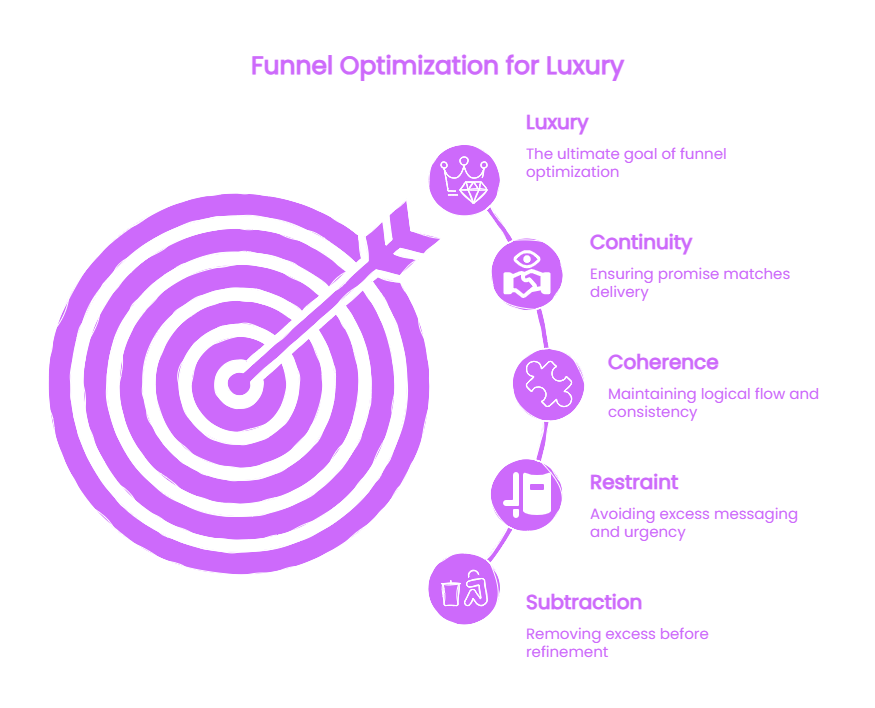
Working with this distortion requires evaluating where the funnel is over signaling and under supporting. Claims of exclusivity should be examined against the actual structure of the experience. Excess messaging, unnecessary urgency, and competing pathways should be reduced intentionally. Positioning must become more defined rather than more expansive. The funnel should communicate confidence through restraint and coherence instead of accumulation. Continuity between promise and delivery must be strengthened across every stage. The system should feel disciplined rather than performative.
This process often requires subtraction before refinement can occur effectively. Removing excess reveals whether the structure itself is capable of sustaining trust. Simplifying pathways allows hierarchy and direction to become clearer. Readers should experience consistency between what is claimed and what is delivered. The funnel becomes more stable as unnecessary signaling is removed. Alignment begins replacing performance within the system. Luxury emerges more clearly when precision governs the experience.
In Closing
Luxury is not declared into existence through branding language alone. It is experienced through coherence, precision, restraint, and operational alignment. Funnels weaken when they attempt to appear luxurious without structurally supporting the claim. Readers sense the disconnect between presentation and behavior even when the visuals appear refined. Trust becomes unstable because the system beneath the branding remains unstable. The issue is rarely the word luxury itself, but the structure attempting to carry it. Positioning collapses when operational reality does not sustain perception.
When luxury is structurally established, the funnel behaves differently at every level. Clarity replaces excess within messaging, pacing, and direction. Confidence becomes visible through containment rather than performance. Readers experience refinement through continuity instead of presentation alone. The funnel supports trust because its behavior aligns with its positioning. Distinction emerges naturally when precision governs the system. Luxury becomes believable when structure and experience reinforce one another completely.