The Difference Between a Funnel and a Website
Websites and funnels are often treated as interchangeable. They both live online, they both share information, and they both welcome people into a business. So, it’s understandable why the distinction gets blurred. While they may look similar on the surface, they serve very different purposes and when those purposes are confused, friction follows.
What a Website Is Designed to Do
A website is a space for orientation and discovery. It introduces your brand, your values, your work, and your credibility. It allows people to explore at their own pace, move between pages freely, and gather context without being rushed toward a decision. Websites are meant to be open, informational and exploratory. They answer broad questions who are you, what do you do and is this relevant to me? Importantly, they don’t require immediate action. Their job is to support understanding.

What a Funnel Is Designed to Do
A funnel, on the other hand, is built for sequence and decision. It doesn’t invite wandering. It offers a guided path. Each step leads intentionally to the next, with a clear purpose behind the progression. Funnels reduce choice rather than expand it. They narrow focus so that someone can move through a decision without distraction or confusion. Where a website holds space for exploration, a funnel holds space for clarity.
Where Confusion Creates Friction
Problems arise when websites are asked to function like funnels or funnels are built like websites. When websites are overloaded with pop-ups, urgency, and constant calls to action, visitors feel rushed before they’re oriented. When funnels are filled with excessive navigation, multiple offers, or too much discovery, people lose the thread of the journey and stall. In both cases, the issue isn’t design, it’s role confusion. Each system begins to strain when it’s asked to do work it wasn’t designed to hold.

Why This Matters for Conversion
Conversion doesn’t come from pressure. It comes from clarity at the right moment. Websites prepare people. Funnels guide them. When a website is allowed to do its job, funnels don’t have to over explain. And when funnels are allowed to do their job, websites don’t have to push. The result is a smoother experience for both the user and the business.
A Simple Way to Audit Your Own Setup
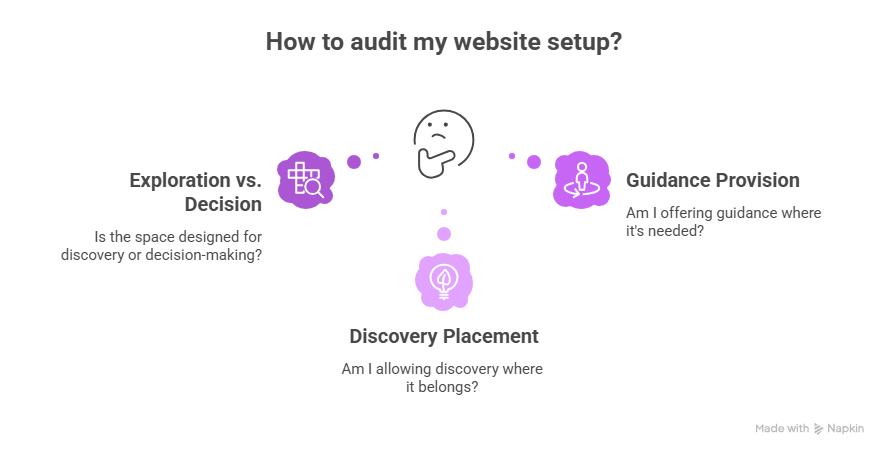
Ask yourself is this space meant for exploration or decision, am I allowing discovery where discovery belongs, and am I offering guidance where guidance is needed? You don’t need more pages to answer these questions. You need clearer roles. Mapping the journey someone takes from first encounter to next step often reveals exactly where confusion has crept in.
A Grounded Closing
Websites and funnels are not competing tools. They are complementary systems, each supporting a different phase of understanding. When they’re built with intention and allowed to do their specific work, clarity increases, friction decreases, and decisions begin to feel natural instead of forced. And that’s where trust quietly grows.