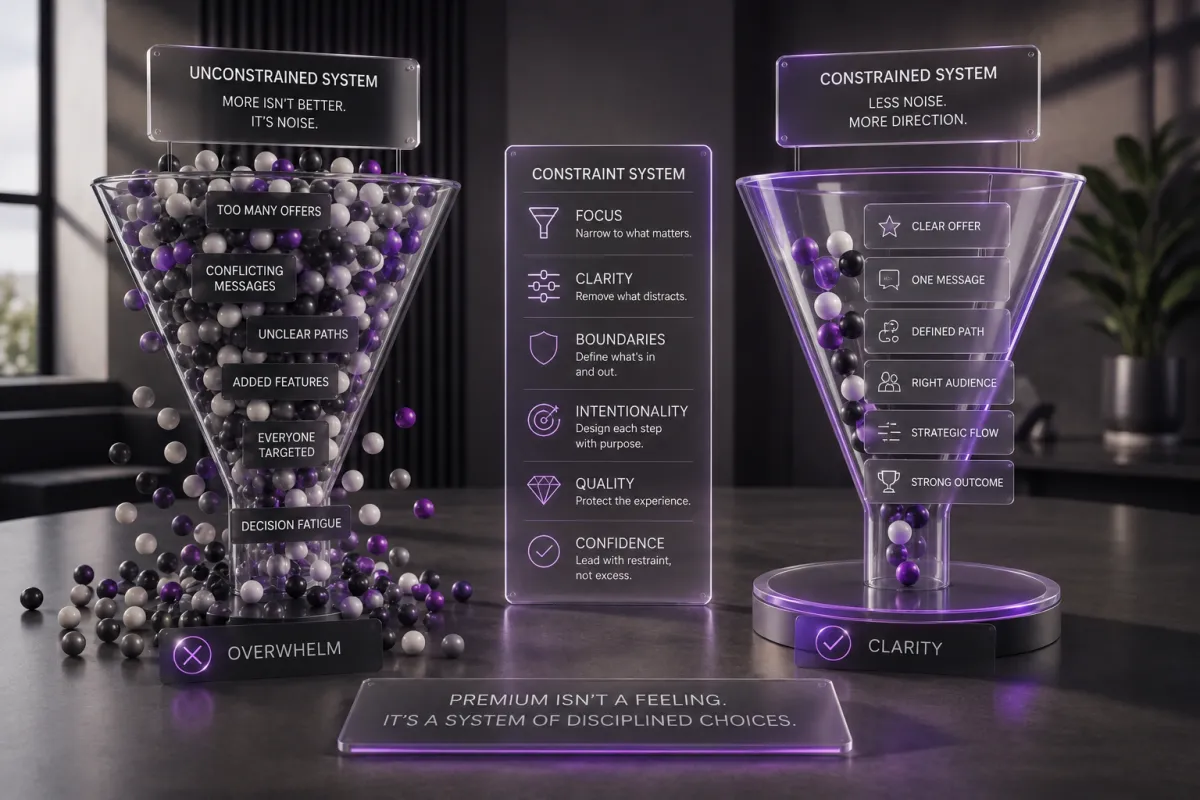
Premium Isn’t a Vibe. It’s a Constraint System.
Funnels attempting to feel premium often begin by emphasizing atmosphere before structure. Visuals become elevated, language becomes refined, and exclusivity cues are layered throughout the experience. The presentation signals sophistication through aesthetics, tone, and curated perception. However, beneath the presentation, the system itself frequently remains unrestricted and undefined. Pathways expand endlessly, messaging shifts inconsistently, and priorities compete against one another. The funnel appears elevated visually while behaving without discipline operationally. The issue is not the desire to create a premium experience, but the absence of the constraints required to sustain one.
This disconnect becomes visible through the relationship between appearance and movement within the funnel. Readers encounter polished presentation while simultaneously navigating unclear structure and competing directions. The system attempts to communicate refinement while structurally operating through excess and expansion. Confidence weakens because the funnel lacks containment beneath the atmosphere it projects. Premium positioning begins to collapse when every possibility remains open simultaneously. The experience feels performative rather than intentionally governed. Premium is not atmosphere alone, but the result of disciplined constraints shaping the experience.
What a Constraint System Actually Is
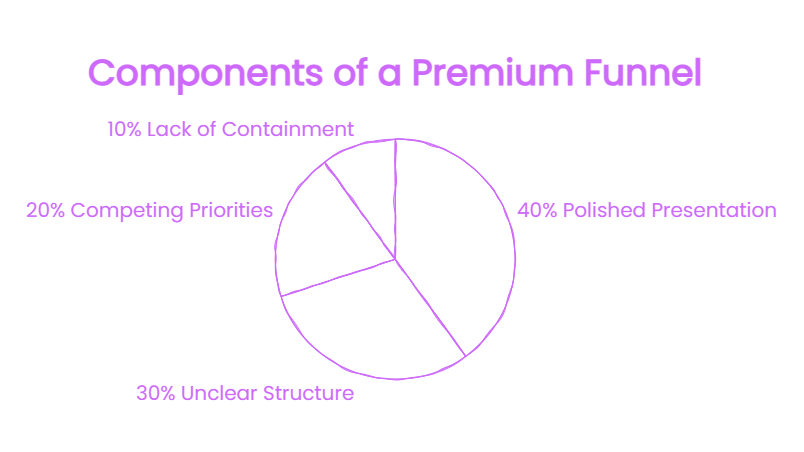
A constraint system is the intentional use of limitation to create clarity, coherence, quality, and direction. It establishes boundaries around what is included, excluded, prioritized, and protected within the funnel. Rather than expanding endlessly, premium systems narrow focus intentionally. Constraints create hierarchy by determining what receives emphasis and what does not. This allows the experience to remain stable, understandable, and aligned throughout its progression. Readers encounter fewer competing signals because the structure has already resolved unnecessary complexity. Premium systems communicate confidence through disciplined limitation.
This creates an experience where movement feels directed rather than scattered. Messaging remains coherent because the funnel is not attempting to communicate everything simultaneously. Offers are intentionally contained rather than endlessly accumulated. Visual hierarchy becomes clearer because attention is not being divided across excessive elements. Each stage reinforces the same level of structure and restraint. The system protects clarity by limiting what enters the experience unnecessarily. Constraints create refinement by preserving coherence across the funnel.
What It Looks Like in Practice
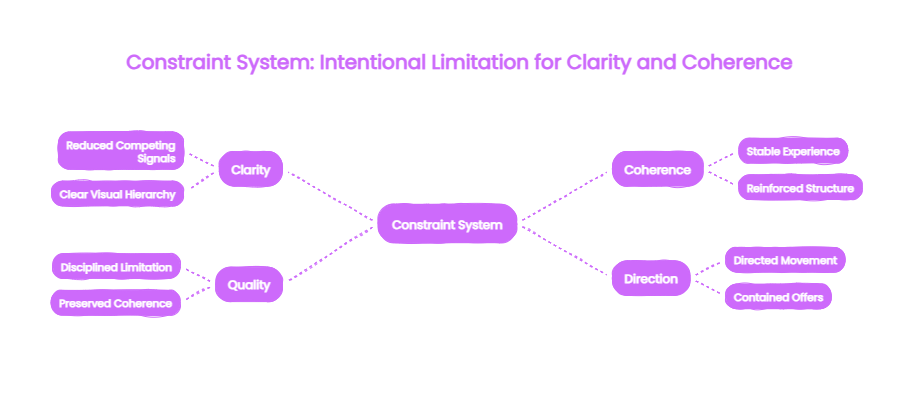
In practice, the absence of constraints appears through systems attempting to serve everyone simultaneously. Funnels expand continuously through stacked offers, excessive bonuses, and competing pathways. Messaging shifts across audiences without maintaining a stable position or direction. Additional features are introduced without removing anything already present within the structure. Calls to action multiply instead of guiding attention toward a defined movement. The funnel becomes crowded with possibilities that compete against one another continuously. The result feels noisy rather than refined.
This often creates experiences where readers struggle to determine what matters most. Hierarchy weakens because too many elements demand equal attention simultaneously. The funnel attempts to appear valuable through accumulation instead of precision. Pathways remain unclear because the structure refuses to narrow focus intentionally. Readers encounter expansion where direction should exist instead. Excess begins replacing clarity across messaging, visuals, and progression. The absence of boundaries creates instability throughout the experience.
How Funnels Reveal This Distortion
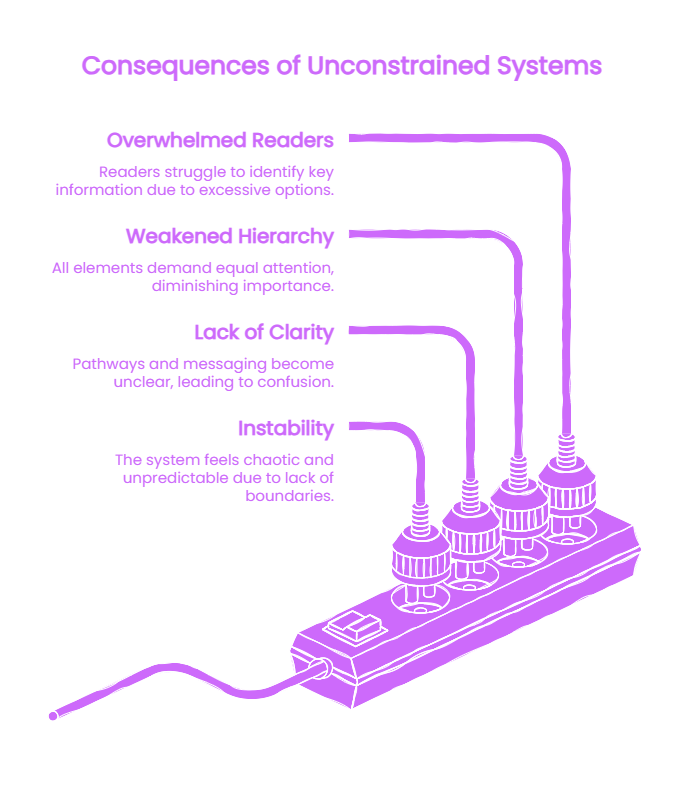
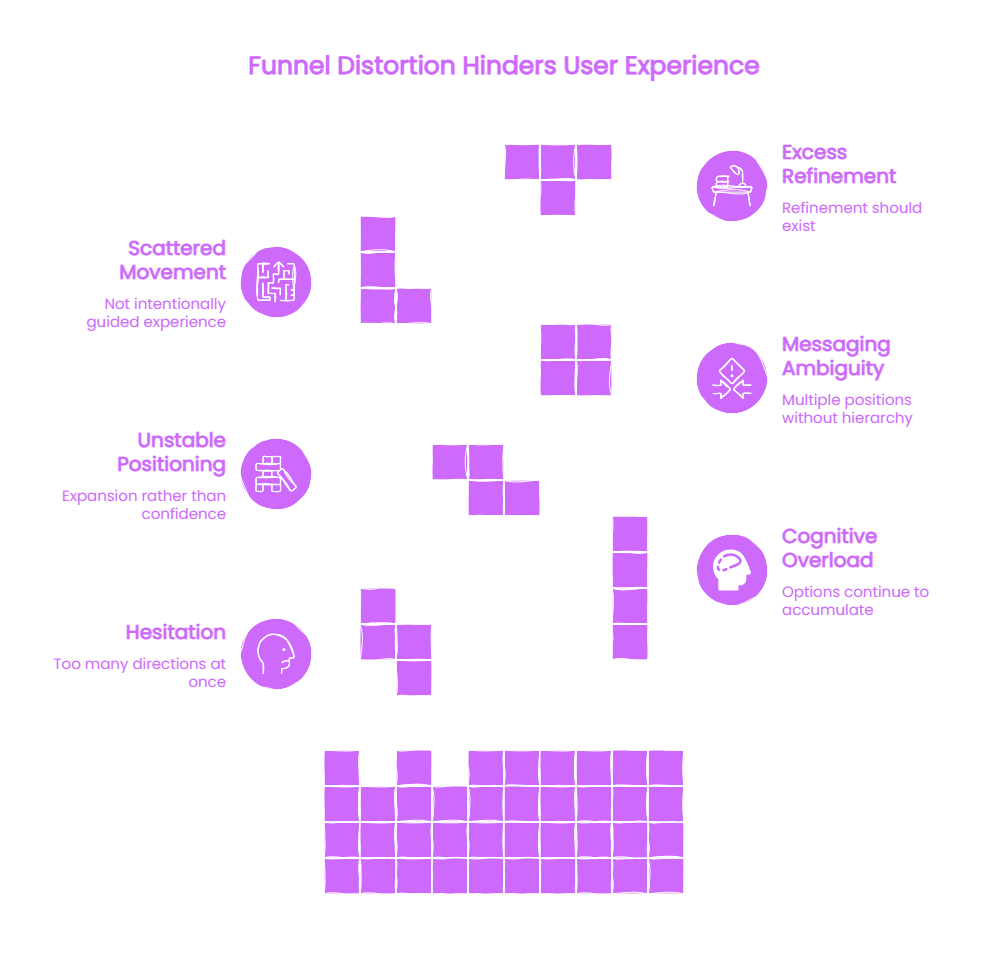
Funnels reveal this distortion through hesitation, cognitive overload, and unstable positioning. Readers pause because the system presents too many directions at once. Decision-making becomes more difficult as additional options continue to accumulate. The funnel reflects expansion rather than confidence through its structure and behavior. Messaging attempts to hold multiple positions simultaneously without establishing hierarchy. Readers experience movement as scattered instead of intentionally guided. The system exposes excess where refinement should exist.
This distortion becomes increasingly visible as readers move deeper into the funnel. Interest may initially exist because the presentation appears elevated and expansive. However, clarity weakens as competing pathways and priorities emerge across the experience. Readers struggle to determine what the funnel actually values most. Momentum decreases because the structure lacks disciplined direction. The experience communicates uncertainty beneath its polished presentation. The funnel reveals that unrestricted systems cannot sustain premium positioning effectively.
Why More Features Don’t Fix It
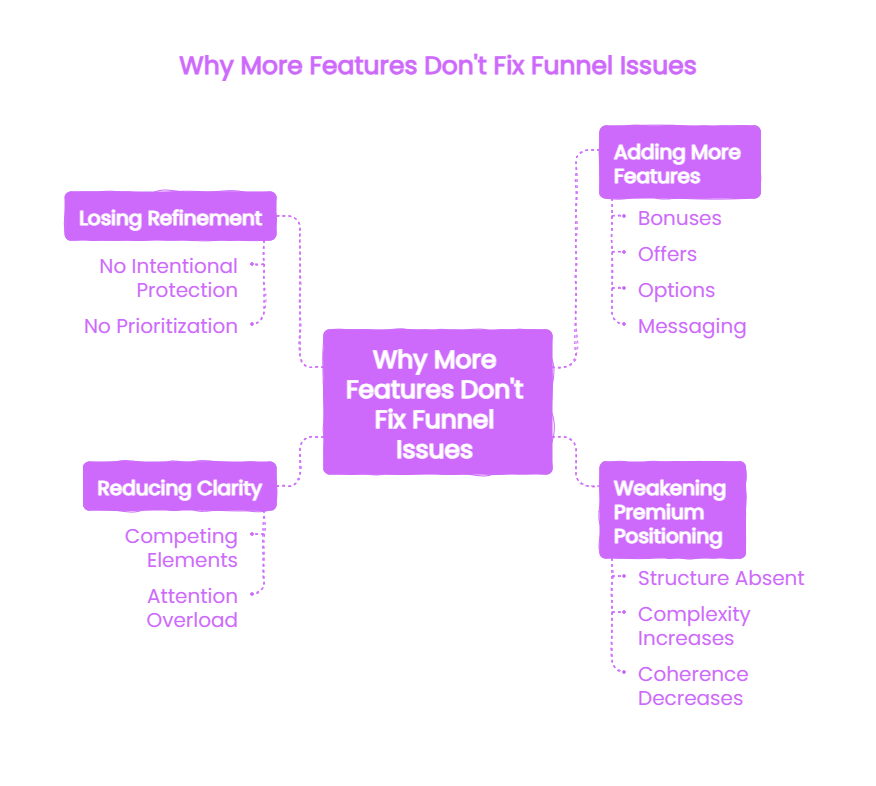
Attempts to resolve this issue often focus on adding more rather than refining structure. Additional bonuses, offers, options, and messaging are layered into the funnel continuously. Flexibility is expanded in an effort to increase appeal and perceived value. However, accumulation weakens premium positioning when structure is absent beneath it. Each added element increases complexity without improving coherence or direction. The funnel becomes heavier while simultaneously becoming less focused. More features amplify excess instead of resolving it.
Premium experiences rely on precision and containment rather than endless expansion. Readers interpret disciplined structure as confidence within the system. Excessive additions often communicate instability because the funnel appears unable to define what matters most. The attempt to increase value through accumulation frequently reduces clarity instead. Readers become overwhelmed by the number of competing elements requiring attention. The system loses refinement because nothing is intentionally protected or prioritized. Premium positioning weakens when containment disappears from the experience.
Where Constraints Must Be Established
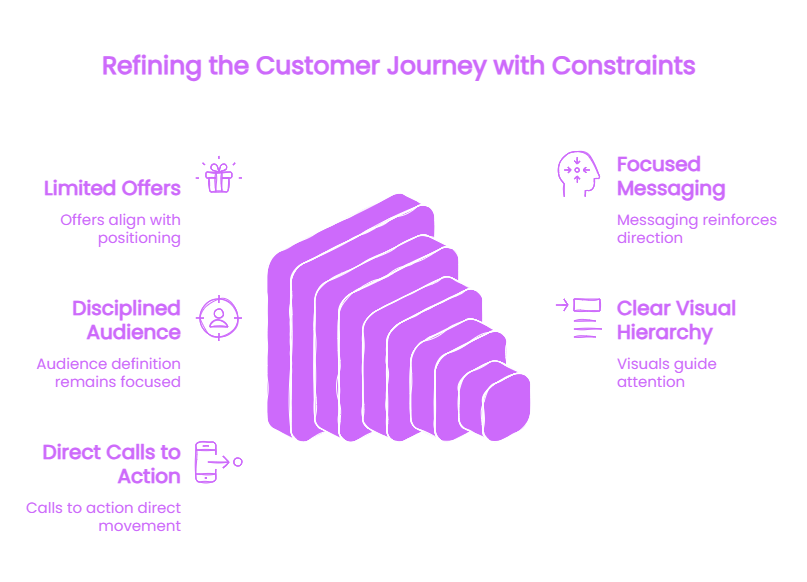
Constraints must be intentionally established across every level of the funnel experience. Offers should be limited to what directly supports the defined positioning and outcome. Messaging should reinforce a focused direction instead of expanding endlessly across multiple angles. Audience definition must remain disciplined so the system knows who it is actually serving. Visual hierarchy should guide attention intentionally without competing focal points. Calls to action should direct movement clearly instead of multiplying options unnecessarily. Constraints preserve coherence by creating structure around the experience.
This creates an environment where clarity becomes easier to sustain consistently. Readers encounter defined movement instead of endless possibility and expansion. Hierarchy strengthens because the system has already determined what deserves emphasis. The funnel becomes easier to trust because direction feels intentional and stable. Every stage supports the same level of refinement and containment operationally. Constraints allow the experience to remain coherent across positioning, pacing, and progression. Premium positioning becomes believable when limitation governs the structure.
Working With the Funnel
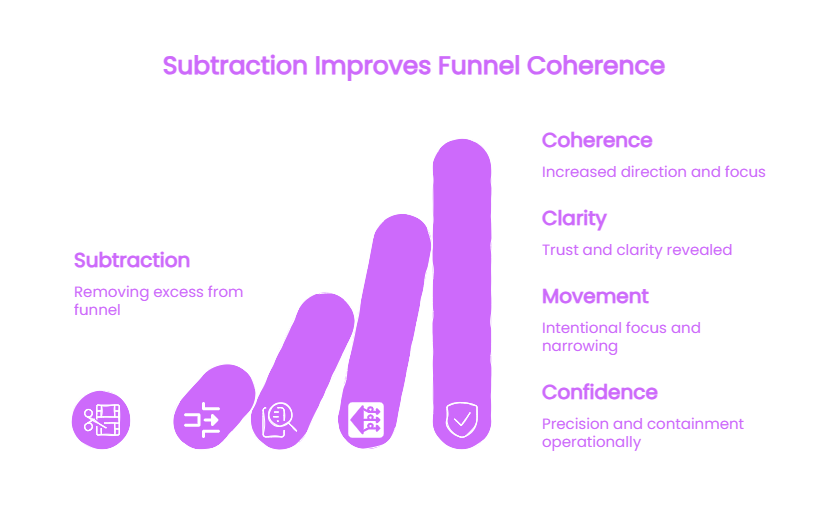
Working with this distortion requires identifying where excess currently exists within the funnel. Competing pathways, overlapping offers, and unnecessary additions should be evaluated carefully. The goal is not to reduce value, but to increase coherence and direction. Messaging should become more focused by removing angles that dilute positioning unnecessarily. Priorities must be clarified so the system communicates a singular direction consistently. Readers should encounter intentional sequencing rather than uncontrolled expansion across the experience. The funnel should guide attention through structure instead of accumulation.
This process often requires subtraction before refinement can emerge clearly. Removing excess reveals whether the system itself is capable of sustaining trust and clarity. Simplifying pathways strengthens hierarchy throughout the experience naturally. Readers become less overwhelmed because unnecessary complexity no longer competes for attention. Movement improves as the funnel narrows focus intentionally. The system begins communicating confidence through precision and containment operationally. Subtraction improves clarity by protecting what matters most.
In Closing
Premium positioning is not created through atmosphere, aesthetics, or exclusivity cues alone. It is established through disciplined structure, intentional limitation, and operational coherence. Funnels weaken when they attempt to appear premium while remaining unrestricted beneath the surface. Readers sense instability when the system refuses to narrow focus or establish hierarchy clearly. Excess competes against refinement by overwhelming the structure continuously. The issue is not ambition within the funnel, but the absence of disciplined containment. Premium experiences rely on constraints to preserve coherence and trust.
Constraints are not limitations on value within a premium system. They are what protect clarity, positioning, pacing, and direction from fragmentation. The funnel becomes easier to trust when unnecessary complexity is intentionally removed. Readers experience refinement through precision instead of accumulation. Confidence becomes visible through what the system chooses not to include. Premium positioning strengthens when structure governs expansion carefully. Constraints define and protect the integrity of the experience.