PayPal vs Stripe: What the Difference Actually Means for Funnels
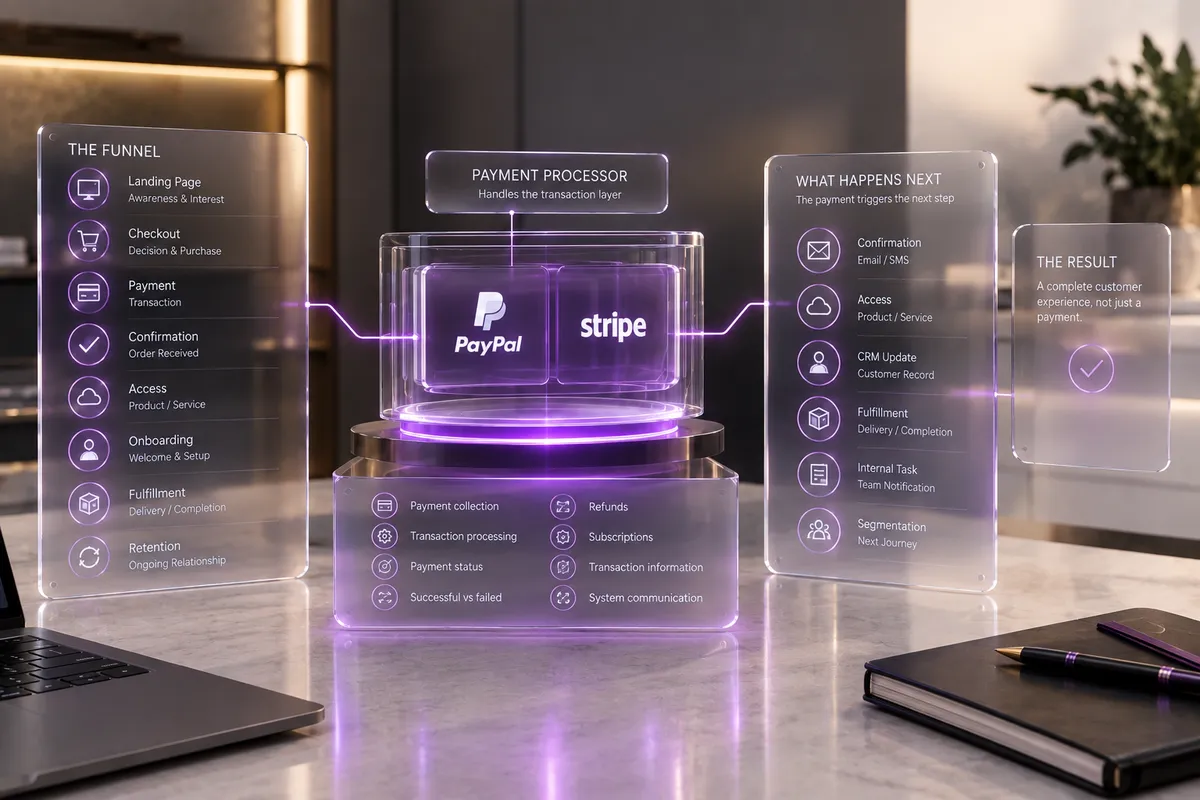
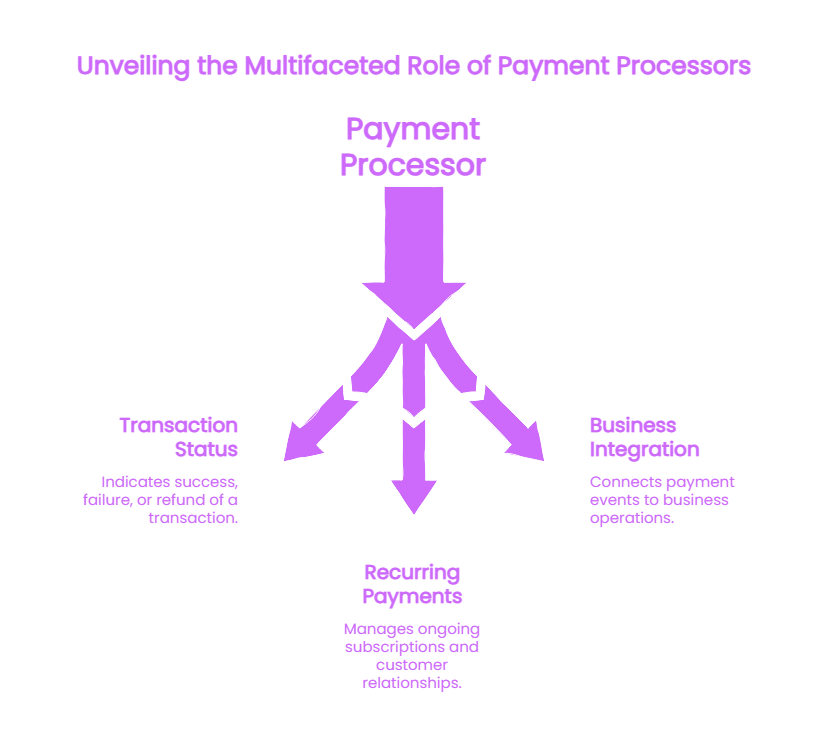
Businesses often treat PayPal and Stripe as interchangeable payment tools. One business uses PayPal because it is familiar, another chooses Stripe because it is already connected to the rest of its technology, and another simply uses whichever processor someone recommended when the business was first set up. From the outside, the difference can appear to be little more than where the customer enters their payment information. But once payment becomes part of a funnel, the payment processor becomes part of a larger chain of events. The transaction does not simply place money into the business; it can also determine what information becomes available, what systems can respond to the transaction, and what happens next in the customer journey. Stripe and PayPal both support online payment experiences, recurring payments, and integrations, but the ways those capabilities are configured and connected can create different conditions for a funnel. The important question is therefore not which platform is universally better, but what the payment system needs to allow the particular business and funnel to accomplish.
The Payment Button Is Not the Whole Payment System
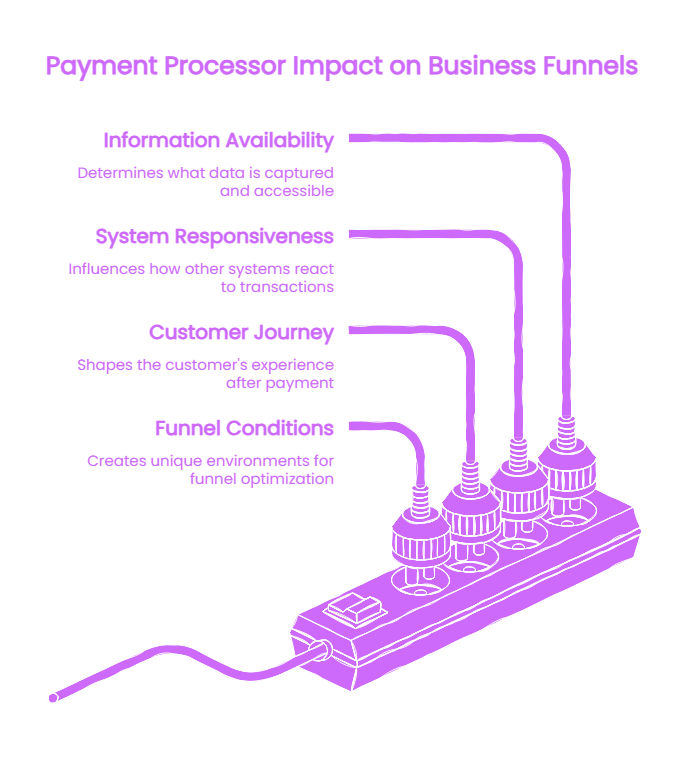
A payment button is only the visible part of a much larger transaction layer. When someone clicks to purchase, the business needs more than a successful charge. It needs to know whether the transaction succeeded, whether it failed, whether the customer is purchasing once or entering a recurring arrangement, and what should happen with that information afterward. Depending on the setup, the payment event may need to communicate with a CRM, email or SMS platform, membership system, calendar, fulfillment process, or internal workflow. Stripe, for example, provides hosted and embedded checkout options, payment links, subscriptions, customer portals, and other payment infrastructure that can participate in broader workflows. PayPal likewise provides checkout integrations and subscription capabilities that can communicate payment and subscription events to other systems.
This distinction matters because the transaction itself is only one event inside the customer's movement through the business. Someone may arrive at a sales page, make a decision, complete payment, receive confirmation, gain access to something, enter an onboarding process, and begin fulfillment. If the payment system is disconnected from those next steps, the funnel can appear successful at the transaction level while failing at the experience level. The customer may have paid but not received the expected information. The business may have received the money but not received the information required to fulfill the purchase. An automation may be waiting for an event that never reaches it. The payment button worked, but the system surrounding the payment did not complete the intended movement.
What a Payment Processor Actually Governs
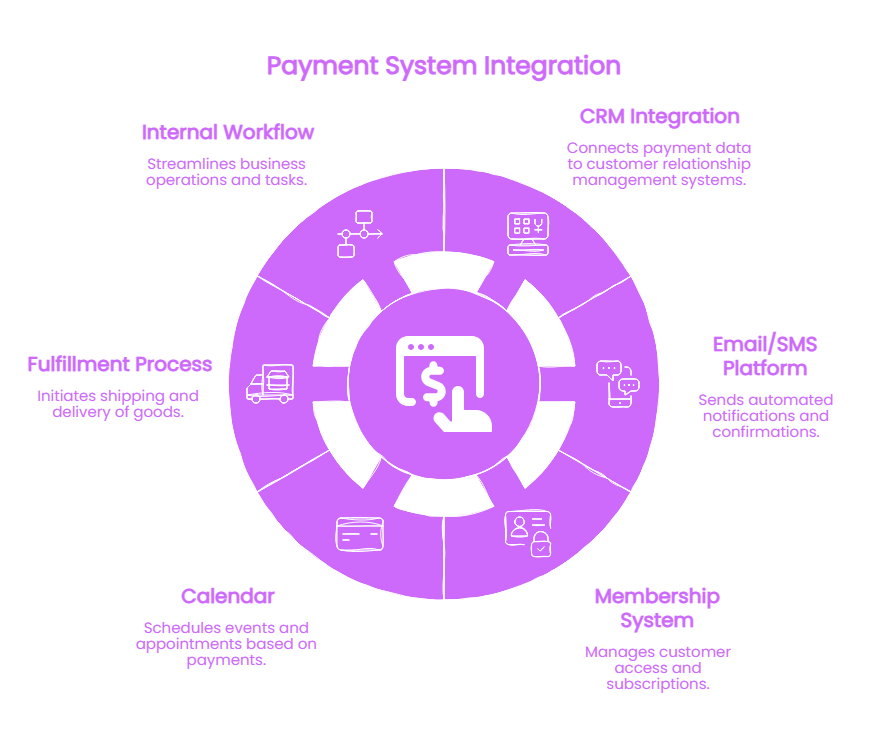
At its most basic level, a payment processor participates in the movement of money from the buyer through the payment infrastructure to the business. But within a digital funnel, the payment layer also produces information about the transaction that other parts of the business may need to use. A successful payment can indicate that an offer has been purchased. A failed payment can indicate that the intended transaction has not been completed. A refund changes the financial status of a previous transaction. A recurring payment creates an ongoing relationship that requires different communication and fulfillment considerations from a one-time purchase. These distinctions become operational information once they are connected to the rest of the business.
Recurring payments make this especially clear. Both Stripe and PayPal support recurring payment and subscription models, but the specific configuration, customer experience, integration requirements, and available capabilities depend on the implementation. Stripe's current Checkout and Billing infrastructure supports subscriptions and customer management, while PayPal provides subscription products and APIs for recurring billing and payment recovery. A business therefore needs to think beyond the question of whether a processor can technically accept recurring payments. It needs to consider how recurring payment status affects access, communication, fulfillment, cancellations, failed-payment handling, and customer records. The processor is carrying the financial event, while the business is responsible for understanding what that event means inside the larger customer journey.
Why PayPal and Stripe Create Different Funnel Conditions
PayPal and Stripe can both support legitimate funnel transactions, but they do not create identical conditions. Their checkout experiences, payment methods, integration approaches, subscription implementations, and ways of connecting transaction events to other systems can differ. Stripe offers several checkout configurations, including hosted checkout, embedded experiences, Payment Links, and more customizable payment interfaces. PayPal provides its own checkout experience and payment methods, including PayPal and other eligible funding options depending on the buyer and configuration. These differences can influence how the payment stage fits into the rest of the funnel.
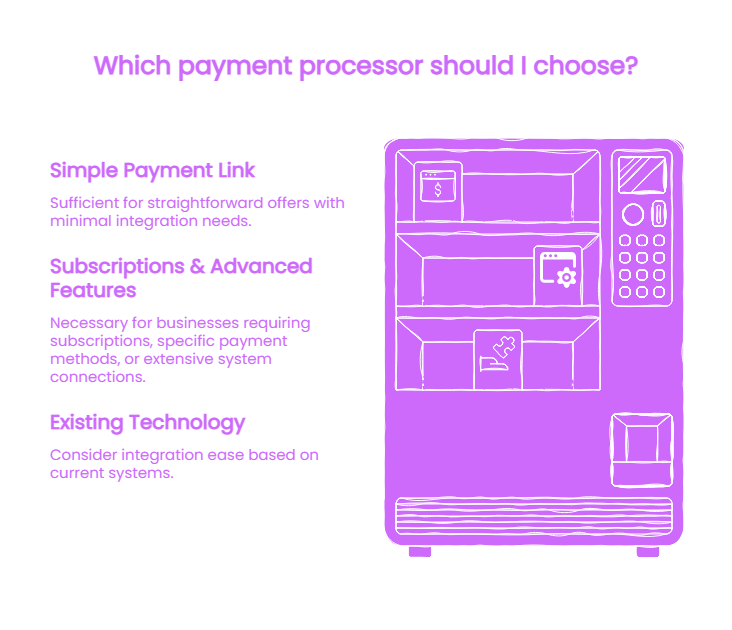
The important distinction is functional rather than preferential. If a business needs a simple payment link for a straightforward offer, one configuration may be sufficient. If the business needs subscriptions, specific payment methods, customer records, automated access, or more extensive connections to other systems, the relevant question becomes which payment infrastructure supports those requirements in the particular environment. A business may also have existing technology that makes one processor easier to integrate than another. The payment processor therefore becomes part of a larger technology decision rather than an isolated preference. Choosing it well requires understanding what the transaction needs to accomplish after the customer clicks the payment button.
Payment Events Become Funnel Events
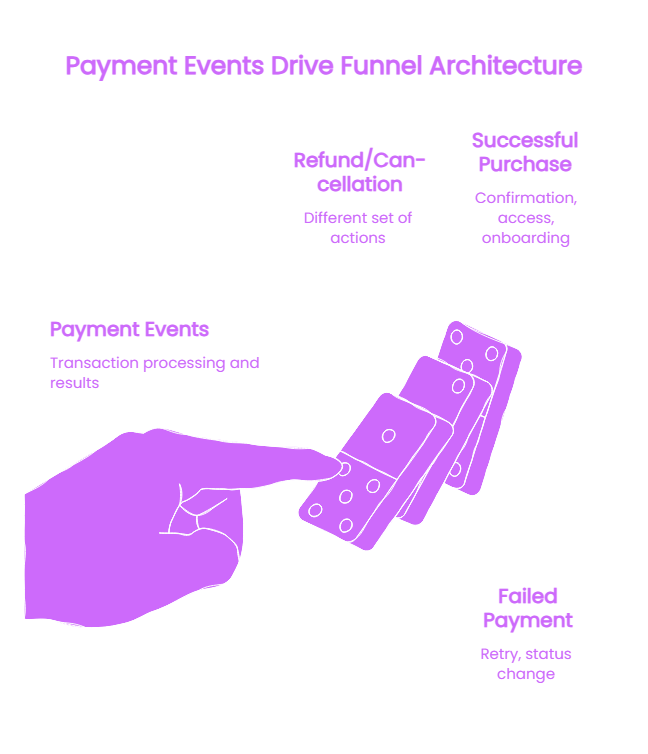
The structural relationship becomes easier to see when we follow a single transaction. Someone reaches the checkout and submits payment. The payment system processes the transaction and produces a result. The business then needs to determine what that result means and what should happen next. A successful purchase might trigger confirmation, access, onboarding, email or SMS communication, a CRM update, a fulfillment notification, or an internal task. A failed payment might require a different communication path, an opportunity to retry, or a status change that prevents access from being granted prematurely. A refund or cancellation may require another set of actions altogether.
This is where payment infrastructure becomes part of funnel architecture. The funnel does not simply move someone toward the payment page; it has to account for the consequences of the payment event. A transaction can therefore become a trigger for other systems when the appropriate connections have been established. PayPal's documentation, for example, describes using real time payment or subscription updates to synchronize billing events with systems responsible for access, fulfillment, and customer communication. Stripe likewise provides payment infrastructure that can support broader workflows through its checkout, billing, and API capabilities. The quality of the funnel depends partly on whether those downstream relationships have been intentionally established.
The Customer Experience After Payment
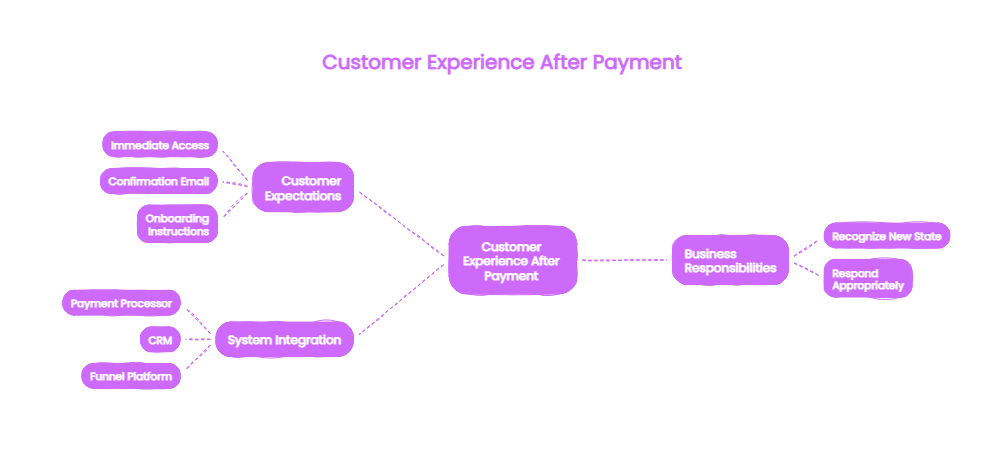
Payment is often treated as the finish line because it is the moment revenue is recorded. From the customer's perspective, however, payment usually represents the beginning of another stage. They may expect immediate access to a product, a confirmation email, an appointment link, onboarding instructions, a receipt, a download, or information about what happens next. The expectation depends on the offer, but the principle remains the same: a completed payment creates a new customer state. The business needs to recognize that state and respond appropriately.
This is why a funnel can technically convert while still producing a poor customer experience. Imagine that a customer completes payment successfully but receives no confirmation. Perhaps the payment went through, but the access automation did not. Perhaps the customer receives an email intended for someone who has not purchased because the systems were not properly synchronized. Perhaps the business receives the payment notification but still has to manually determine what the customer purchased and what should happen next. None of these situations necessarily means the payment processor failed. The problem may be the relationship between the processor and the systems surrounding it.
The customer does not experience those systems separately. They experience one business. They do not necessarily know whether an email came from the payment processor, CRM, funnel platform, or another application. They simply know whether they paid and what happened afterward. That makes the payment layer part of the overall experience even when it remains invisible to the customer. The transaction should therefore be evaluated not only by whether money changed hands, but by whether the intended next state of the customer was established correctly.
When the Funnel Converts but the System Breaks
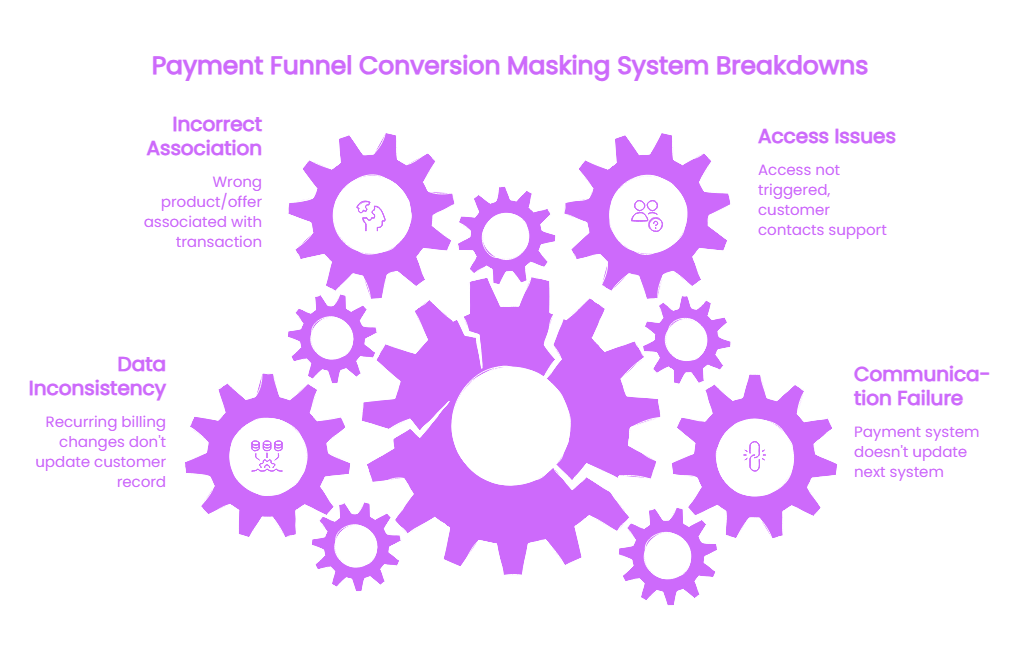
A completed transaction can create a misleading sense of success. The business sees the payment recorded and assumes the funnel worked. But conversion is only one part of the movement the funnel was designed to create. If payment does not communicate correctly with the next system, the business may need to manually intervene. If access is not triggered, the customer may contact support. If the wrong product or offer is associated with the transaction, fulfillment may begin from incorrect information. If recurring billing changes but the customer record does not update, the business can end up with conflicting records.
These problems become increasingly significant as transaction volume grows. Manual intervention that seems manageable when there are a few purchases can become a substantial operational burden when the same exception occurs dozens or hundreds of times. The issue is not necessarily that the business chose the wrong processor. It may have chosen a suitable processor but failed to design the relationships around the transaction. Payment infrastructure has to be considered in context with the offer, funnel, customer journey, fulfillment process, and technology stack. The processor provides capabilities; the business still has to establish how those capabilities participate in its operating environment.
Follow the Money
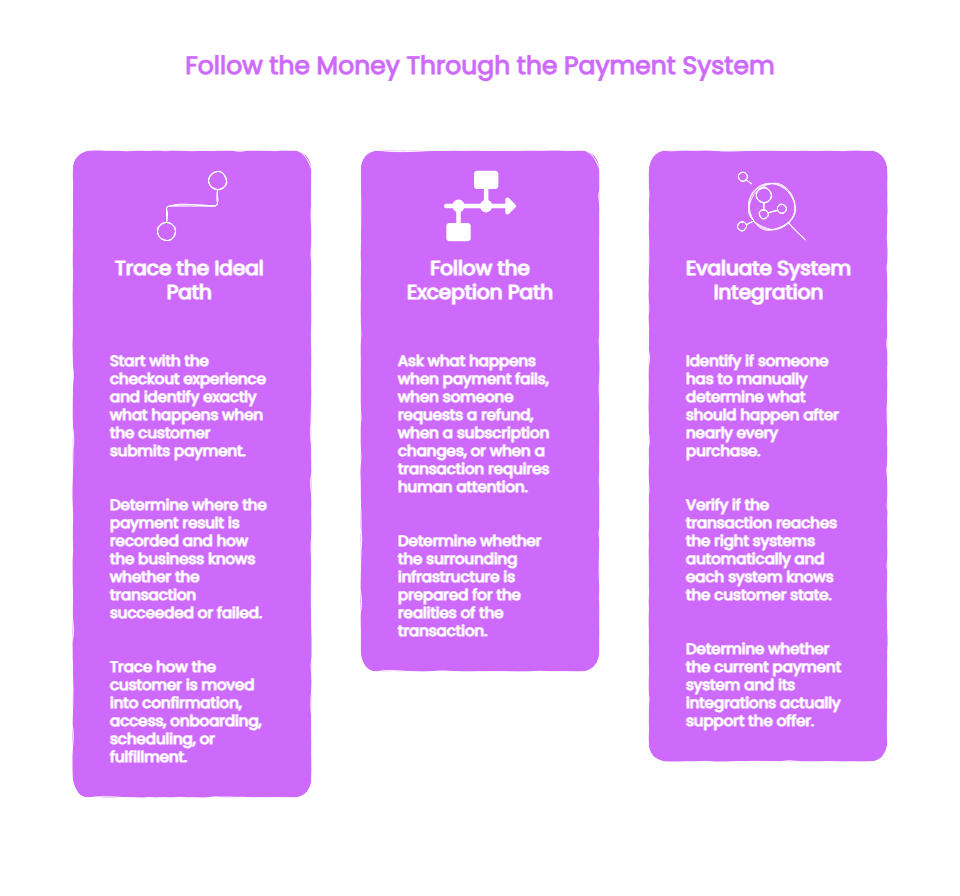
Choose one offer that currently moves through a payment system and follow the transaction from beginning to end. Start with the checkout experience and identify exactly what happens when the customer submits payment. Determine where the payment result is recorded, how the business knows whether the transaction succeeded or failed, and what information becomes available after the transaction. Then trace what happens to that information. Identify which system receives it, what action should occur, and how the customer is moved into confirmation, access, onboarding, scheduling, or fulfillment.
Then follow the exceptions rather than only the ideal path. Ask what happens when payment fails, when someone requests a refund, when a subscription changes, or when a transaction requires human attention. The ideal path tells you how the funnel is supposed to work. The exception path tells you whether the surrounding infrastructure is prepared for the realities of the transaction. If you discover that someone has to manually determine what should happen after nearly every purchase, that is useful information. If the transaction reaches the right systems automatically and each system knows what state the customer has entered, the payment layer is functioning as part of the larger funnel rather than as an isolated checkout mechanism.
A useful sequence to trace is:
Checkout - Payment - Confirmation - Access - Communication - Fulfillment
The purpose is not to make every stage fully automated. The purpose is to understand where the transaction goes and what the business expects to happen because it occurred. Once that movement is visible, you can determine whether the current payment system and its integrations actually support the offer.
Choose the Payment System Around the Business
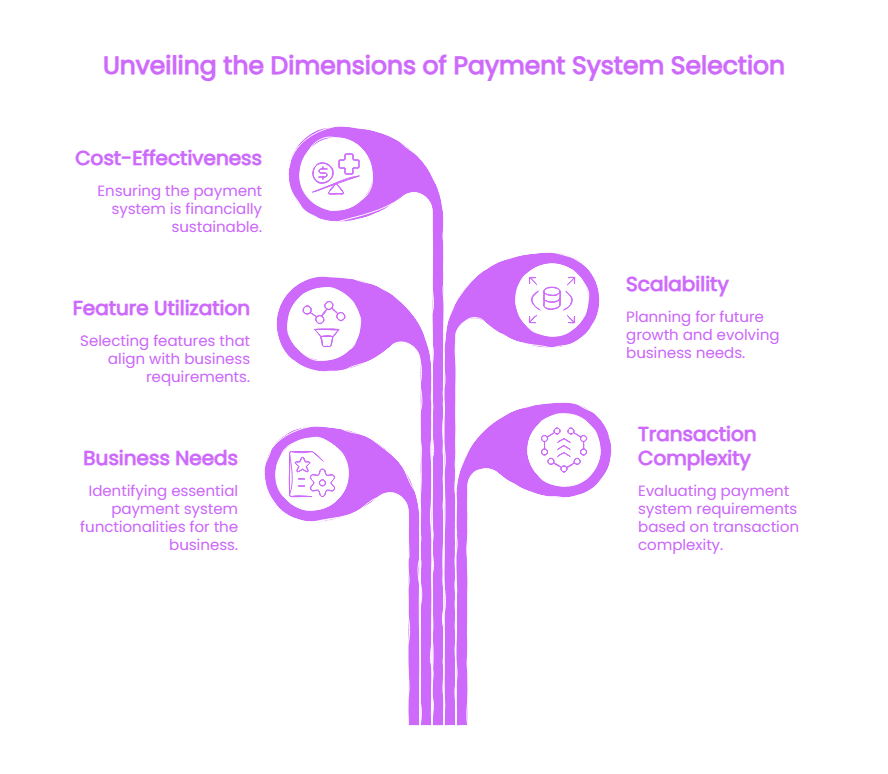
The right payment system cannot be selected solely by asking which platform has more features or which one another business uses. The relevant question is what the business needs the payment layer to accomplish. A straightforward offer with a simple transaction may require very little infrastructure around payment. A subscription, membership, high-touch service, event, or multi-stage customer journey may require considerably more coordination between payment status, access, communication, records, and fulfillment. The more responsibilities attached to the transaction, the more carefully the payment system needs to be evaluated as part of the whole environment.
This also means that a business does not need to use every capability a payment platform offers. More features do not automatically create a better funnel. The goal is to establish the smallest reliable payment structure that can carry the actual transaction and the responsibilities that follow it. A business can begin with a simple payment configuration and expand its infrastructure when the business model requires additional capability. It can also discover that a different processor or configuration better supports a new offer or operational model. The decision should follow the requirements of the business rather than the perceived prestige of the tool.
Closing
PayPal and Stripe are not simply buttons a business places at the end of a funnel. They are payment infrastructure that participates in a larger chain of transaction, information, communication, and fulfillment. Their capabilities and implementation options can create different conditions for the customer journey, which means payment needs to be considered when the funnel is being designed rather than added after everything else has been decided. A payment system can collect money successfully while the larger customer journey remains disconnected. Conversely, when the transaction is properly connected to the systems that need to respond to it, payment becomes a reliable transition point within the funnel.
The goal is not to choose PayPal because it is familiar or Stripe because it is popular. The goal is to understand what the offer requires at the transaction layer and choose an environment capable of supporting that reality. Follow the money, follow the information, and follow what happens next. That is how you determine whether your payment system is actually supporting your funnel. The payment button may be where the customer clicks, but the payment event is where the business has to know what happens next.
Following the money is only useful if you have somewhere to fix what you find. Plug Club is where you connect payment, access, communication, and fulfillment into one working system, instead of finding the break and having nowhere to take it. Join Plug Club