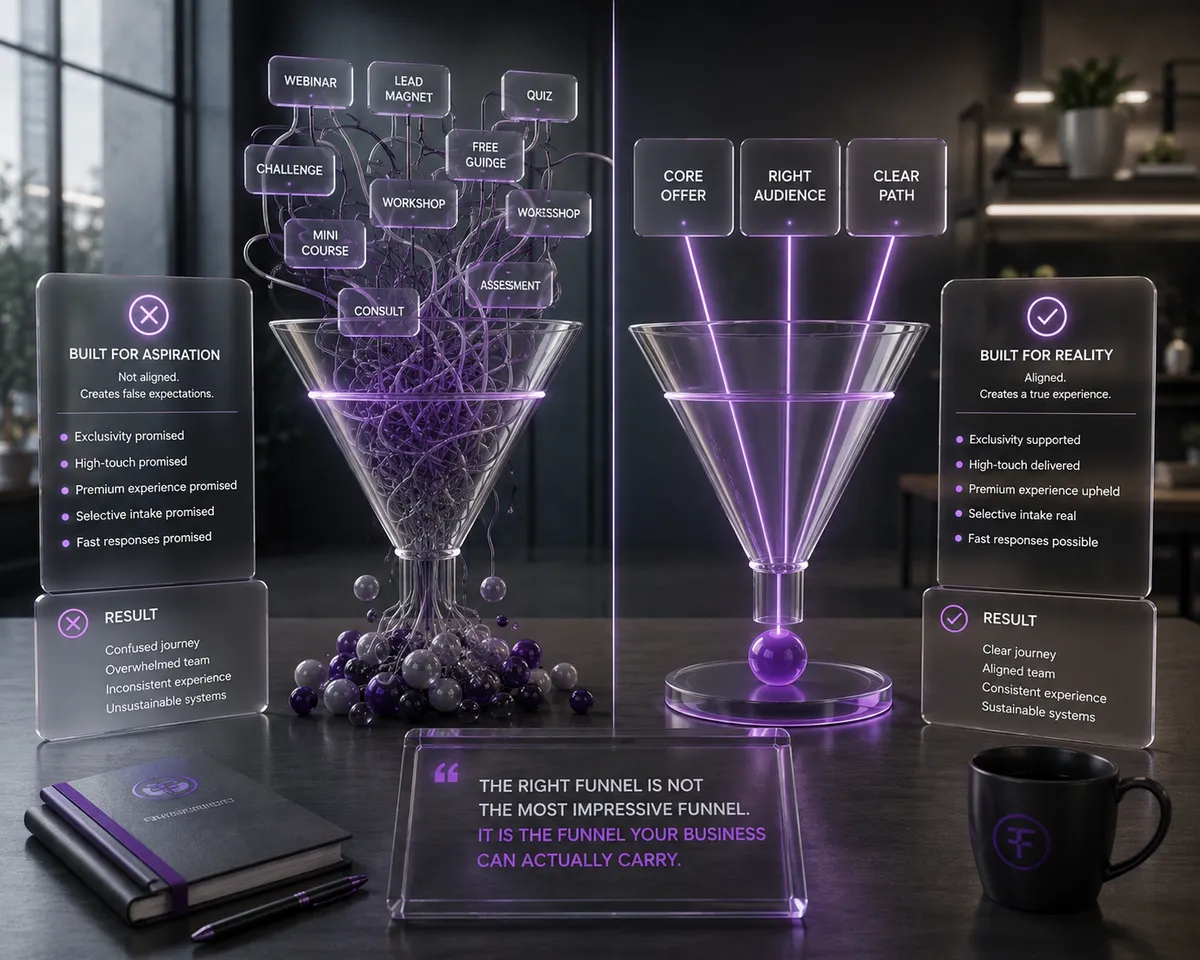
Not Every Business Should Have a Luxury Funnel
The attraction of a luxury funnel is easy to understand. The design can feel refined, the language can sound elevated, and the structure can appear deliberate and sophisticated. A carefully paced customer journey can create the impression of selectivity, authority, and exceptional service before a prospective client ever speaks with the business. For a business owner building toward a more premium position, that experience can feel like the natural next step. The problem begins when the funnel is selected because of the business the owner wants to appear to be rather than the business the funnel will actually have to represent. A funnel can create a beautiful impression while simultaneously establishing expectations the business has not yet developed the capacity to fulfill. The important question is therefore not whether a luxury funnel looks right for the brand, but whether the business is prepared to carry what that funnel communicates.
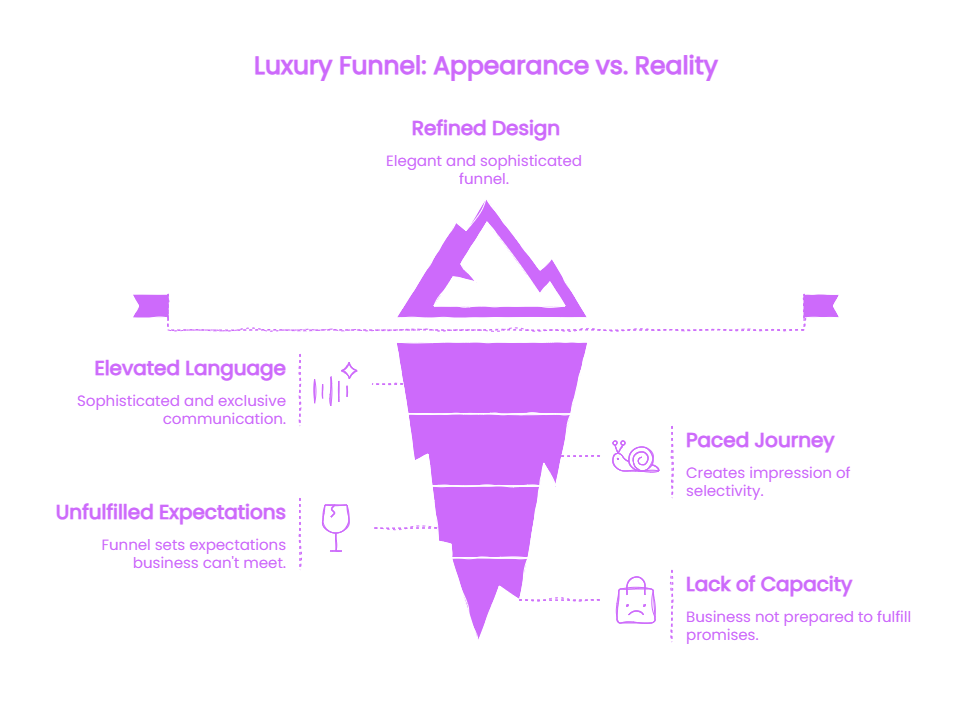
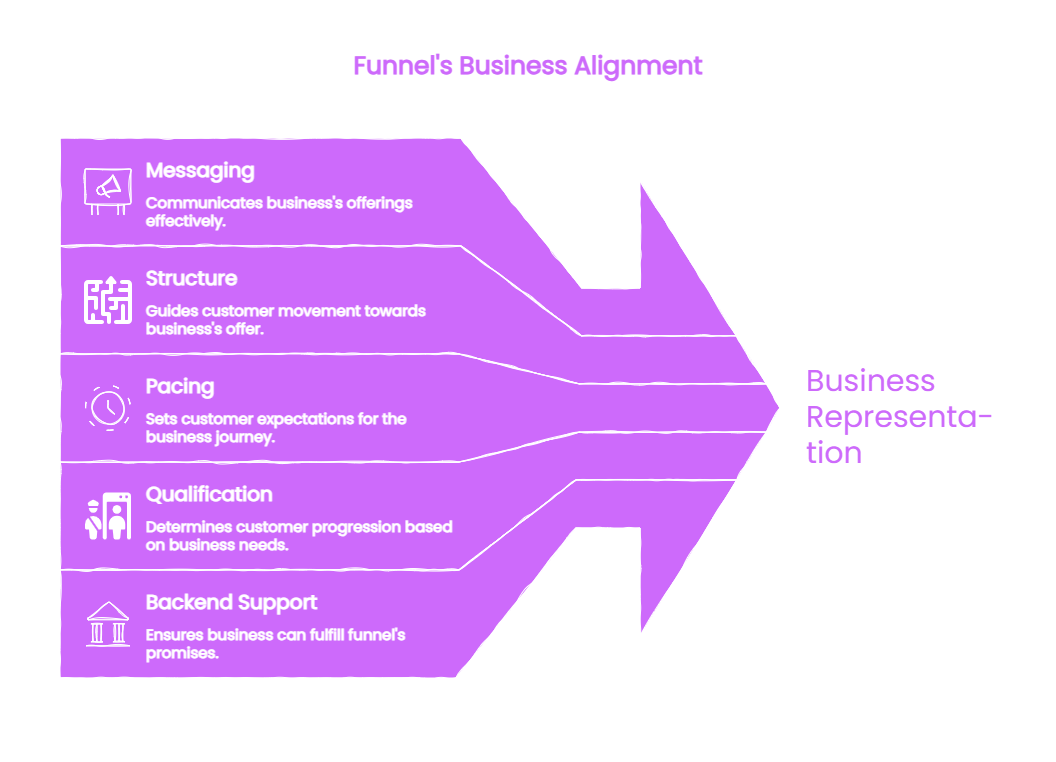
A Funnel Carries the Business It Represents
A funnel does not operate independently of the business behind it. Its messaging communicates what the business offers, its structure guides how people move toward that offer, its pacing establishes expectations, and its qualification process determines who progresses and under what conditions. The communication that follows conversion continues the experience established by the funnel, while the backend determines whether the promised journey can actually be supported. Every part of the funnel therefore carries information about the business, whether that information was intentionally established or simply built into the experience through design choices. Choosing a funnel architecture is consequently also choosing how the business will be represented throughout a specific customer journey. The funnel becomes an expression of the business's current offer, operating model, capacity, and level of readiness.
This is why selecting a funnel based primarily on appearance creates risk before the build even begins. A business may admire the spacious design of a luxury application funnel, the deliberate pacing of a high touch sales journey, or the exclusivity communicated by a selective intake process. Yet those characteristics only create a coherent experience when they correspond to something real within the business. If the offer requires a different decision process, if the audience needs a different level of education, or if the backend requires a different form of support, the attractive architecture may introduce friction rather than refinement. The funnel needs to fit the movement that actually needs to occur. When the architecture follows the business, design becomes an expression of alignment rather than a substitute for it.
What Makes a Funnel “Luxury”?
A luxury-oriented funnel is not defined by a particular color palette, typography, price point, or minimalist visual style. Its character comes from the experience it is designed to create and the level of consideration built into the journey. The funnel may introduce greater selectivity because the offer requires a closer assessment of fit. It may establish stronger authority because the prospective client is being asked to make a significant decision. It may use deliberate pacing because the decision deserves space for consideration rather than immediate pressure. It may provide more context, more thoughtful communication, or more intentional transitions because the business is promising an experience in which details matter. These characteristics arise from the nature of the offer and the experience surrounding it, not from a visual formula.
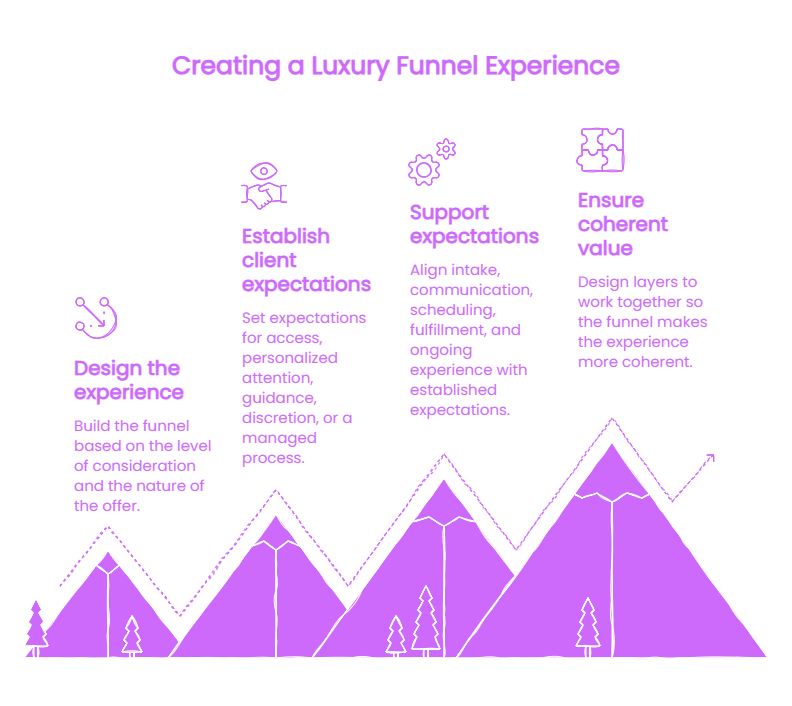
A luxury funnel can therefore carry a higher level of expectation than a more transactional funnel. The prospective client may expect greater access, more personalized attention, stronger guidance, greater discretion, or a more carefully managed process. Those expectations become part of the customer journey as soon as the funnel establishes them. The business then has to support those expectations through its intake, communication, scheduling, fulfillment, and ongoing client experience. Luxury oriented architecture creates value when the business has intentionally designed those layers to work together. The funnel should make the experience more coherent, not create an experience the rest of the business has to struggle to imitate.
Why the Business Has to Be Ready to Carry It
A funnel can establish an expectation faster than a business can establish the infrastructure required to fulfill it. This creates a particularly important governance issue for businesses moving toward a premium or luxury position. If the funnel promises exclusivity while intake remains indiscriminate, the experience contains a structural contradiction. If the funnel communicates personalized service while fulfillment is standardized beyond what that promise reasonably suggests, the client encounters another contradiction. If the funnel creates a high touch expectation while communication and support depend on inconsistent manual processes, the business has established a level of experience its backend may not be able to sustain. The problem is not the ambition behind the funnel. The problem is the gap between the expectation being created and the reality available to carry it.
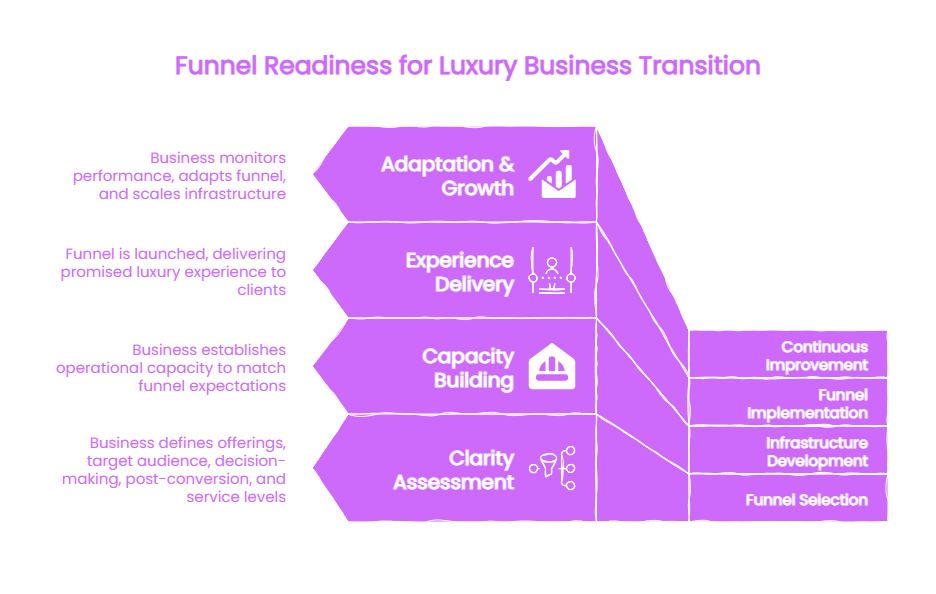
This is why readiness belongs in funnel selection. Before choosing an architecture, the business needs sufficient clarity about what it offers, who it serves, how people make decisions, what happens after conversion, and what level of service it can consistently provide. A funnel can amplify what is already established, but it cannot create operational capacity simply by communicating that the capacity exists. The business may absolutely be capable of developing that capacity, and the funnel can become part of that development when the transition is intentional. The key is knowing which elements already exist, which are being deliberately established, and which remain future state design. That distinction allows the business to grow toward a position without creating an experience that currently depends on infrastructure it does not yet possess.
The Problem With Building for the Business You Want to Be
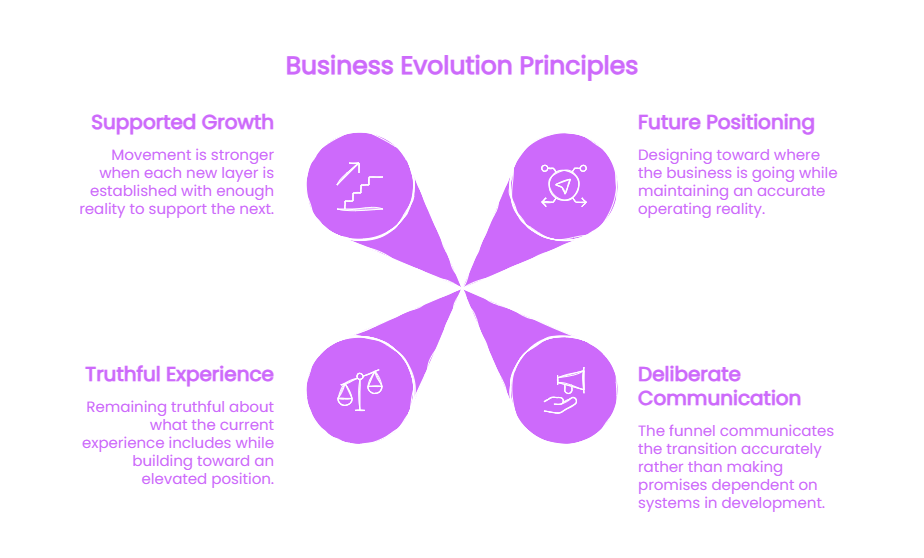
Businesses evolve, and a future position can legitimately influence present decisions. There is nothing inherently wrong with designing toward where the business is going. The difficulty begins when future positioning is presented as though it already describes the business's established operating reality. A business may be developing a more selective offer, strengthening its authority, refining its client experience, or building the backend required to support higher touch service. Those developments can appropriately inform the direction of a new funnel. What matters is that the funnel communicates the transition deliberately and accurately rather than making promises that depend on systems still in development.
This distinction protects both the business and the client. A business can say that an offer is becoming more selective, establish an intentional application process, and build the supporting infrastructure required to carry that experience. It can create a clear path toward a more elevated position while remaining truthful about what the current experience includes. That is fundamentally different from borrowing the appearance and language of a luxury business while leaving the underlying operating model unchanged. Growth requires movement, but movement is stronger when each new layer is established with enough reality behind it to support the next layer. The funnel should therefore participate in the business's evolution without asking the customer to experience a version of the business that exists primarily in aspiration.
Compare the Funnel to the Business
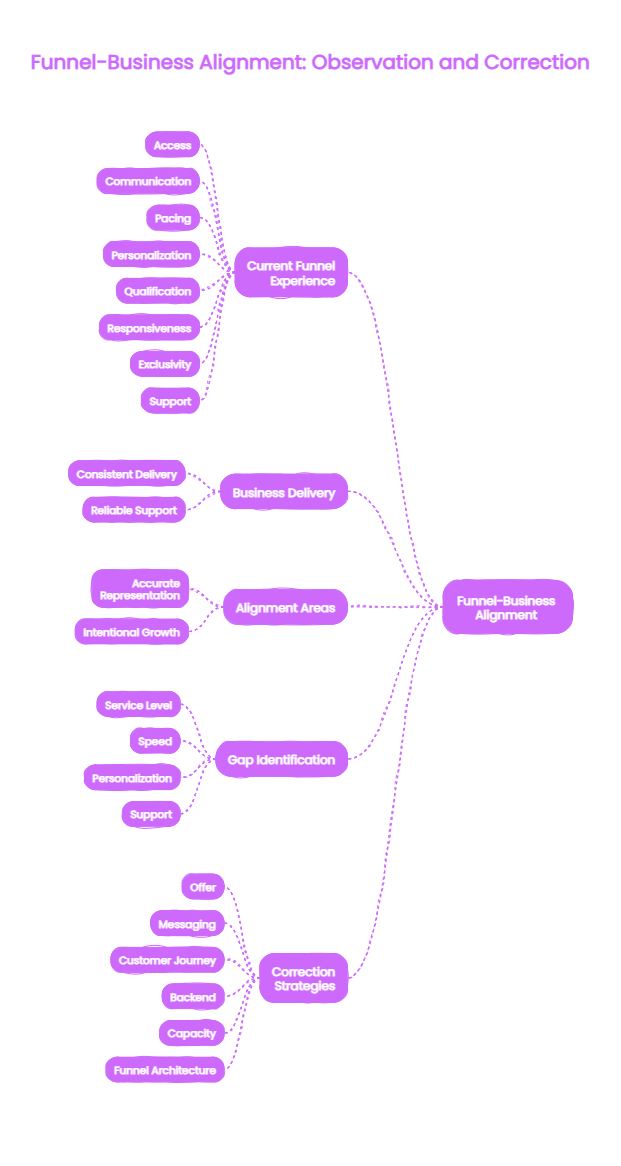
You can examine this alignment without immediately rebuilding your funnel. Begin with the actual experience your current funnel promises from the first interaction through the point at which the client receives the promised result. Pay attention to the expectations established around access, communication, pacing, personalization, qualification, responsiveness, exclusivity, and support. Then compare those expectations with what the business can consistently deliver today. Look for the places where the experience being communicated and the experience being delivered already agree. Then look carefully at the places where the funnel implies a level of service, access, speed, personalization, or support that the business cannot yet reliably provide.
The purpose of this review is observation before correction. You are identifying where the funnel accurately represents the business, where it represents an intentional direction of growth, and where the architecture may be creating expectations without sufficient support behind them. If you find a gap, resist the instinct to immediately redesign everything around it. First determine what the gap actually represents and whether the required change belongs in the offer, messaging, customer journey, backend, capacity, or funnel architecture itself. That distinction gives you a more useful starting point than simply deciding that the funnel needs to look more premium. Alignment begins when the business can see clearly what it has established, what it is developing, and what its current structure can genuinely carry.
Closing
Funnel selection is a business decision because a funnel becomes part of the way the business presents, guides, qualifies, communicates with, and ultimately serves its customers. The architecture carries the assumptions built into the offer and establishes expectations that continue beyond the point of conversion. A luxury funnel therefore belongs where the business has the corresponding offer, positioning, customer journey, capacity, and supporting experience required to carry it. Another business may require a simpler architecture because its offer calls for a more direct or accessible path. Neither structure is inherently more sophisticated. The appropriate structure is the one that accurately supports the business and the movement it needs to govern.
The right funnel is not the most impressive funnel. It is the funnel the business is structurally prepared to carry. When the architecture fits the offer, the customer journey, the expectations, and the operational reality behind them, the funnel can strengthen the business rather than compensate for what has not yet been established. That is where alignment begins: with a clear understanding of what the business is, what it can carry, and what the customer actually needs to experience next.
The right funnel isn't the most impressive one it's the one your business is structurally prepared to carry. Plug Club exists to help you build that capacity in the right order: the offer, the funnel, the follow up, the backend so your architecture matches your operating reality instead of outrunning it. Join Plug Club