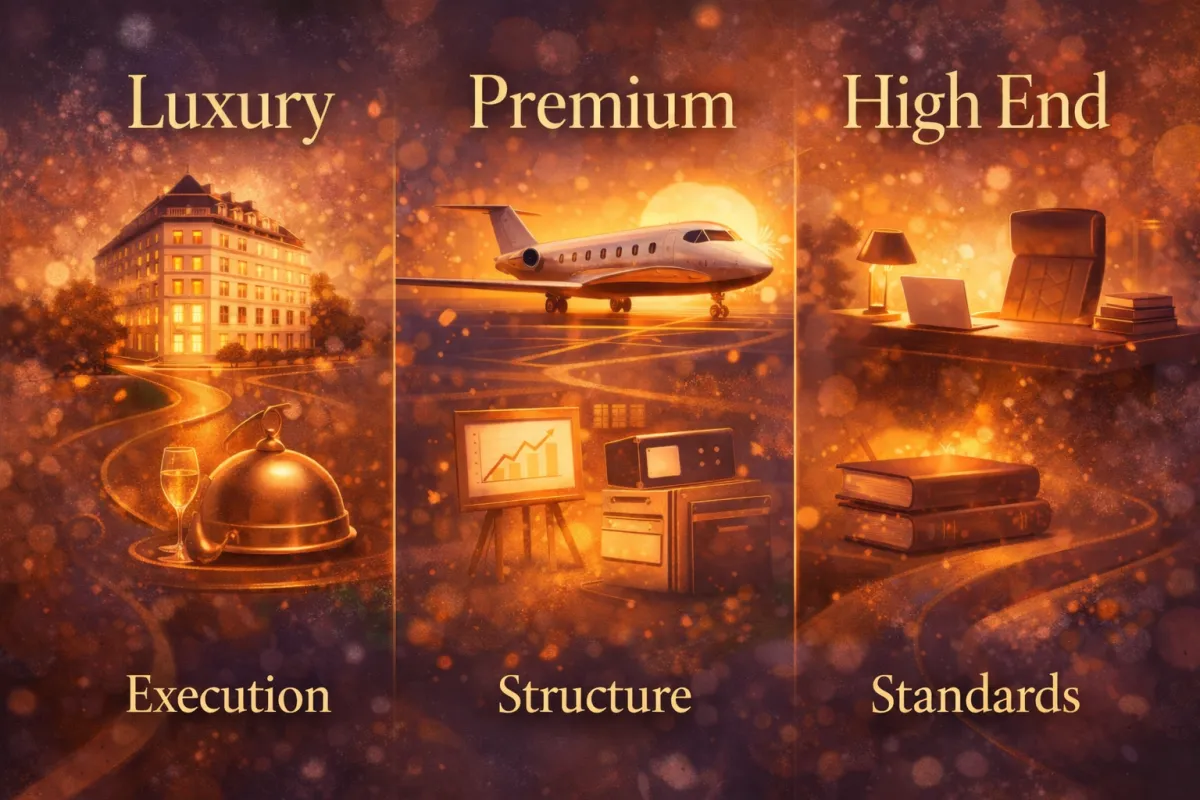
Luxury, Premium, and High End Are Classifications - Not Marketing Styles
There are words that sound powerful when spoken.
Luxury.
Premium.
High end.
They appear often in websites, brand decks, and conversations about growth. While they’re familiar, they’re also frequently misunderstood. Not because people are careless, but because these words are usually treated as presentation choices instead of what they truly are.
These are not labels you apply. They are classifications that emerge. Once that distinction is clear, many things begin to make sense including why certain funnels strain under expectations they were never designed to hold.

What These Words Actually Do
Luxury, premium, and high end are not descriptors of taste. They are descriptors of structure, standards, and execution. They name the result of how a business operates, not the ambition of how it wants to be perceived.
When used accurately, they help set expectations
For clients
For systems
For delivery
For experience
When used loosely, they create confusion especially inside funnels, where clarity matters most.

Why These Terms Get Misused
These words are often encountered visually first.
A certain look.
A certain tone.
A certain mood.
From there, it’s easy to assume the classification comes from the aesthetic. But aesthetics are presentation, not substance. They can signal intention. They cannot replace structure. When a business adopts the language of luxury, premium, or high end without the operational reality to support it, the disconnect shows up quickly. Not always in branding, but in friction
misaligned inquiries
confusion around pricing
clients arriving with expectations that don’t match delivery
funnels working harder than they should
This isn’t failure. It’s misclassification.

What Aesthetic Actually Is
Aesthetics are how something is expressed.
Color.
Design.
Voice.
Visual cohesion.
It matters but it is not determinative. Aesthetics communicate how something wants to be experienced, not whether it can hold that experience consistently. Classification, on the other hand, is determined by what the business can reliably sustain.

How These Classifications Are Formed
Luxury, premium, and high-end emerge from different operational realities. They are not tiers of worth, they are different structures of value.
Premium
Premium businesses offer:
elevated quality
thoughtful experience
strong delivery relative to cost
They operate with:
clear systems
reliable outcomes
intentional positioning
Premium is about consistency with care.

High End
High end businesses offer:
depth of expertise
Precision
fewer compromises
They operate with:
tighter boundaries
higher standards
more selective engagement
High end is about excellence with restraint.

Luxury
Luxury businesses offer:
exceptional containment
high discernment
minimal friction
They operate with
deep structural support
refined pacing
uncompromising standards across every layer
Luxury is about effortlessness made possible by structure.

None of these can be fabricated. Each one is revealed through how a business actually functions.

What Each Classification Requires Operationally
This is where clarity protects everyone. Each classification places different demands on
Systems
Communication
Client readiness
Internal capacity
When a business claims a level, its operations cannot yet support, funnels are forced to compensate through urgency, persuasion, or explanation. That compensation is what feels heavy.

Why Forcing the Label Breaks Funnels
Funnels are translators. They carry meaning from business to buyer. When the classification is unclear or inflated, funnels inherit the confusion
they overpromise
they attract misaligned inquiries
they require repeated clarification
they strain trust instead of building it
This isn’t because funnels are ineffective. It’s because they are being asked to hold an identity the business hasn’t fully embodied yet.

How Clarity Creates Confidence (Without Hype)
When a business names itself accurately
funnels relax
conversations shorten
pricing feels steadier
clients arrive more prepared
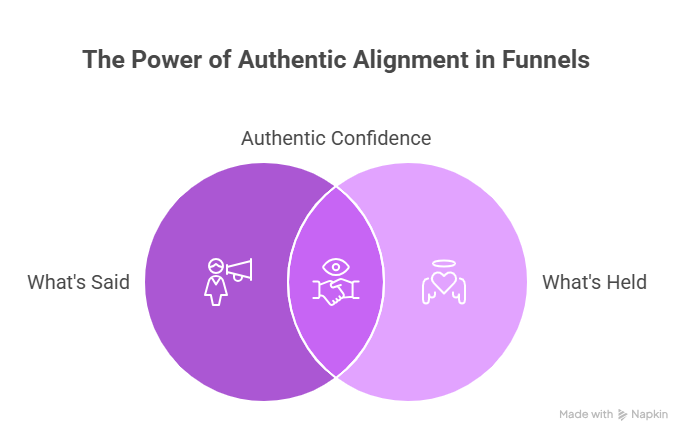
Confidence doesn’t come from stronger claims. It comes from alignment between what’s said and what’s held. Funnels built from that place don’t persuade. They orient.
In Closing
Luxury, premium, and high-end are not goals to reach for. They are truths to recognize.
When classification is clear:
value is understood
expectations are shared
systems work as intended
This clarity doesn’t limit a business. It stabilizes it. And from that stability, growth becomes sustainable not strained.
A Next Step
This clarity is not theoretical, it’s how Fearlyss Funnels approaches every build. If you want a funnel that carries the right expectations, attracts aligned clients, and works without strain, Fearlyss Funnels is designed for that exact purpose.
Start Your Funnel Build with Fearlyss Funnels.