Luxury, Premium, and High End Are Not Aesthetics, Here's the Difference
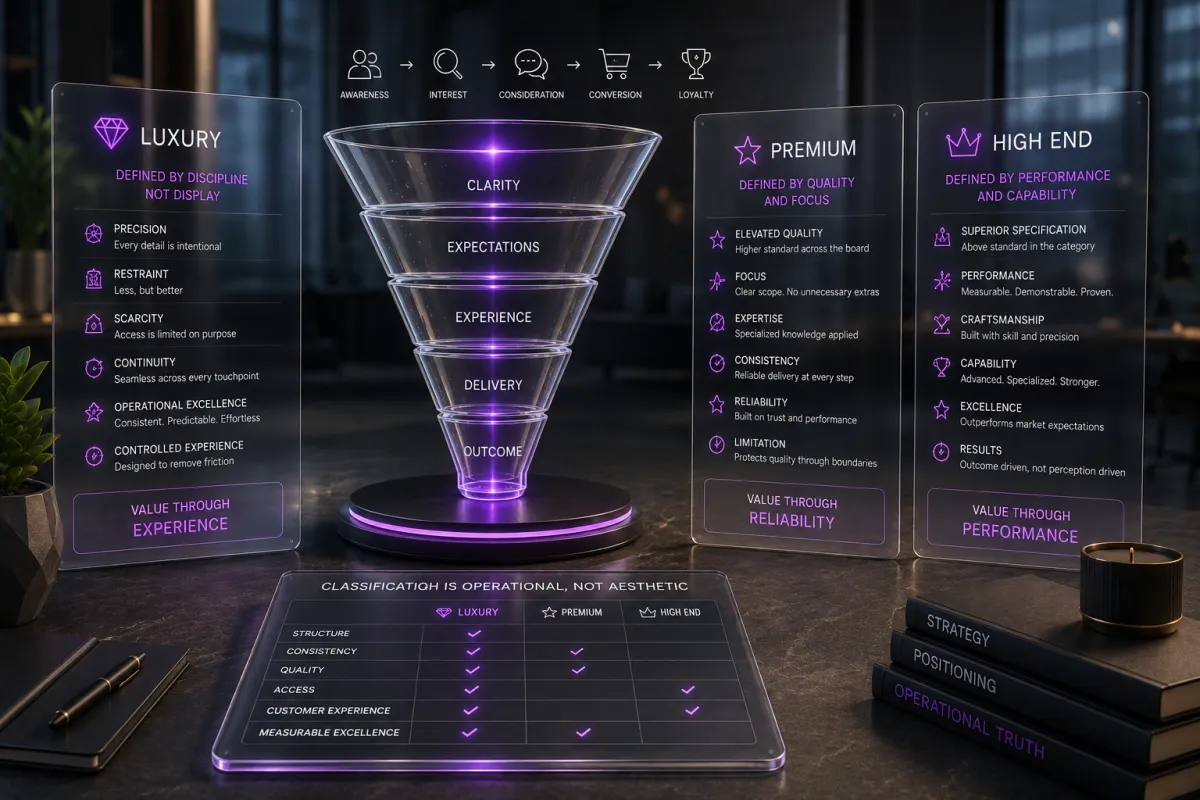
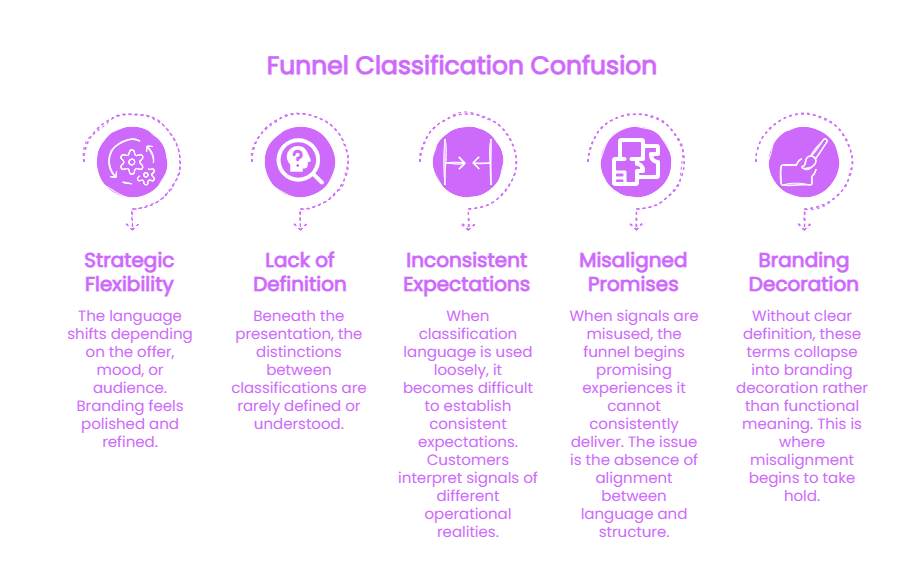
A growing number of funnels use the terms luxury, premium, and high end as if they describe the same thing. The language shifts depending on the offer, the mood, or the audience being targeted. One moment a business calls itself premium, the next moment it positions itself as luxury, and in another moment, it reframes the same offer as high end. On the surface, this appears strategic and flexible. The branding often feels polished, visually elevated, and intentionally refined. Yet beneath that presentation, the distinctions between these classifications are rarely defined or understood. The result is a funnel that communicates sophistication without structural clarity. These terms are not interchangeable aesthetics, they are operational classifications.
This confusion creates instability in how offers are positioned and experienced. When classification language is used loosely, it becomes difficult to establish consistent expectations. Customers interpret luxury, premium, and high end as signals of different operational realities. When those signals are misused, the funnel begins promising experiences it cannot consistently deliver. The issue is not the use of elevated language, but the absence of alignment between language and structure. Without clear definition, these terms collapse into branding decoration rather than functional meaning. This is where misalignment begins to take hold across the funnel.
Why These Terms Are Frequently Confused
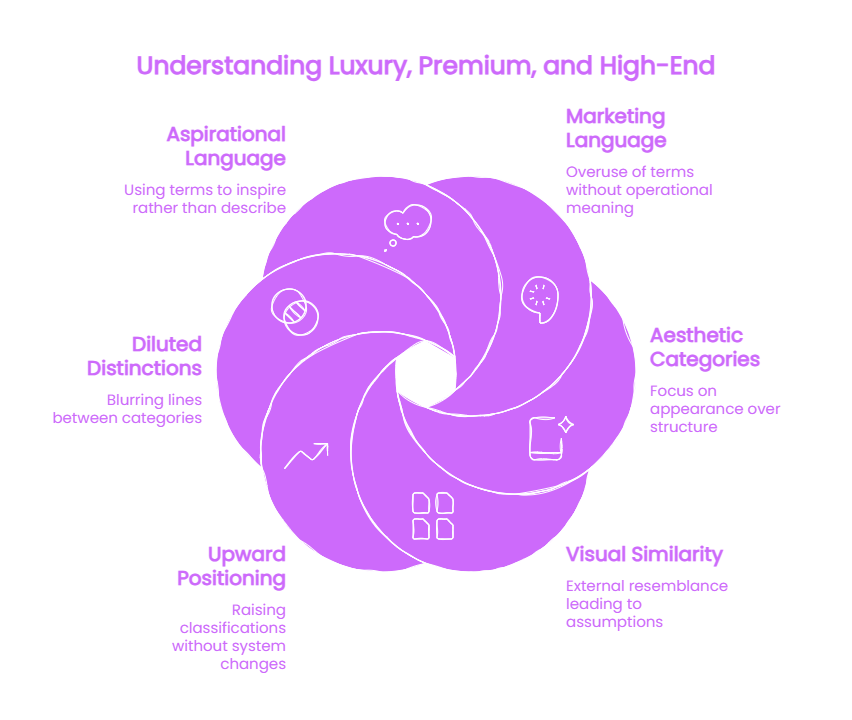
Luxury, premium, and high end are frequently confused because marketing language has stripped them of their operational meaning. Over time, they have been reduced into aesthetic categories rather than structural definitions. Businesses begin using them to signal positioning without understanding what actually produces that positioning. Visual similarity reinforces the confusion because all three can appear polished or refined from the outside. This creates the assumption that they are interchangeable variations of the same idea. In reality, they describe fundamentally different systems of operation and delivery. The confusion persists because appearance is easier to replicate than structure.
Another source of confusion is the pressure to position upward within competitive markets. Businesses often adopt higher classifications to increase perceived value without adjusting underlying systems. This creates a disconnect between what is communicated and what is operationally supported. As more brands adopt this approach, the distinctions between categories become further diluted. Language becomes aspirational rather than descriptive. Funnels then inherit this ambiguity and continue reinforcing it across messaging and structure. Over time, classification loses meaning and becomes purely stylistic.
What Luxury Actually Requires
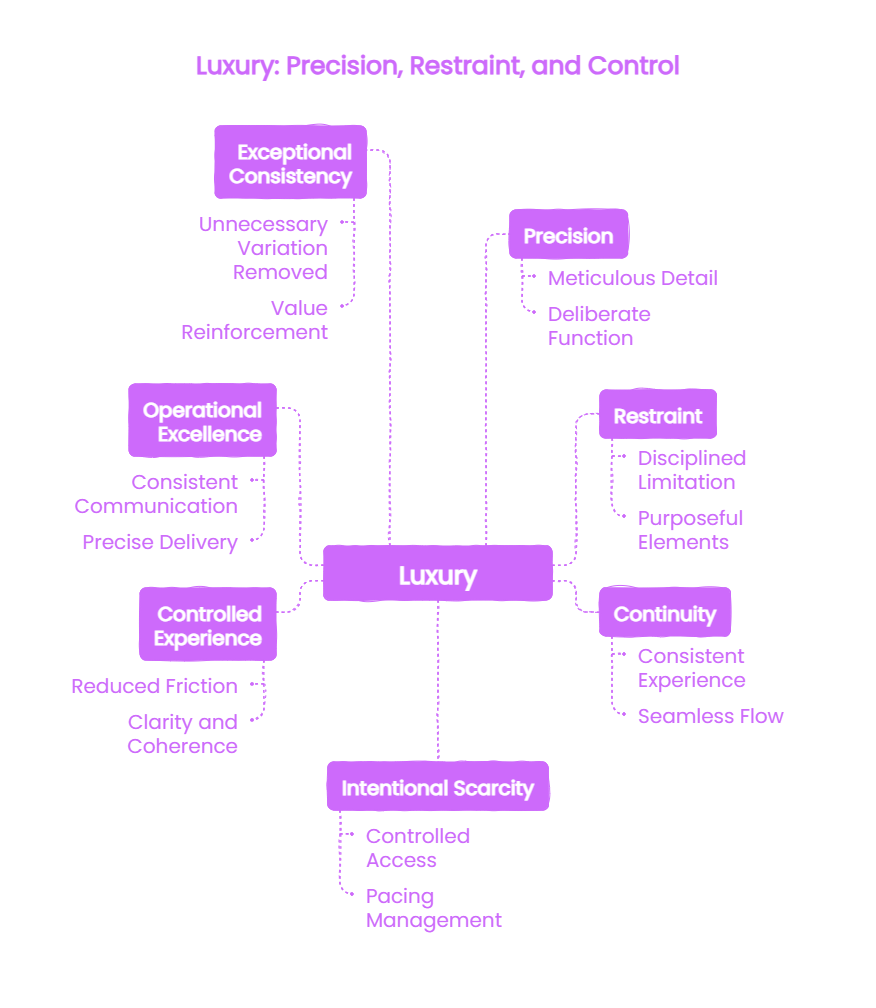
Luxury is defined by precision, restraint, continuity, intentional scarcity, controlled experience, operational excellence, and exceptional consistency. It is not created through abundance or amplification but through disciplined limitation. Every element within a luxury system serves a deliberate function and nothing exists without purpose. The experience is designed to reduce friction rather than increase stimulation. Decisions are carefully constrained to protect clarity and coherence. The result is a system where experience feels seamless because unnecessary variation has been removed. Luxury operates through control, not expansion.
Operationally, luxury requires consistency across every touchpoint of the customer experience. Communication, delivery, timing, and interaction must all reflect the same level of precision. There is no separation between promise and execution because the system is tightly aligned. Scarcity is not only visual or narrative, it is structural in how access, pacing, and delivery are managed. Customers experience luxury as clarity, control, and intentional design. The value is reinforced through consistency rather than persuasion. Without these conditions, luxury cannot exist regardless of branding.
What Premium Actually Requires
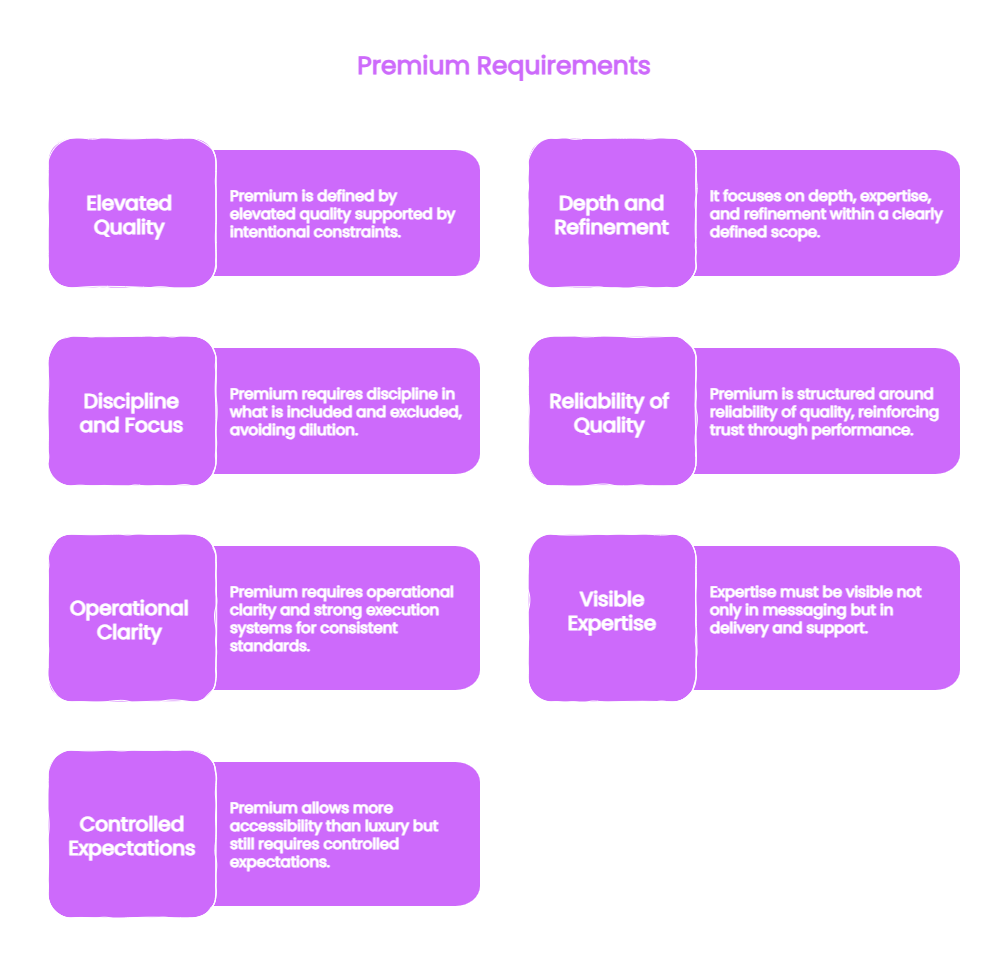
Premium is defined by elevated quality supported by intentional constraints. It focuses on depth, expertise, and refinement within a clearly defined scope. Unlike luxury, premium does not require scarcity at the same level, but it does require discipline in what is included and excluded. Premium systems are designed to protect quality through focus rather than expansion. They avoid dilution by maintaining strong boundaries around delivery and positioning. The emphasis is on doing fewer things with greater consistency and effectiveness. Premium is structured around reliability of quality.
In practice, premium requires operational clarity and strong execution systems. The experience must reflect a consistent standard that does not fluctuate across interactions. Expertise must be visible not only in messaging but in delivery and support. Customers should experience a clear sense of competence and refinement throughout the funnel. While premium allows more accessibility than luxury, it still requires controlled expectations and structured delivery. The system must reinforce trust through dependable performance. Without consistency, premium positioning loses credibility.
What High End Actually Requires
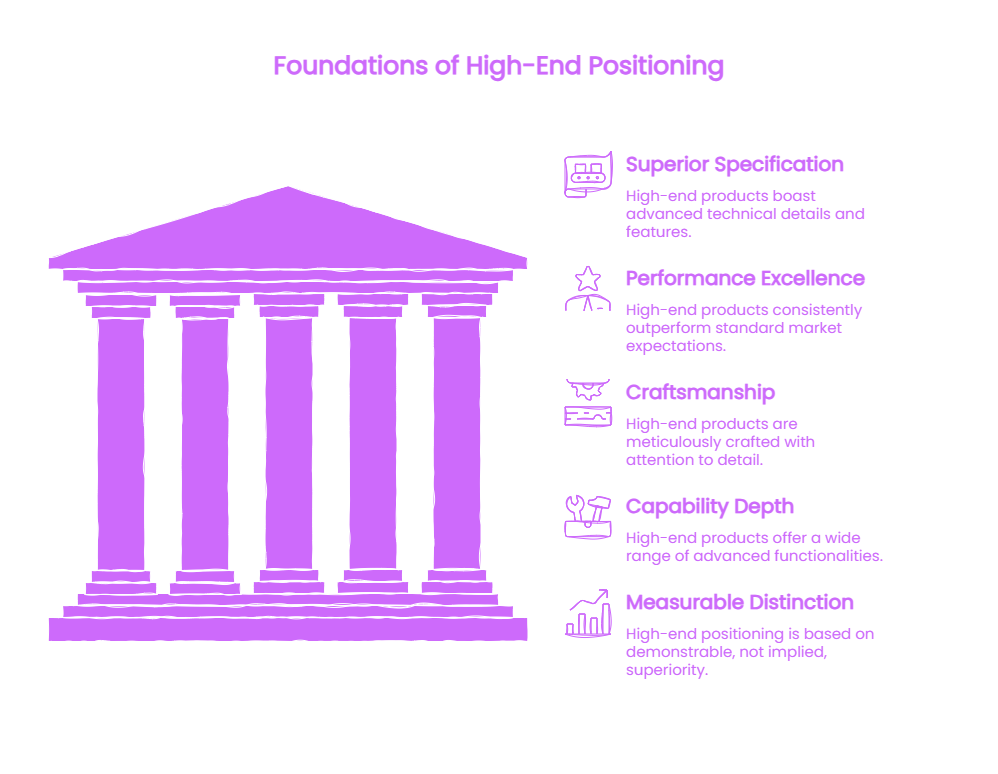
High end is defined by superior specification, performance, craftsmanship, or capability within a category. It is rooted in measurable excellence rather than perceived exclusivity alone. High end positioning communicates that a product or service performs at a level above standard market expectations. It often emphasizes technical strength, depth of capability, or advanced execution. The focus is on what the system can do rather than how restricted access is. High end is therefore grounded in performance reality. It must be demonstrable, not implied.
Operationally, high end requires clear evidence of superiority within its category. This includes consistent delivery of outcomes that outperform standard alternatives. Systems must be built to support complexity and depth of capability reliably. Customers should be able to experience tangible differences in quality or performance. Messaging alone cannot carry high end positioning without supporting structure. The system must continuously validate its own claims through execution. Without measurable distinction, high end collapses into generic premium language.
Why Appearance Doesn't Determine Classification
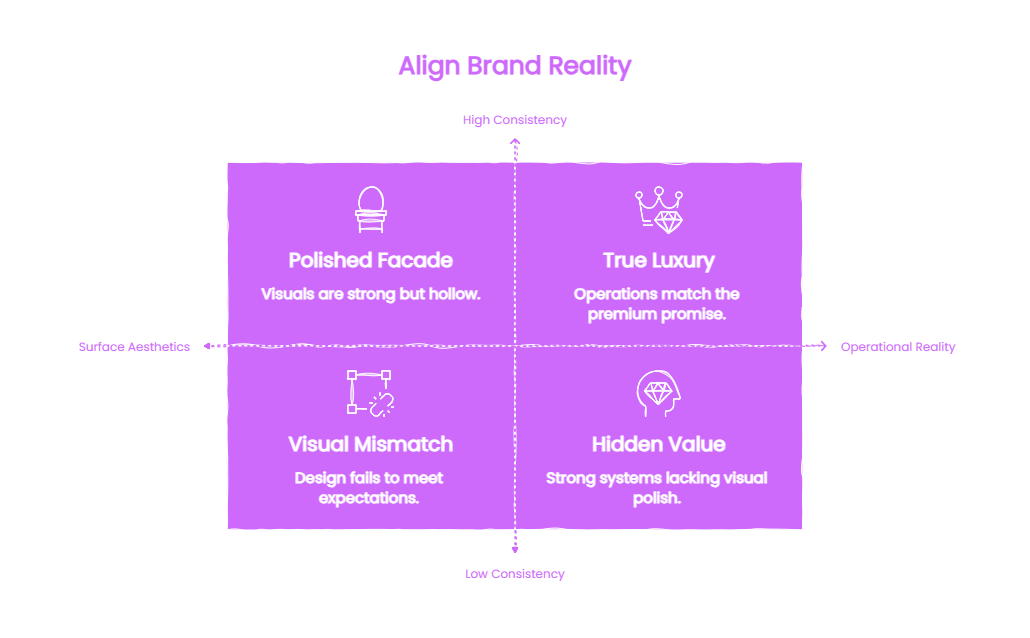
Appearance alone cannot determine whether a system is luxury, premium, or high end. Visual design elements such as typography, color palette, minimalism, or photography style communicate positioning but do not create operational reality. Many businesses mistake aesthetic refinement for structural sophistication. This leads to funnels that look elevated but operate without the systems required to support that positioning. Customers eventually recognize this gap between presentation and experience. The result is weakened trust and unclear expectations. Appearance can introduce positioning, but it cannot sustain it.
True classification is determined by how the system operates across every stage of the customer experience. It is reflected in consistency, delivery, constraints, and execution rather than visuals alone. A visually refined funnel without operational alignment remains only surface-level positioning. Customers respond to experience more than design language. Over time, inconsistency becomes more visible than aesthetics. This is why structural reality always overrides visual intention. Classification must be earned through operation, not design.
Working With the Funnel
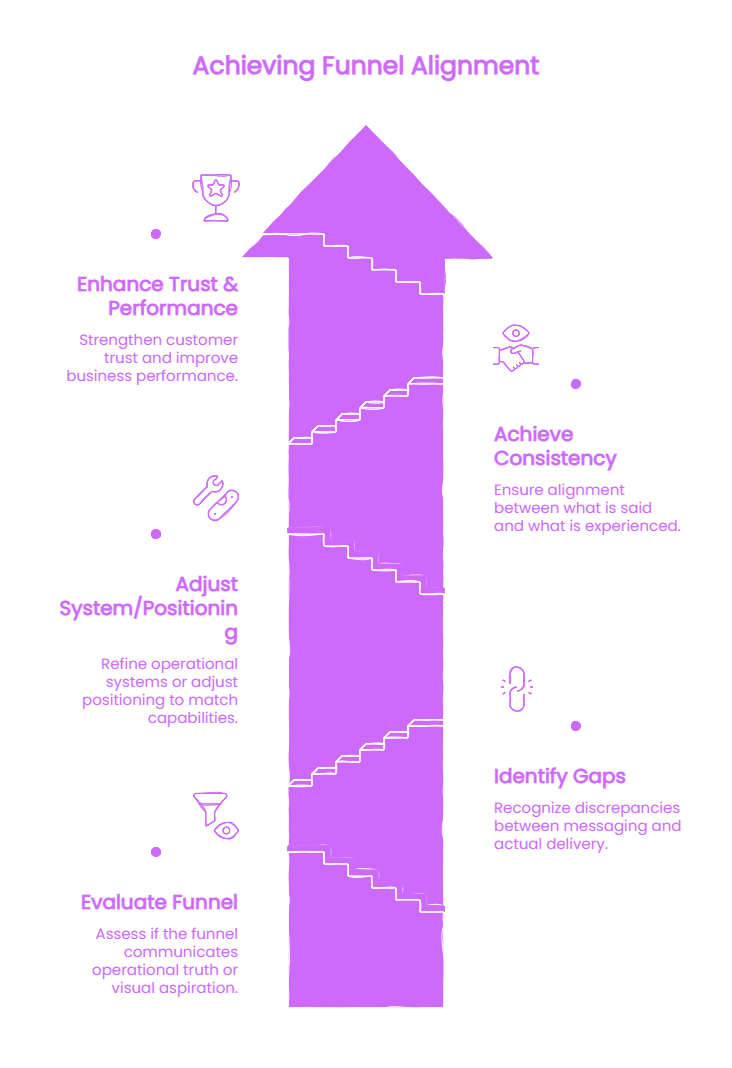
Evaluating classification begins by examining whether the funnel communicates operational truth or visual aspiration. Each stage of the funnel should reflect the same structural reality being communicated in its positioning. Compare messaging against actual delivery, customer experience, and operational consistency. Identify where language suggests a classification that is not supported by the system. Notice where expectations may be exceeding what the business can reliably deliver. These gaps reveal where positioning and structure are misaligned. Clarity begins with honest evaluation of current reality.
Once these gaps are identified, alignment requires adjusting either the system or the classification being used. Operational systems may need refinement to support higher positioning. In other cases, positioning must be adjusted to reflect current capability. The goal is consistency between what is said and what is experienced. Funnels become more effective when they communicate truth rather than aspiration. Alignment strengthens both trust and performance simultaneously. Structure determines classification more than language ever will.
In Closing
Luxury, premium, and high end are not aesthetic categories but operational realities. Each one requires specific structural conditions to exist and be sustained over time. When these distinctions are ignored, funnels lose clarity and positioning becomes inconsistent. Customers rely on experience to interpret what classification actually means in practice. If the system does not support the language being used, trust begins to weaken. Strong funnels are built on alignment between structure and communication. Classification becomes meaningful only when it reflects operational truth.
When structure and positioning align, funnels become easier to understand and easier to trust. Customers experience consistency between expectation and delivery. Messaging reinforces reality instead of compensating for it. Operational clarity strengthens every stage of the funnel experience. Businesses gain stability because their classification is supported by actual execution. In this alignment, positioning becomes credible rather than aspirational. Structure is what ultimately defines classification.