
High Ticket vs High Value: Why Funnels Fail When These Are Confused
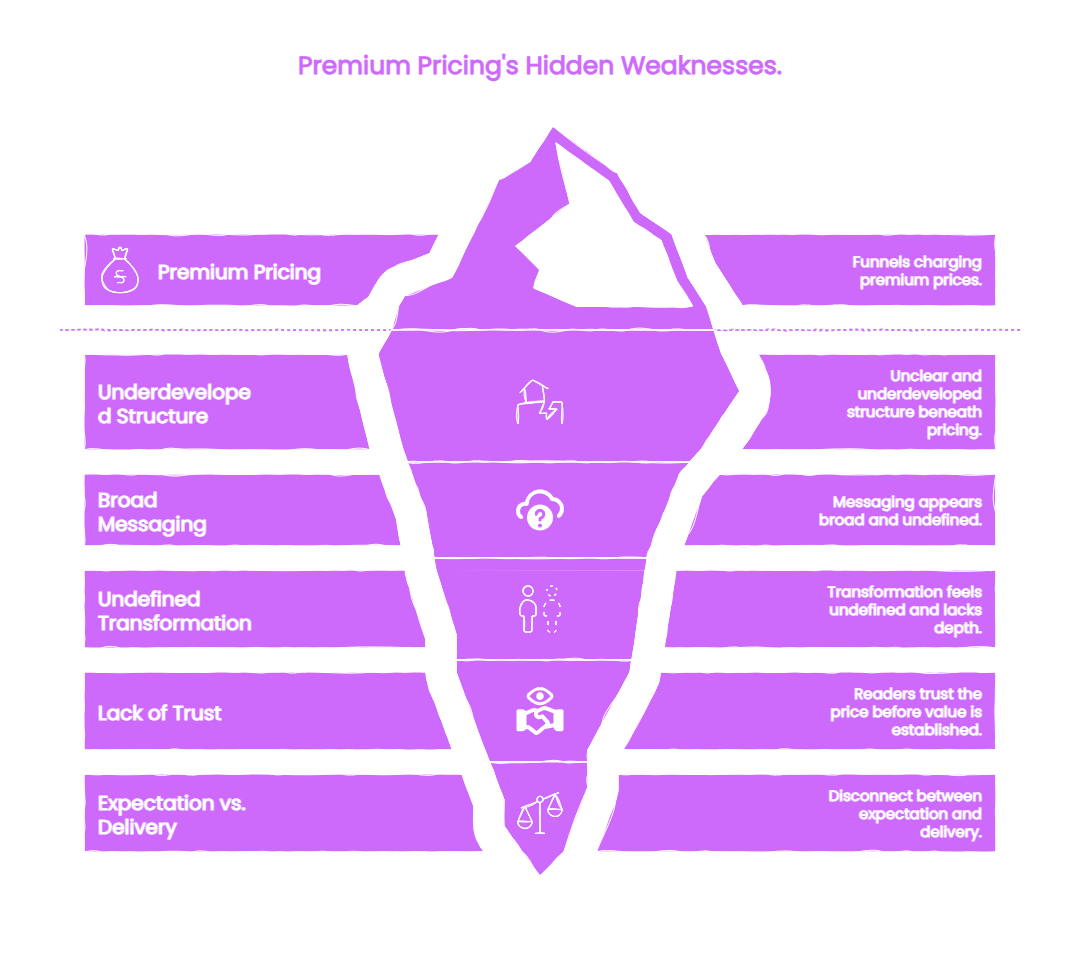
Funnels charging premium prices often attempt to establish significance through cost alone. The pricing communicates exclusivity, seriousness, and elevated positioning from the beginning of the experience. Readers immediately recognize that the offer is intended to occupy a higher tier within the market. However, the structure beneath the pricing frequently feels underdeveloped or unclear once engagement begins. Messaging may appear broad, transformation may feel undefined, and the experience itself may lack depth or precision. The funnel asks readers to trust the price before the system has established meaningful value operationally. High ticket pricing and high value experience are not interchangeable concepts within a funnel system.
This disconnect becomes visible through the relationship between expectation and delivery throughout the funnel. Premium pricing naturally increases scrutiny because readers expect stronger clarity, relevance, and refinement in return. When the structure beneath the price does not sustain those expectations, confidence begins to weaken quickly. The funnel may initially attract attention because pricing signals importance and exclusivity. However, attention alone cannot sustain trust without operational alignment beneath it. Readers begin evaluating whether the experience itself justifies the level of positioning being communicated. The issue is not premium pricing itself, but the assumption that price independently establishes value perception.
What High Ticket and High Value Actually Mean
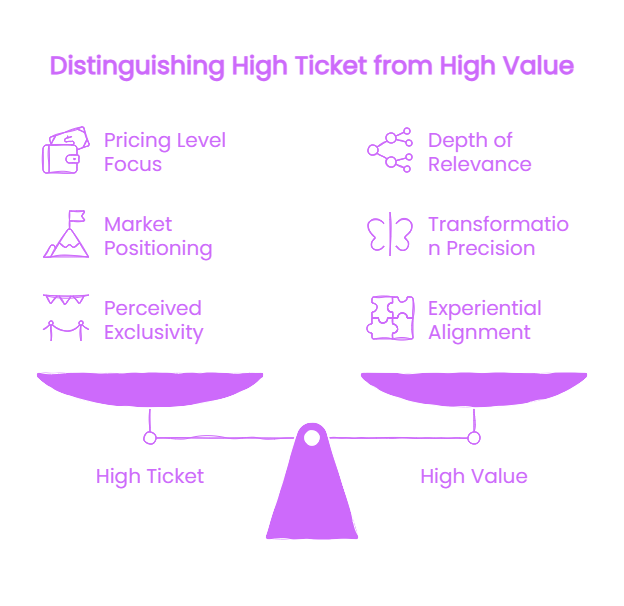
High ticket refers primarily to pricing level within a funnel or offer structure. It communicates market positioning, perceived exclusivity, and expected significance through cost. High value, however, refers to depth of relevance, transformation, precision, and experiential alignment throughout the system. Value is established through the quality and coherence of what the reader experiences before, during, and after engagement. It exists through clarity, trust, operational consistency, and meaningful outcomes rather than pricing language alone. A funnel may be expensive without being deeply valuable in practice. Price can signal positioning, but value must substantiate the signal operationally.
This distinction becomes important because readers evaluate value through experience rather than numbers alone. Premium pricing increases expectations surrounding clarity, delivery, support, and transformation naturally. Readers expect greater precision when higher investment is required from them. The funnel must structurally support the level of significance the pricing communicates. If the experience remains vague, inconsistent, or underdeveloped, the pricing begins to feel unsupported quickly. Value cannot rely entirely on aspirational positioning or pricing psychology to sustain belief. High value must exist independently of the price attached to it.
What It Looks Like in Practice
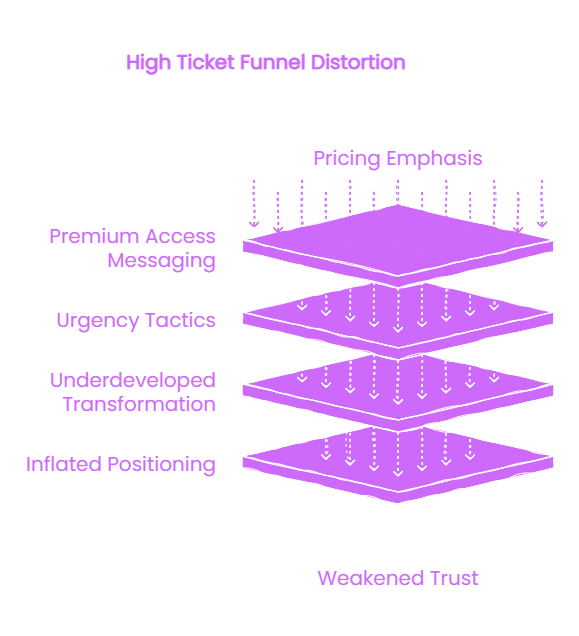
In practice, this distortion often appears through funnels emphasizing pricing and exclusivity more than transformation itself. Messaging may focus heavily on premium access, income potential, status, or elevated positioning. Urgency tactics are frequently layered into the experience to reinforce perceived significance quickly. However, specificity surrounding the actual transformation often remains underdeveloped or unclear. The funnel communicates importance through cost while failing to establish operational depth beneath the positioning. Readers encounter strong pricing signals without equally strong experiential clarity or precision. Pricing becomes the primary signal because value has not been fully established elsewhere within the system.
This often creates funnels where positioning feels inflated relative to the actual experience being presented. Outcomes may sound expansive while remaining difficult to define concretely. Messaging may rely heavily on emotional aspiration without grounding it operationally. Readers encounter broad promises instead of precise clarity regarding relevance and delivery. The funnel attempts to communicate authority through exclusivity rather than through structural coherence and depth. Attention may initially increase because the pricing creates intrigue and perceived significance. However, trust weakens when the system beneath the pricing lacks refinement and specificity.
How Funnels Reveal This Distortion
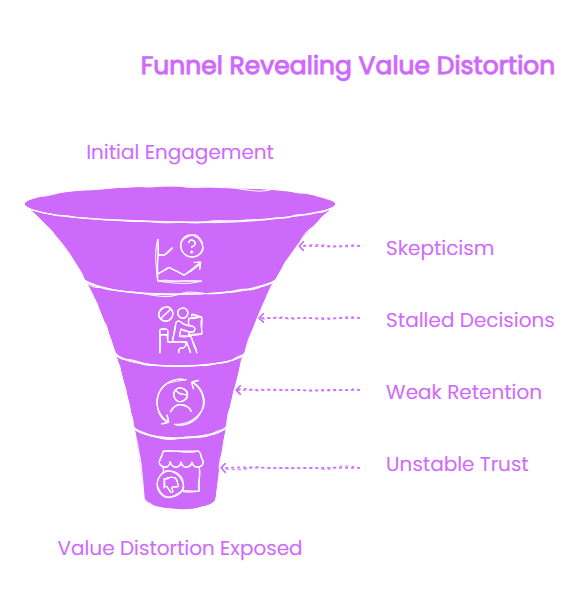
Funnels reveal this distortion through skepticism, stalled decisions, weak retention, and unstable trust patterns. Readers may initially engage because premium pricing signals elevated value and importance. However, hesitation begins increasing as the structure fails to substantiate the positioning operationally. Questions become more frequent because clarity within the experience remains insufficient. Conversion behavior becomes inconsistent despite strong presentation and pricing signals. The funnel attracts attention initially but struggles to sustain confidence throughout the decision process. The system reveals the gap between perceived significance and experienced value.
This distortion also becomes visible after conversion takes place within the funnel. Retention may weaken because expectations established through pricing are not consistently supported through delivery. Refund behavior may increase when readers feel the transformation lacked depth or operational precision. Emotional trust becomes unstable because the experience beneath the positioning feels underdeveloped. The funnel may continue generating interest while simultaneously struggling to sustain long-term confidence. Readers interpret inconsistency between price and experience as structural instability within the system. The funnel exposes where pricing has been asked to compensate for missing value alignment.
Why Raising Prices Doesn’t Fix It
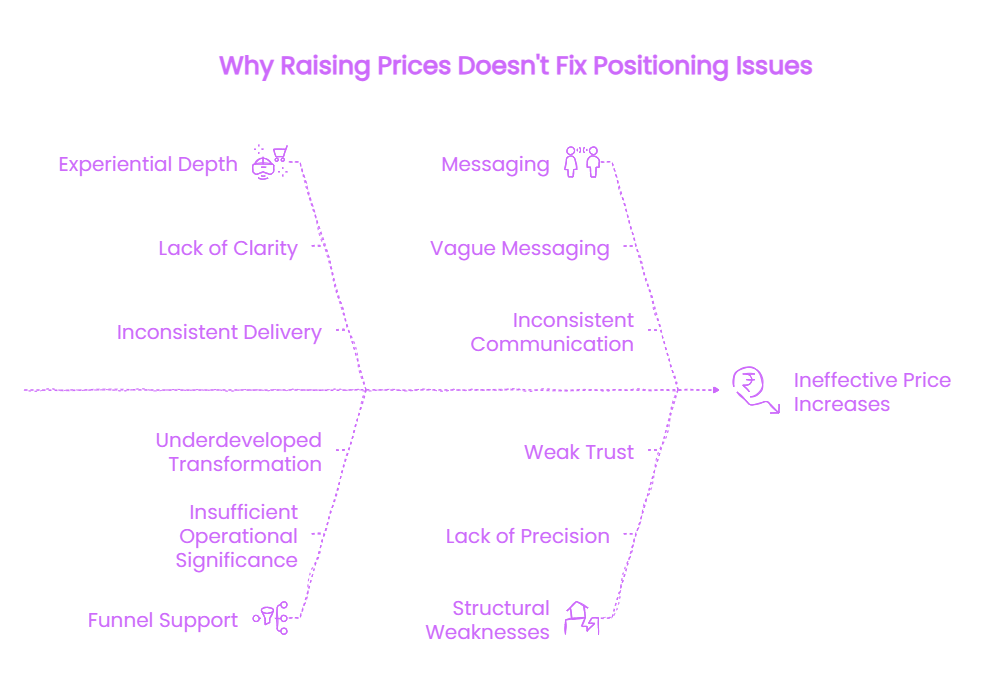
Attempts to resolve this issue often focus on increasing prices further in order to strengthen positioning. Higher pricing is assumed to communicate greater authority, exclusivity, and perceived value automatically. However, increasing prices without increasing experiential depth amplifies scrutiny rather than trust. Readers become more critical because higher investment creates higher expectations naturally. The funnel must now support an even greater level of significance operationally across every stage. If clarity and transformation remain underdeveloped, the disconnect becomes more visible rather than less visible. Raising prices magnifies structural weaknesses when value has not been fully established.
This occurs because pricing shapes interpretation before the experience itself begins. Readers evaluate whether the system behaves consistently with the level of investment being requested from them. If messaging remains vague or delivery feels inconsistent, confidence weakens quickly regardless of price level. Higher pricing cannot independently create precision, trust, or experiential coherence within the funnel. The system must operationally sustain the expectations pricing creates from the beginning. Premium positioning becomes fragile when structure does not reinforce the significance being communicated. Authority cannot rely entirely on pricing psychology without deeper alignment beneath it.
Where Value Must Be Established
Value must be established through operational clarity, relevance, trust, and experiential consistency across the funnel. Readers need to understand the transformation clearly and specifically before confidence can stabilize. Messaging should reinforce meaningful relevance rather than relying primarily on aspirational positioning or exclusivity signals. Delivery must align with the expectations established throughout the funnel experience consistently. Trust strengthens when the system behaves coherently across positioning, communication, and outcomes. Readers experience value through the integrity of the structure rather than through pricing alone. Pricing communicates positioning, but value substantiates it operationally.
This creates an environment where confidence becomes easier to sustain naturally. Readers no longer rely exclusively on pricing signals to determine significance and trustworthiness. The funnel communicates value through clarity, depth, continuity, and experiential precision instead. Each stage reinforces the same level of operational alignment and refinement. The experience feels substantial because the structure itself consistently supports the transformation being communicated. Value becomes visible through coherence rather than through numerical positioning alone. Premium pricing becomes believable when the experience beneath it is structurally aligned.

Working With the Funnel
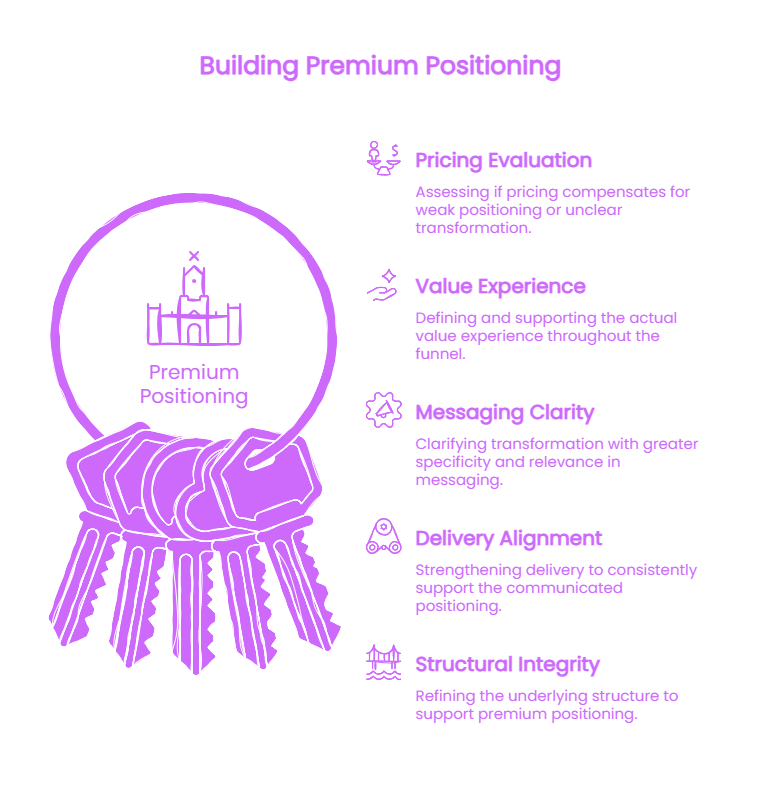
Working with this distortion requires evaluating whether pricing is compensating for weak positioning or unclear transformation. The funnel should be examined to determine whether the actual value experience is sufficiently defined and operationally supported. Messaging should clarify transformation with greater specificity and relevance throughout the sequence. Delivery alignment should be strengthened so the experience consistently supports the positioning being communicated. Excessive reliance on pricing psychology or exclusivity signaling should be reduced intentionally. Readers should experience significance through clarity and coherence rather than through cost alone. The funnel must establish value operationally before relying on pricing to communicate it.
This process often requires refining the structure beneath the positioning rather than adjusting pricing first. Simplifying messaging can reveal whether the transformation itself is clearly understood and communicated. Strengthening continuity between promise and delivery increases trust throughout the experience naturally. Readers become more confident when expectations and operational reality remain aligned consistently. The funnel begins sustaining premium positioning through structural integrity rather than through pricing pressure alone. Value perception strengthens because the experience itself supports the level of investment being requested. Pricing becomes reinforcement rather than compensation within the system.
In Closing
High ticket pricing cannot independently create high value perception within a funnel system. Price communicates positioning and significance, but it does not establish experiential depth automatically. Funnels weaken when pricing is asked to compensate for unclear transformation or inconsistent operational structure. Readers sense the disconnect between perceived importance and actual experience quickly. Trust becomes unstable when the system beneath the pricing lacks precision, coherence, or alignment. The issue is rarely premium pricing itself, but the absence of structurally supported value beneath it. High value must exist operationally before pricing can communicate it convincingly.
When value is structurally established, premium positioning becomes easier to sustain consistently. Readers experience relevance, trust, transformation, and refinement throughout the funnel naturally. Pricing reinforces the experience rather than carrying the entire burden of significance alone. Confidence increases because operational clarity supports the level of investment being requested. The funnel becomes more stable because expectation and delivery remain aligned throughout the system. Premium positioning strengthens when value is experienced consistently at every stage. High ticket pricing becomes believable when high value is structurally present throughout the experience.