
Funnels Don’t Fix Confused Offers
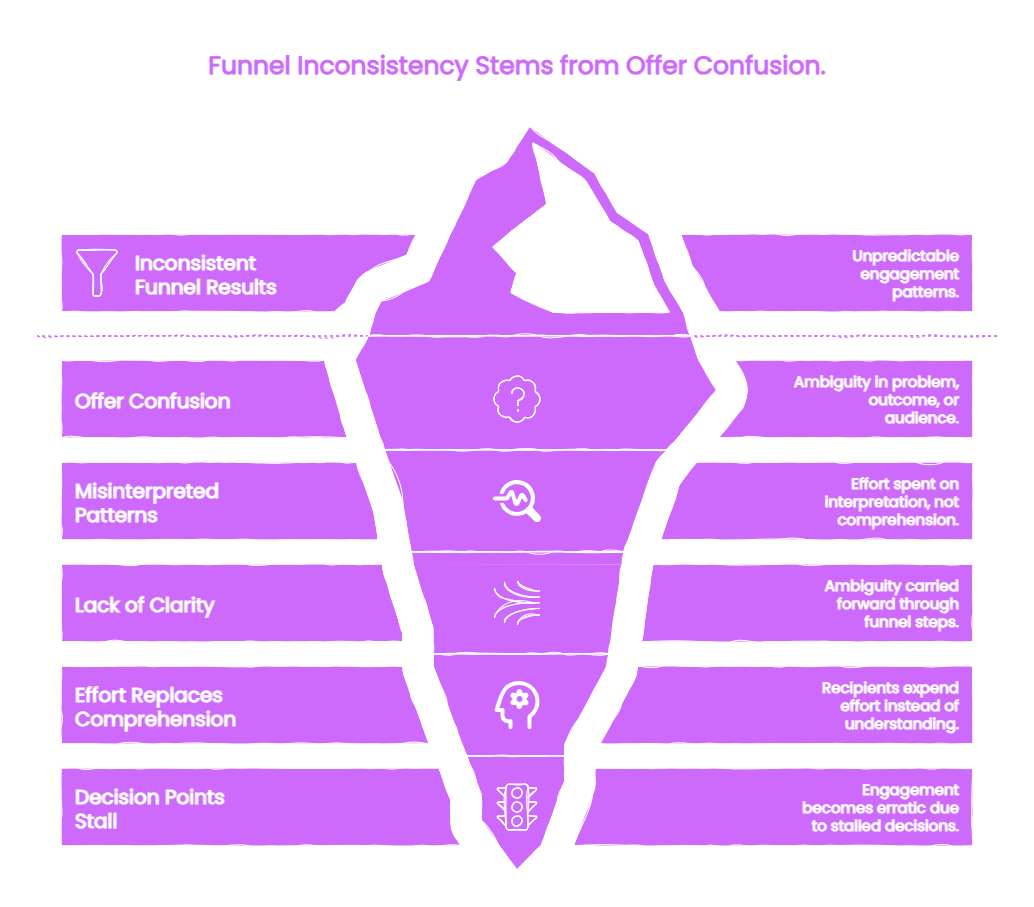
When a funnel is built, the expectation is that engagement will align smoothly with the intended path. The steps are sequenced, the messaging is polished, and the technical mechanics function without error. Yet often, the results feel inconsistent. Some recipients respond as anticipated, others pause, and many fail to progress in ways that indicate understanding. There is a subtle sense that something is off, even though all the funnel elements appear correct. The natural response is to adjust the funnel itself, rewrite copy, redesign pages, add urgency. But these interventions address effects rather than causes. The friction exists not in the funnel, but in the offer being carried through it.
Confusion upstream produces patterns that are misinterpreted as funnel deficiencies. Recipients expend effort interpreting the problem, the outcome, or the audience rather than absorbing meaning naturally. The funnel reflects this absence of clarity, carrying ambiguity forward with every step. Effort replaces comprehension, decision points stall, and engagement becomes erratic. Recognizing that the offer itself must be fully defined before entering the funnel is essential. Until the problem, audience, and outcome are precise and coherent, no adjustment to funnel mechanics will produce meaningful improvement. The work begins before sequencing, not after.
What a Funnel Actually Works With
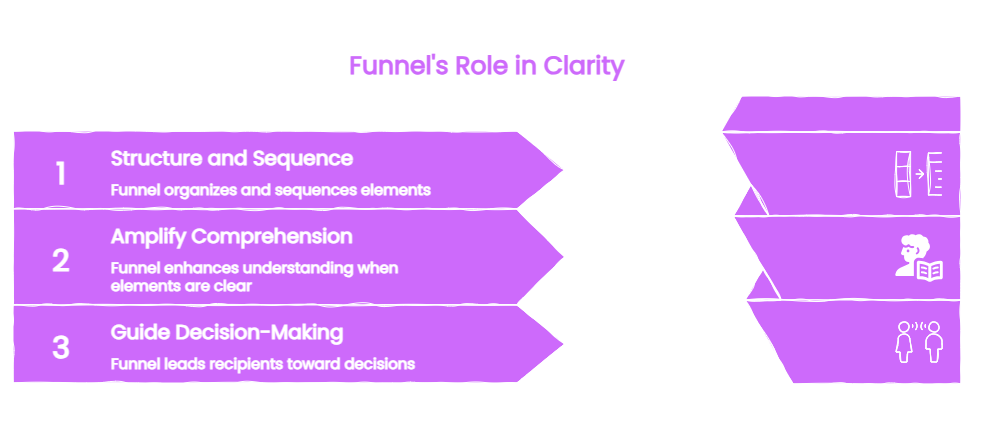
A funnel functions as a structure for what already exists. It sequences and distributes predefined elements, the problem, the audience, the offer, and the intended outcome. It cannot generate clarity or create definition. Its role is strictly organizational, amplifying comprehension when the material is precise and coherent. When the offer is well defined, the funnel guides recipients predictably and efficiently through the steps, producing natural engagement and movement toward decision. The funnel enforces structure on clarity, not vice versa. Its efficacy is directly proportional to the precision of what it carries.
When clarity is absent, the funnel propagates ambiguity. Each step may feel drawn out or awkward, requiring the recipient to interpret meaning that is assumed but not communicated. Engagement patterns become irregular, questions repeat, and decision points stall. The funnel exposes weaknesses rather than correcting them. It mirrors the state of the offer and makes visible where definition is lacking. Distribution cannot substitute for clarity. Without upstream definition, the funnel becomes a conduit for confusion rather than comprehension.
What a Confused Offer Looks Like in Practice
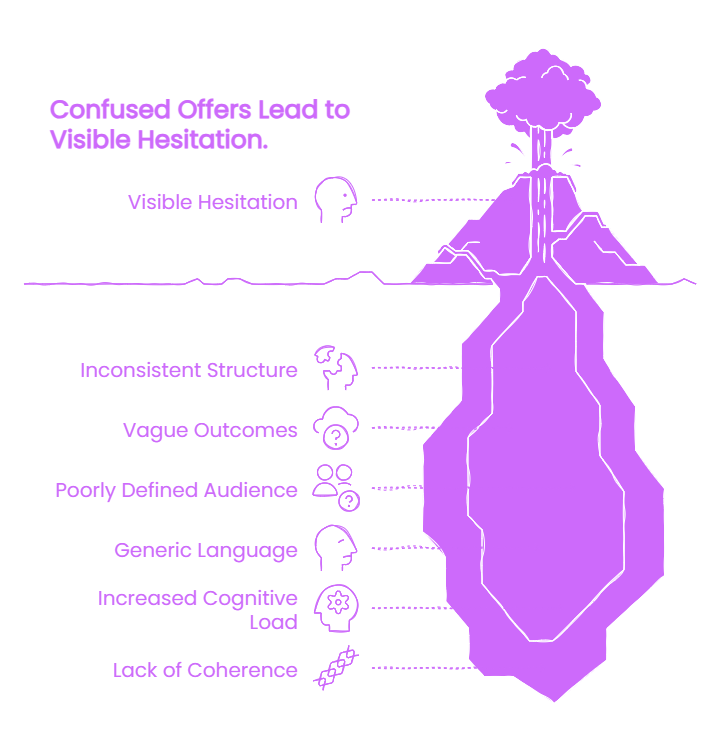
A confused offer manifests through inconsistent structure and messaging. Problem statements may shift depending on context, leaving the audience uncertain. Outcomes are often vague or broad, offering little concrete indication of what the recipient will gain. The intended audience may be poorly defined or inconsistently described. Language is generic, capable of meaning anything, forcing recipients to interpret instead of understand. Each step requires additional cognitive effort to decode, creating friction that stalls engagement. Momentum is interrupted because the offer lacks intrinsic coherence.
This ambiguity becomes evident in behavior. Recipients hesitate, repeat questions, and struggle to make decisions. Each interaction demands interpretation rather than comprehension. Compensatory measures, such as extended explanations or layered messaging, only increase cognitive load. The structural ambiguity of the offer produces uneven engagement and erodes confidence in the value being presented. A confused offer creates visible hesitation, misalignment, and dropout across the funnel. This confusion exists before the funnel, not because of it.
How Funnels Expose Offer Confusion
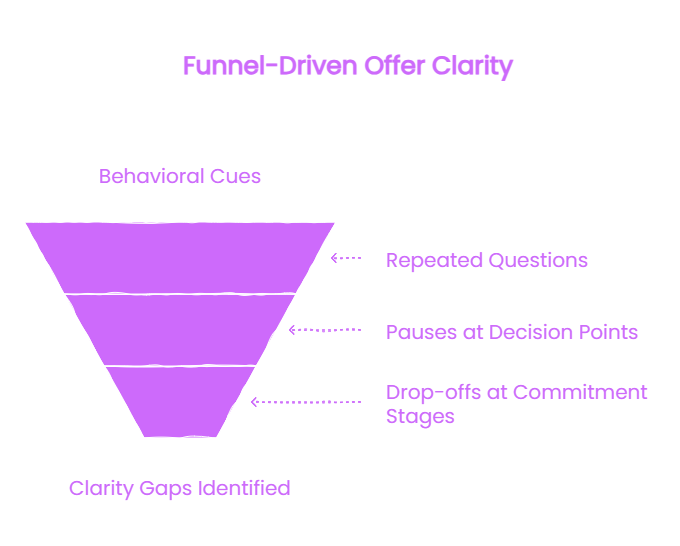
Funnels function as diagnostic tools, revealing where offers lack clarity. Engagement metrics alone cannot detect structural issues. True insight comes from observing patterns of behavior: repeated questions, pauses at decision points, and drop offs at commitment stages. The funnel does not generate comprehension. It makes the absence of understanding visible. Each hesitation is a symptom, each stall a reflection of upstream ambiguity. Funnels reveal, they do not resolve.
Behavioral cues highlight specific weaknesses in the offer. Drop-offs at certain points indicate missing definition in problem, outcome, or audience. Repetition of questions exposes vagueness or inconsistency. The funnel functions impartially, reflecting exactly where the offer fails to communicate. Observing these patterns identifies the areas where upstream clarity must be established. The funnel exposes gaps, providing clear insight into what requires refinement before any technical adjustments.
Why Funnel Refinement Doesn’t Resolve It
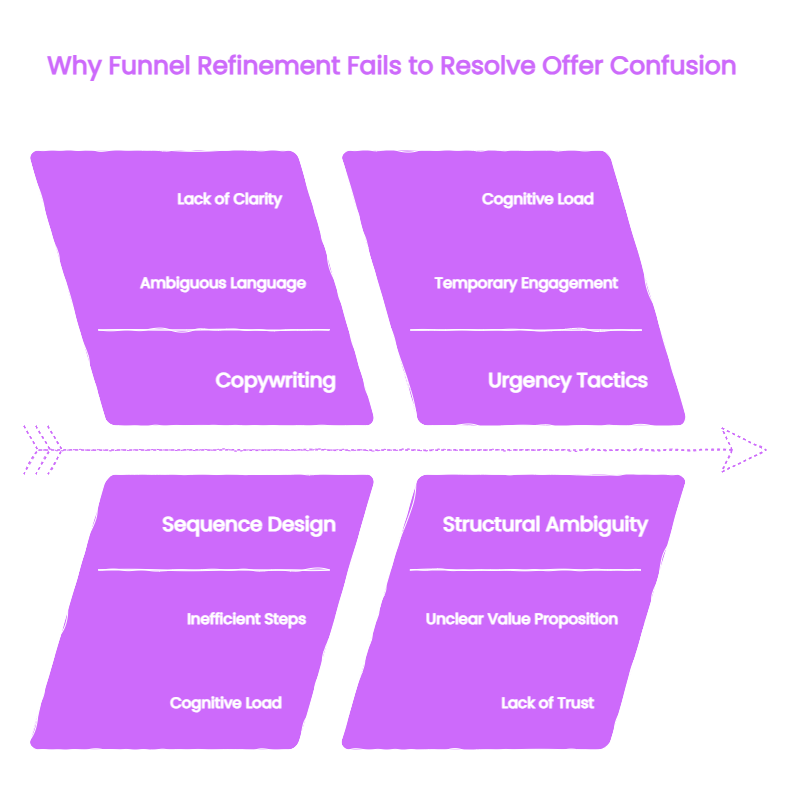
Rewriting copy, redesigning sequences, or adding urgency does not address the core problem. These adjustments treat symptoms rather than causes. They may increase engagement temporarily, but the structural ambiguity of the offer remains. The funnel grows longer and more complex, requiring greater effort from recipients without producing true understanding. Additional steps or persuasive tactics amplify cognitive load rather than clarity. Refinement becomes compensation, not correction.
The effect is predictable movement may appear active, yet decision making remains inconsistent. Recipients expend energy interpreting the offer instead of progressing naturally. Mechanical adjustments produce temporary spikes in engagement but do not resolve hesitation or dropout at critical points. The funnel continues to reflect the underlying ambiguity. Structural clarity must exist first, only then can refinement support, rather than compensate for, understanding. Without this upstream work, the funnel remains a mirror of confusion.
Where Clarity Must Be Established
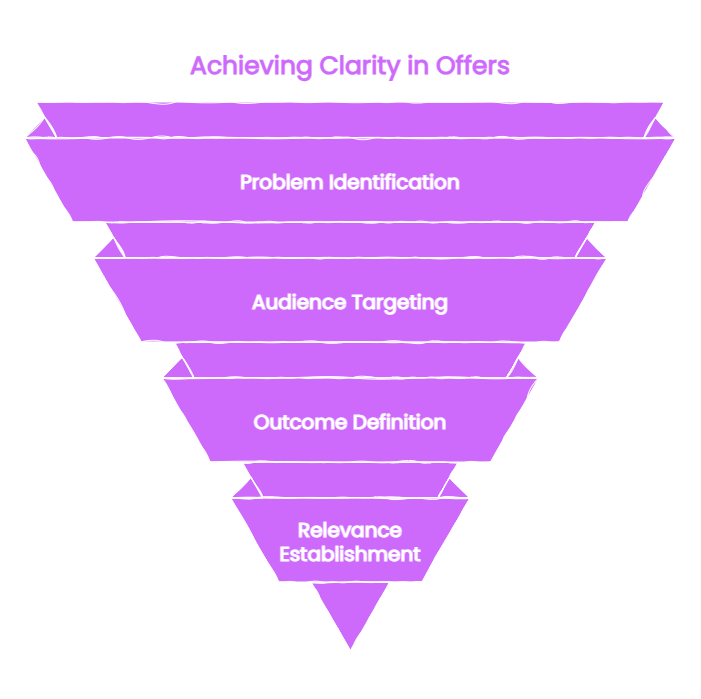
Clarity exists upstream, before the funnel is deployed. It resides in precise definition of the problem, the intended audience, the outcome, and the relevance of the offer. Clarity is structural, not stylistic. It is observable, consistent, and declarative. Without these elements firmly established, the funnel carries ambiguity forward. Sequencing cannot substitute for definition, and distribution cannot create understanding. Clarity is definition realized in the offer itself, not phrasing or embellishment.
When clarity exists, movement through the funnel is natural. Recipients comprehend instantly what is being addressed, why it matters, and what result they will receive. Each step is self-evident, requiring no interpretation. Engagement aligns predictably with intention, and decision making occurs without hesitation. The funnel becomes a conduit for distribution, not a compensatory mechanism for confusion. Upstream clarity transforms the funnel from a reflection of ambiguity into a tool for organized understanding.
Working With the Offer
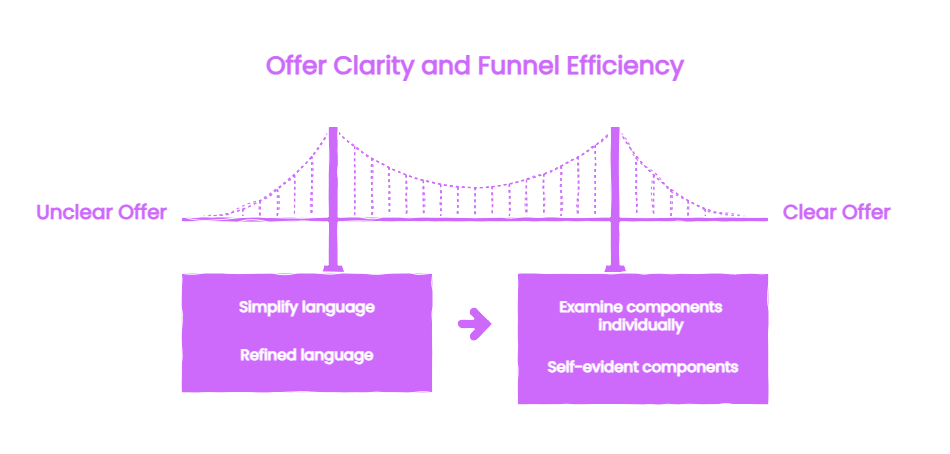
Focus must return to the offer itself to restore coherence. Begin by simplifying language and reducing extraneous statements, ensuring that each phrase carries stable, defined meaning. Examine the problem, the outcome, and the audience individually. Observe where recipients hesitate, misinterpret, or require additional explanation. Moments of hesitation signal gaps that exist structurally, not in sequencing or presentation. Refinement of these areas produces clarity that propagates naturally through the funnel.
Through systematic observation, ambiguity is removed, and the offer stabilizes. Each component becomes self evident, eliminating the need for compensatory interventions. The funnel then functions efficiently, directing understanding rather than testing interpretation. Engagement reflects comprehension rather than guesswork, and momentum flows predictably toward decision. Clarity upstream reduces effort downstream, allowing the funnel to fulfill its purpose. Structural definition in the offer removes the need for mechanical persuasion or additional layers.
In Closing
Funnels organize clarity, they do not create it. When the offer is fully defined with a clear problem, a specific audience, and a distinct outcome, movement becomes natural. Recipients progress without hesitation because interpretation is no longer required. Rewriting or redesigning the funnel cannot resolve upstream ambiguity. Efforts to refine sequencing or messaging without definition only produce mechanical movement. True effectiveness exists before the funnel is built, in the offer itself. When clarity exists upstream, the funnel functions as intended. A structured, efficient, and predictable path for understanding, engagement, and decision making.