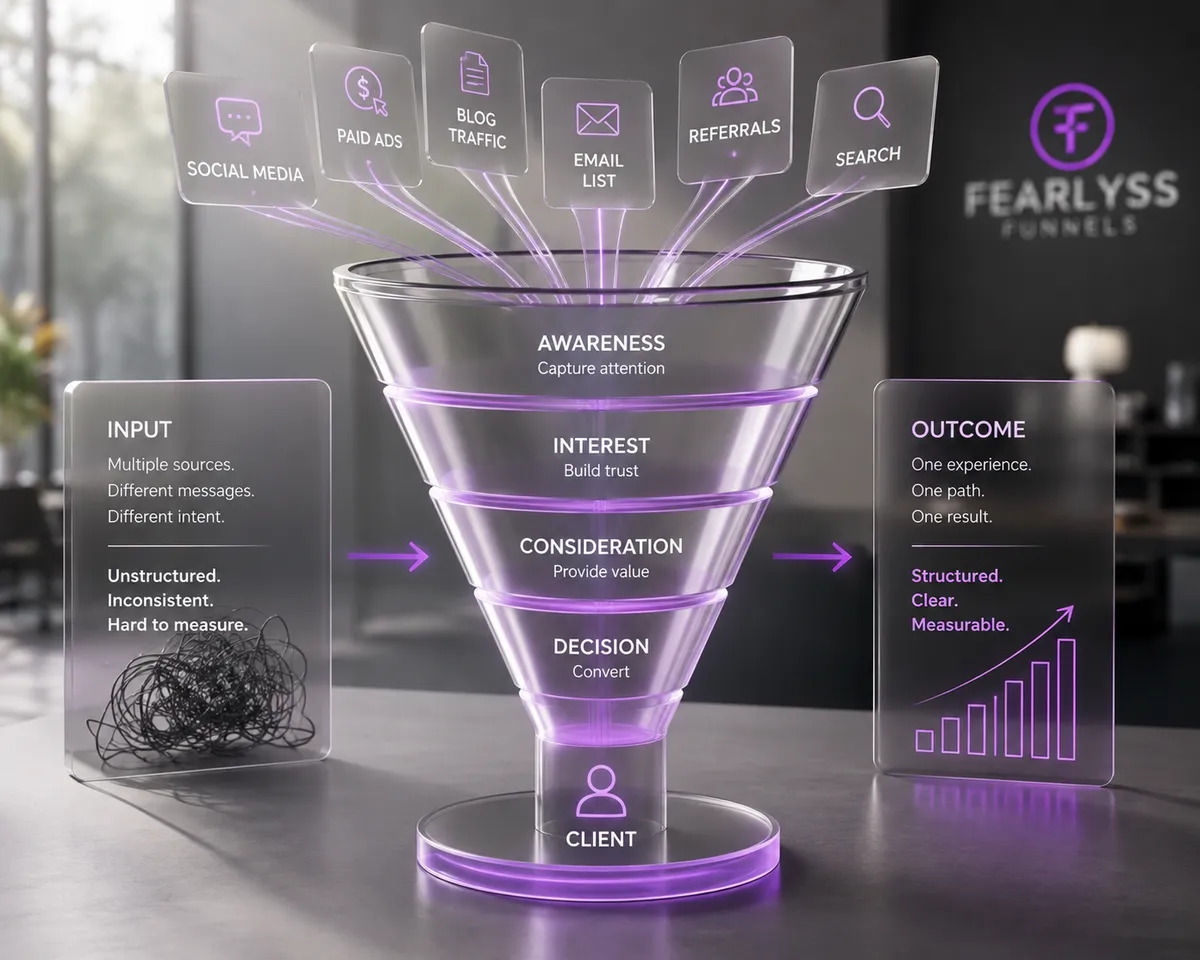
Backend Support Is What Separates Premium from Standard
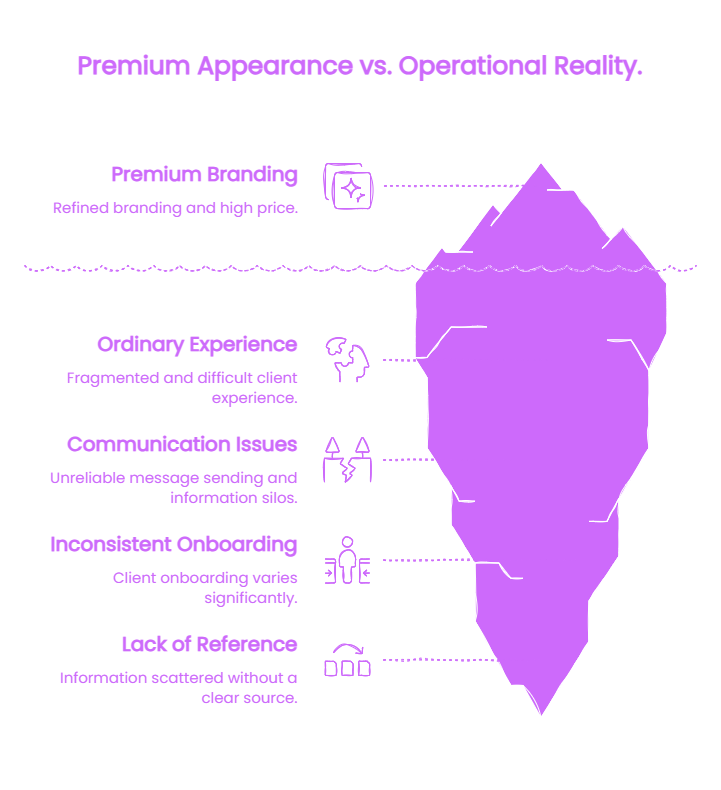
A business can look premium long before it has learned how to operate like one. The branding may be refined, the offer may carry a substantial price, and the funnel may be designed to create a polished first impression. The language may communicate exclusivity, expertise, and elevated service from the first interaction. Yet once a client enters the business, the experience can become ordinary, fragmented, or surprisingly difficult to navigate. Communication may depend on someone remembering to send the next message, onboarding may happen differently from client to client, and information may live in several places without a clear point of reference. The question, then, is not simply how premium the business appears when someone enters it, but what happens behind the experience being promised.
What Premium Actually Requires
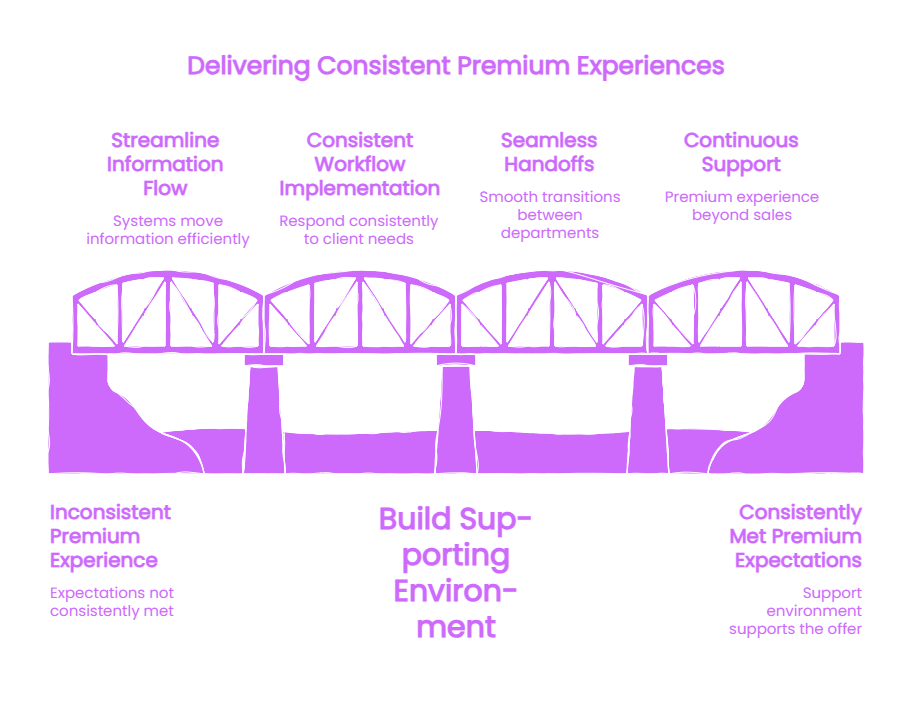
Premium creates an expectation of consideration. When someone encounters a premium offer, they are not only evaluating what they will receive at the end; they are also forming expectations about how the relationship will be handled along the way. The business is communicating a level of care, intentionality, expertise, access, or refinement that extends beyond the transaction itself. That expectation does not come from price alone, because a higher price can establish a higher expectation without creating the capacity to fulfill it. The business has to carry what the offer communicates through the way information moves, decisions are handled, communication occurs, and service is delivered. This is why premium requires more than an elevated presentation. It requires an operating environment capable of consistently supporting the experience the business has established.
Support is part of that environment. It includes the way a client enters the business, what happens immediately after payment, how information is collected and organized, how expectations are communicated, and how the client knows what happens next. It includes the systems that move information between the client and the business without requiring everything to depend on memory. It includes the workflows that allow the business to respond consistently while still providing an experience appropriate to the offer. It includes the handoffs between marketing, sales, onboarding, fulfillment, communication, and completion. It also includes continuity, because a premium experience should not become less considered simply because the client has moved beyond the sales page. The visible offer establishes the expectation, while the supporting environment determines how consistently that expectation can be carried.
The Backend Becomes Part of the Offer
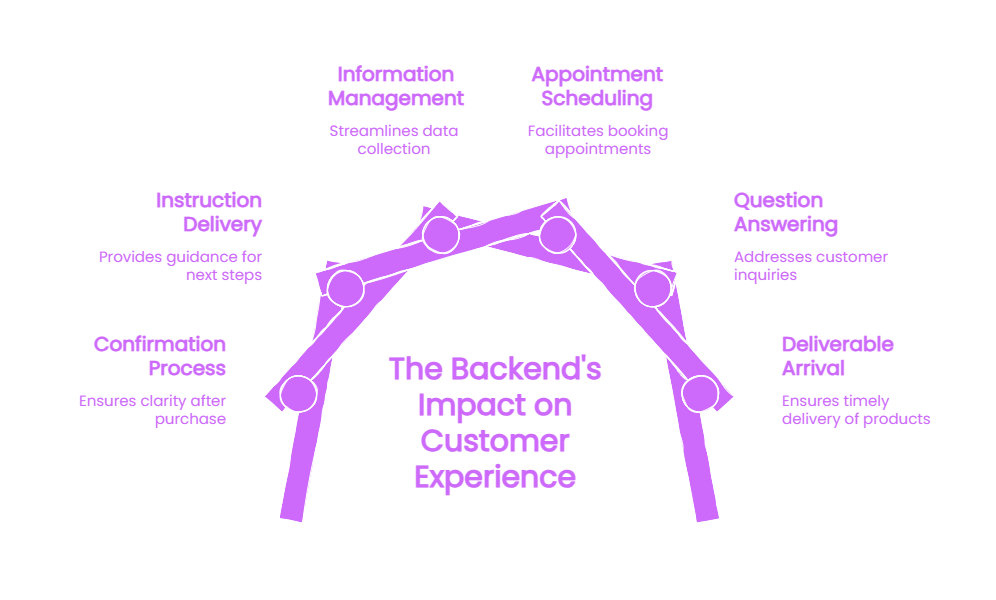
A client does not experience a business only through the page where they purchased. They experience the confirmation that follows the purchase, the instructions they receive, the information they are asked to provide, the way appointments are scheduled, the way questions are answered, and the way deliverables arrive. Every one of these interactions contributes to their understanding of the business. A beautiful funnel can create confidence at the point of decision, but that confidence is immediately tested by what happens afterward. If the client receives unclear instructions, has to ask what should happen next, or repeatedly supplies information the business should already have, the backend has changed the experience. The client is now experiencing the operational reality of the business rather than the promise presented by the funnel.
This is why backend support should be understood as part of the offer rather than as an invisible administrative concern. The offer tells the client what they are entering into, while the backend gives that promise somewhere to live. A strong offer supported by weak communication creates unnecessary friction. A refined funnel followed by disorganized onboarding creates a break between expectation and experience. A high touch service that requires the client to manage the process themselves transfers work back to the person who purchased the service. These conditions can make an otherwise valuable offer feel less considered than it was intended to be. The backend therefore participates directly in how the value of the offer is experienced.
Why Presentation Cannot Carry the Whole Experience
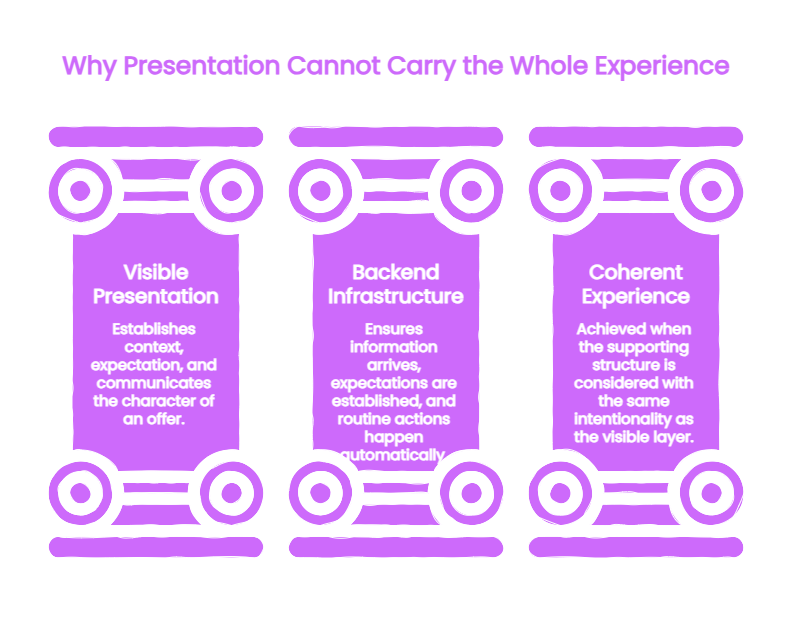
Businesses naturally give significant attention to what people can see. Websites, branding, photography, funnel pages, sales copy, offer names, and visual presentation are tangible and comparatively easy to evaluate. They can be revised, polished, displayed, and discussed as visible assets. Backend infrastructure operates differently because much of its work happens before a client ever notices it. When it is functioning well, information arrives where it needs to arrive, expectations are established before confusion develops, and routine actions happen without someone having to remember every step. Its success can therefore be easy to overlook because the client experiences the result rather than seeing the infrastructure itself. The less visible layer can consequently receive less attention even though it is carrying a significant portion of the visible experience.
This creates a common imbalance in businesses that want to operate at a premium level. The front end receives refinement while the backend continues to depend on workarounds, memory, manual intervention, or inconsistent processes. The business may continue improving the appearance of the funnel while the experience after conversion remains unchanged. This does not mean presentation lacks value; presentation establishes context and expectation and can communicate the character of an offer before someone enters it. It means presentation cannot carry the entire responsibility for the experience. A business has to look beneath what the client sees and understand what is supporting what the client sees. When the supporting structure is considered with the same intentionality as the visible layer, the experience becomes more coherent from entry through completion.
What Backend Support Looks Like in Practice
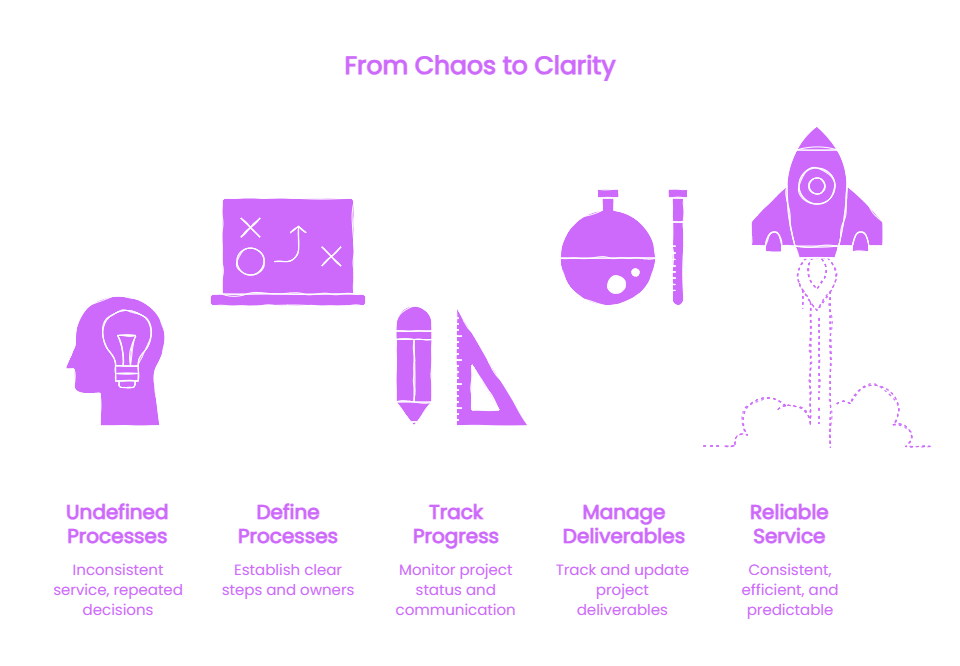
Consider what happens after a client says yes. Payment has been completed, but the relationship has now entered a different stage, and the business has to know what should happen next. The client may need a confirmation, an onboarding form, scheduling instructions, access to a portal, information about communication, or an explanation of what will happen during the next phase. The business needs to receive the information required to fulfill the offer without repeatedly returning to the client for details that could have been gathered earlier. Each movement needs a place, an owner, and an appropriate sequence so that the client is not left interpreting the process for themselves. What looks like a simple client experience from the outside may therefore depend on several connected processes operating behind it.
The same principle continues throughout fulfillment. The business needs to know where client information lives, how project or service progress is tracked, when communication should occur, how deliverables are managed, and what signals indicate that something requires attention. If a question enters through one channel, the business needs a reliable way to know where that question belongs and whether someone has responded. If a deliverable changes, the business needs to know what else that change affects. If a client reaches a particular stage, the next action should be sufficiently defined that the business does not have to reconstruct the process from memory. These are not signs that a business has become impersonal or overly automated. They are signs that the business has given its service somewhere reliable to operate.
Backend support also determines how much unnecessary cognitive work the business places on itself. When processes are undefined, the owner or team repeatedly makes the same decisions, answers the same questions, searches for the same information, and manually moves the same pieces. That labor may remain invisible because the client sees only the completed action. Over time, however, the accumulation creates inconsistency, delays, fatigue, and difficulty maintaining the level of service the business intends to provide. A supporting system reduces that repeated burden by establishing how recurring movement should occur. The goal is not to automate everything simply because automation is available. The goal is to establish enough structure that the business can reliably carry what it has promised.
When Premium Claims and Backend Reality Diverge
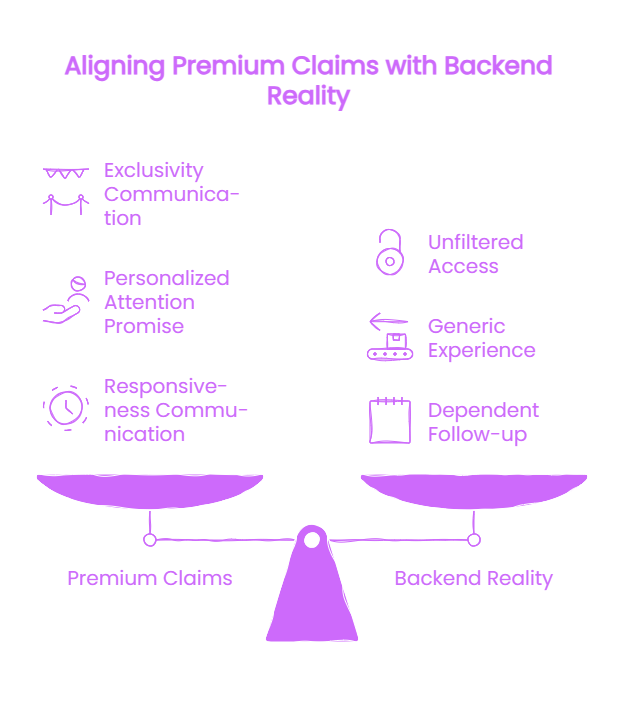
Misalignment becomes visible when the level of expectation created by the offer exceeds the level of support available behind it. A business can communicate exclusivity while allowing every client to enter through the same unfiltered process. It can promise personalized attention while relying on a workflow that gives every client the same generic experience regardless of what the offer requires. It can communicate responsiveness while leaving communication dependent on whoever happens to remember to follow up. None of these conditions necessarily means the business lacks value or expertise. They indicate that the operating environment has not yet been brought into sufficient alignment with the experience being promised.
This distinction matters because there is no single backend structure that makes every business premium. Different offers require different forms of support, and the appropriate infrastructure depends on the business, its clients, its delivery model, its capacity, and the experience it intends to provide. A premium business does not need unnecessary complexity simply to appear sophisticated. It needs the right support for what it has chosen to promise. The question is therefore not whether the backend looks impressive, but whether it reliably carries the expectations established by the business. When the answer is yes, the visible and invisible portions of the client experience begin operating as one experience rather than competing with one another.
Evaluate the Experience Behind the Promise
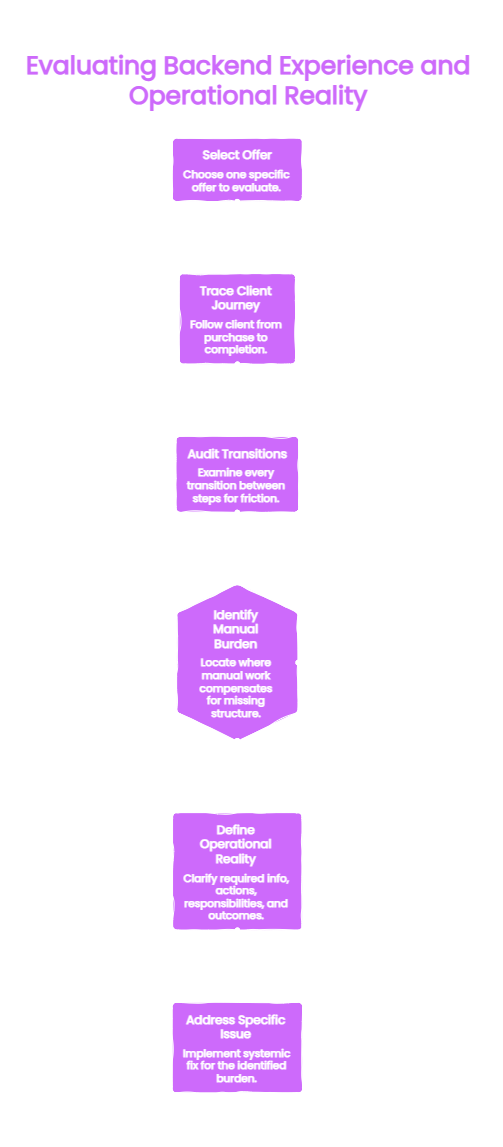
You can examine this in your own business without rebuilding your entire backend. Choose one offer and follow the client from the point of purchase through the point at which the promised work is complete. Pay attention to every transition rather than only the major milestones, because friction often appears between the steps that seem too ordinary to require attention. Notice where the client receives clear direction, where information is requested, where information must be repeated, and where the next action depends on someone remembering to initiate it. Notice where the business is relying on manual work to compensate for something that has never been structurally established. Then consider whether those conditions reflect the level of experience the offer communicates.
Your objective is not to identify everything that could be improved. Identify the place where the backend is currently carrying a burden that should belong to the system. It may be a recurring communication that is manually recreated, an onboarding transition that requires repeated explanation, an information handoff that depends on memory, or a client decision that has no defined place in the workflow. Once you identify it, clarify what should actually happen at that point in the experience. Determine what information is required, what action needs to occur, who or what is responsible for it, and what should happen afterward. That gives you a specific piece of operational reality to address rather than turning the entire backend into one large undefined improvement project.
In Closing
Premium is ultimately experienced through consistency between what a business establishes and what it can actually carry. The offer creates an expectation, the funnel introduces the experience, and the backend sustains that experience after the decision has been made. When those layers support one another, the client does not have to work to reconcile what the business promised with what the business delivers. The experience can feel considered because consideration has been built into the way the business operates.
This is what gives premium its substance beyond price, appearance, or presentation. The distinction is carried through the entire client journey, including the parts the client never sees. The promise establishes expectation. The backend determines whether the business can consistently carry it. When the supporting systems are aligned with the offer, the business gains more than a polished client experience; it gains a more reliable way to deliver what it has already said it will provide. That is where premium becomes operational rather than merely descriptive.
"Everything in this piece points to one thing, a business shouldn't have to hold its infrastructure alone and neither should you. Plug Club exists for exactly the moment you're in right now, wanting the system, without wanting to figure it out solo." Step into Plug Club