AI and the Intelligence It Carries: What Happens When Its Form Changes?
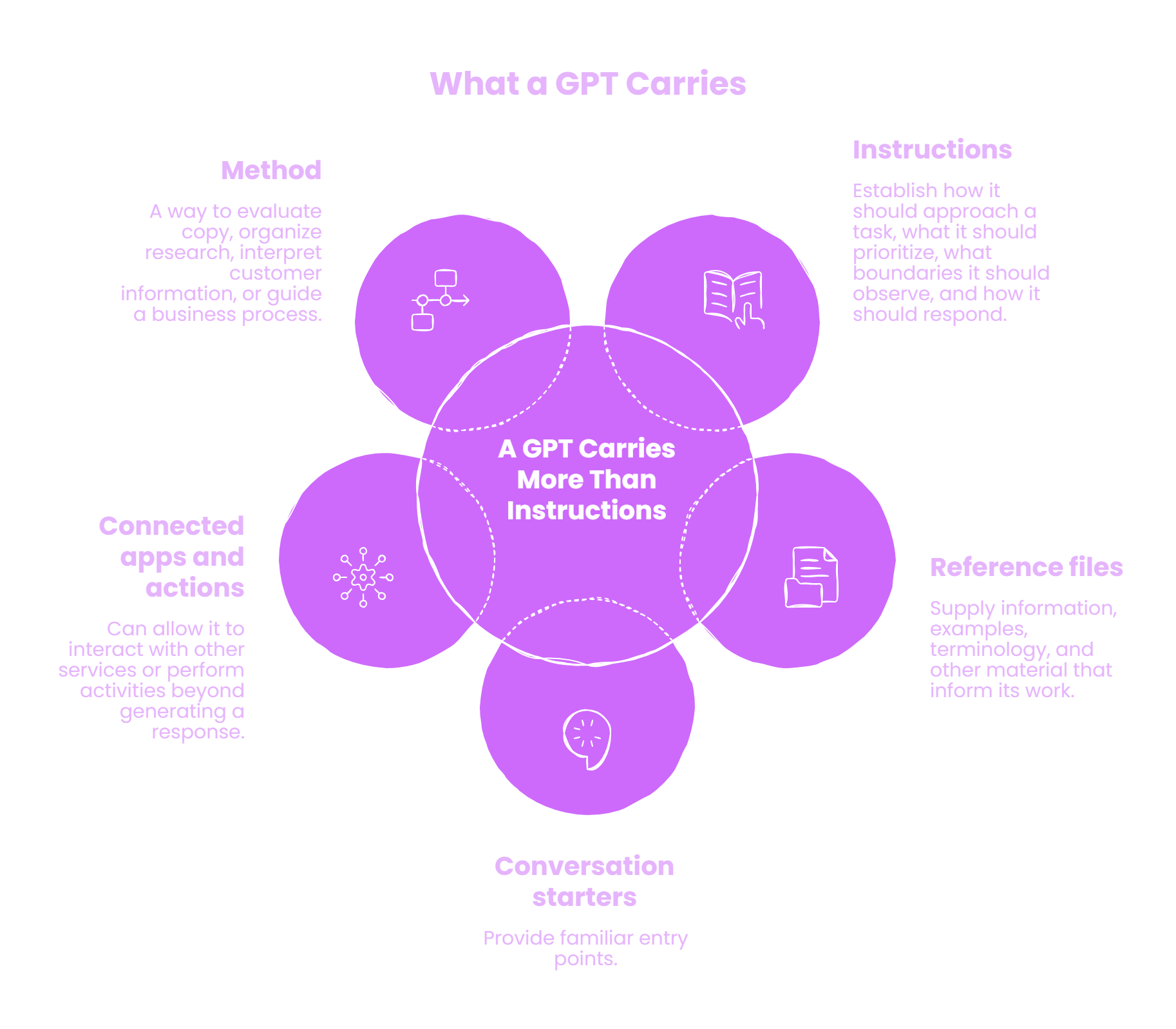
A custom GPT was created to help with a part of the business that requires a particular kind of knowledge. It may help develop marketing content, interpret information, organize ideas, support customer communication, or guide a repeatable process. Over time, the GPT becomes familiar. Its instructions have been refined, useful reference materials have been added, and its responses begin to reflect the way the work is expected to be done. Eventually, the GPT becomes part of how the business operates. Then the environment changes. The platform announces a new way of building and using AI capabilities. The familiar GPT is being moved toward a different form, and the business is encouraged to migrate it into a plugin. What initially sounds like a technical update raises some very practical questions.
What happens to the instructions and knowledge that shaped the GPT? Will the new version perform the same work? What needs to be saved, reviewed, rebuilt, or tested before the transition is complete? These questions matter because an AI tool can become closely connected to the work it supports. A business may have invested considerable time developing its instructions, refining its method, organizing its reference materials, and establishing how the tool should respond. When the environment changes, that work deserves to be understood and carried forward with care. The transition from custom GPTs to plugins provides an opportunity to examine what an AI tool actually carries, how its different components contribute to its usefulness, and what it takes to preserve that capability when its technical form changes.
What Is Changing With Custom GPTs?
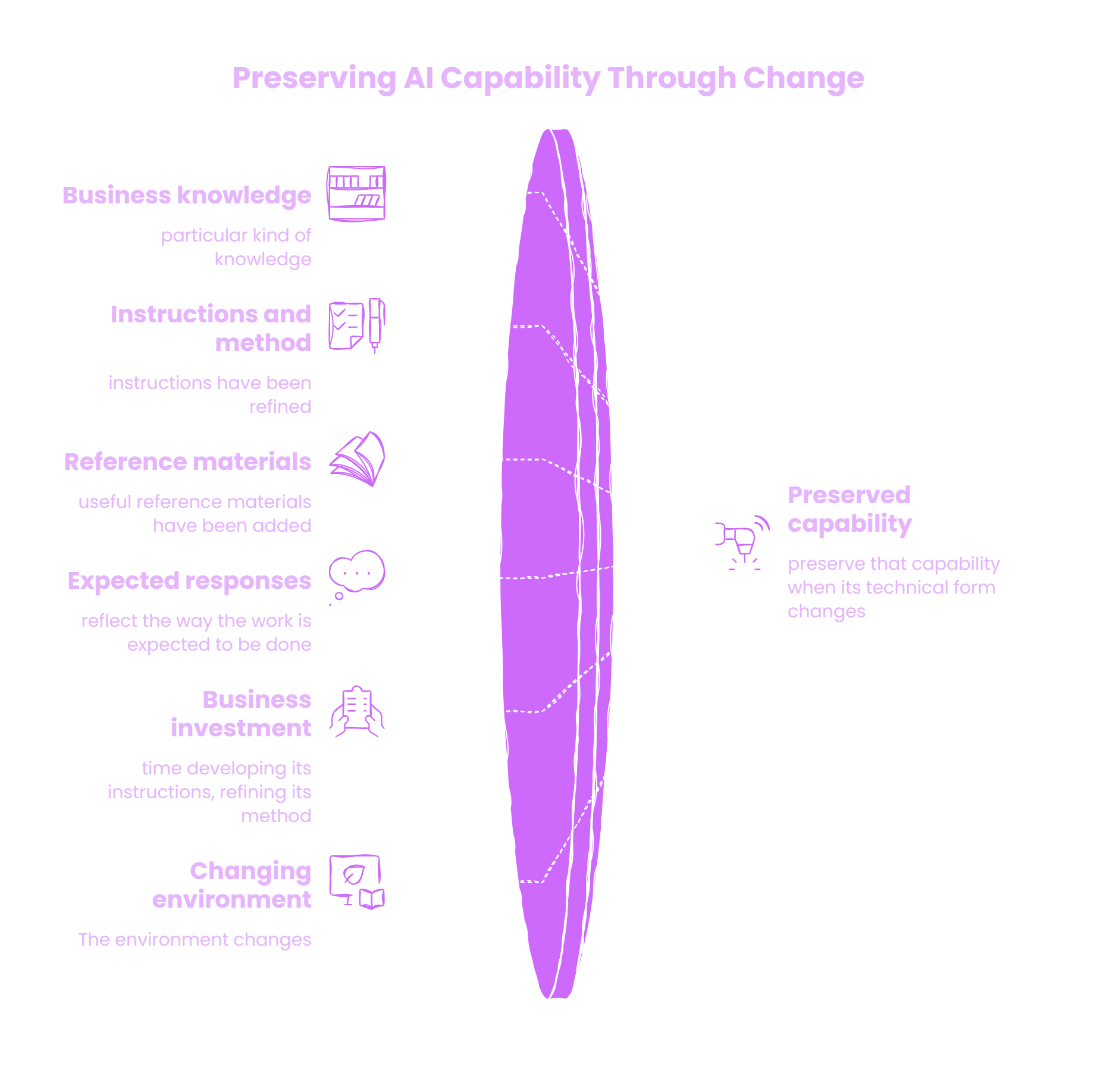
Custom GPTs allow people to configure ChatGPT for particular purposes. A creator can establish instructions, provide reference files, configure available capabilities, and shape how the GPT responds to a specific kind of work. This makes it possible to create a more focused experience than starting every conversation with a general purpose assistant. A custom GPT might support a business's content development, help interpret a particular type of information, guide a team through a process, or provide assistance based on a collection of reference materials. Its usefulness comes from the way these elements work together to support a defined purpose. OpenAI is transitioning custom GPT experiences toward plugins within ChatGPT. Plugins provide another way to organize reusable instructions and skills, along with connected apps when the work requires access to external services. For people who have created custom GPTs, this means there is a migration process to understand and prepare for.
The original GPT does not simply become a plugin with every part of its configuration automatically preserved. Some components transfer into the new structure, while others require separate attention. The applicable timeline and migration options depend on the account and workspace. OpenAI's published guidance identifies December 11, 2026 as the scheduled retirement date for affected Enterprise workspaces, with February 11, 2027 applying to qualifying Enterprise workspaces with an approved deferral. Other users should follow the migration information and notices presented in their own ChatGPT accounts rather than assume that an Enterprise date applies to them. This makes it important to establish which GPTs matter, who created them, and what the account or workspace currently permits. Before considering the migration itself, however, it helps to understand what a GPT contains.
A GPT Carries More Than a Set of Instructions
A custom GPT may appear to be one assistant with one name and one purpose. Behind that familiar experience, several elements contribute to the work it performs.
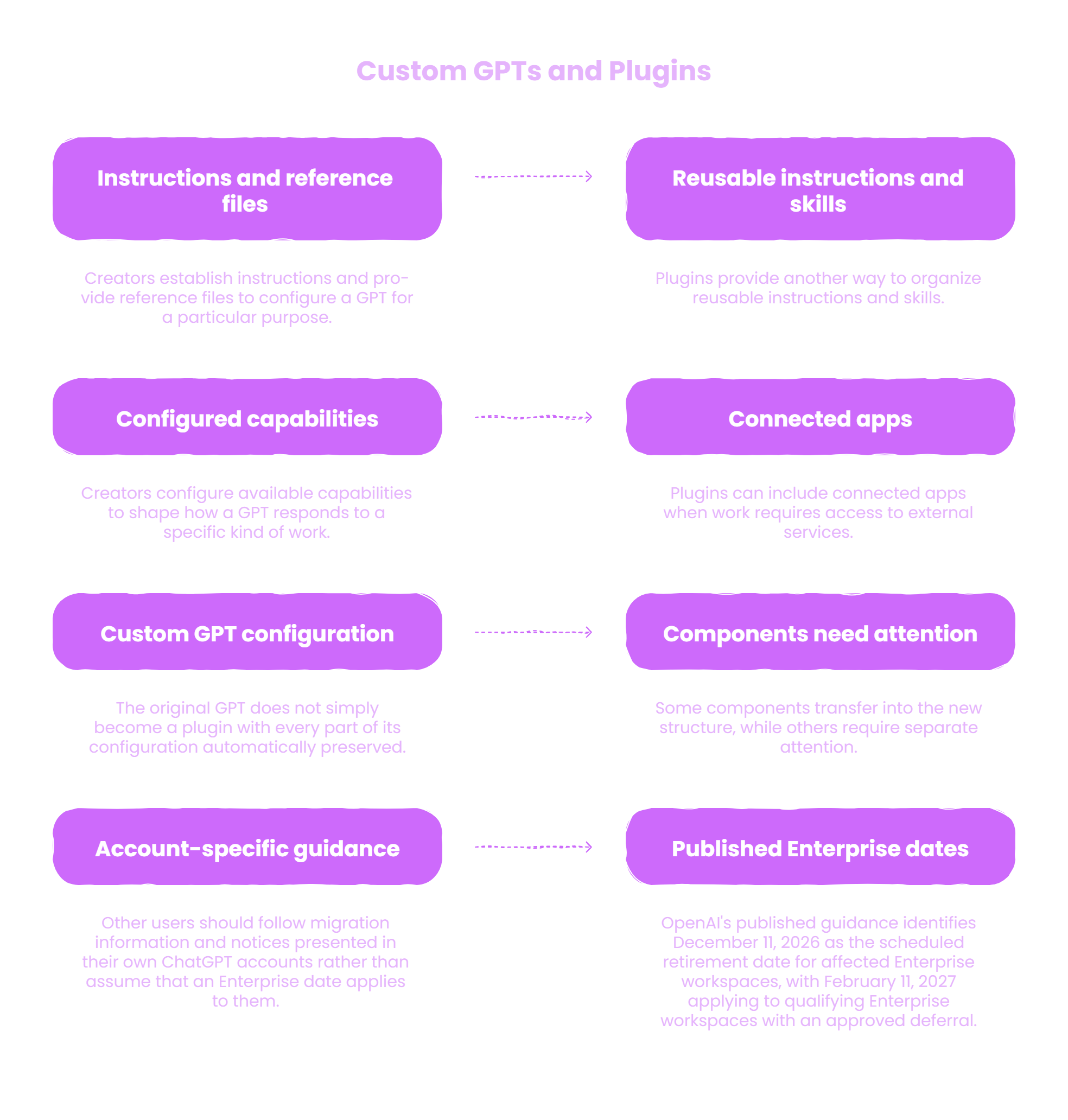
Its instructions establish how it should approach a task, what it should prioritize, what boundaries it should observe, and how it should respond. Reference files can supply information, examples, terminology, and other material that inform its work. Conversation starters provide familiar entry points. Connected apps and custom actions can allow it to interact with other services or perform activities beyond generating a response.
There may also be a method behind the configuration. Someone might have spent time developing a way to evaluate copy, organize research, interpret customer information, or guide a business process. That method may have existed long before the GPT was created. The custom GPT gave it a usable form within ChatGPT. Consider a GPT developed to support a business's content process.
Its instructions may establish the order in which a subject should be examined, the distinctions that must be made before writing, the tone and vocabulary to preserve, and the criteria that determine whether a draft is ready. Its reference files may contain brand information, previous examples, and approved language. The GPT's usefulness depends on the relationship between these elements. Copying the instructions alone would not necessarily preserve the entire working capability. The instructions may explain how the work should be approached, while the reference materials supply information needed to perform it appropriately. Examples may demonstrate a standard that is difficult to communicate through a short instruction alone. Connected tools may support additional activities that are part of the process. The original GPT is therefore better understood through the work it was established to support and the components that make that work possible. This understanding becomes especially important when those components must be carried into a different environment.
A Plugin Provides a Different Form for Carrying the Work
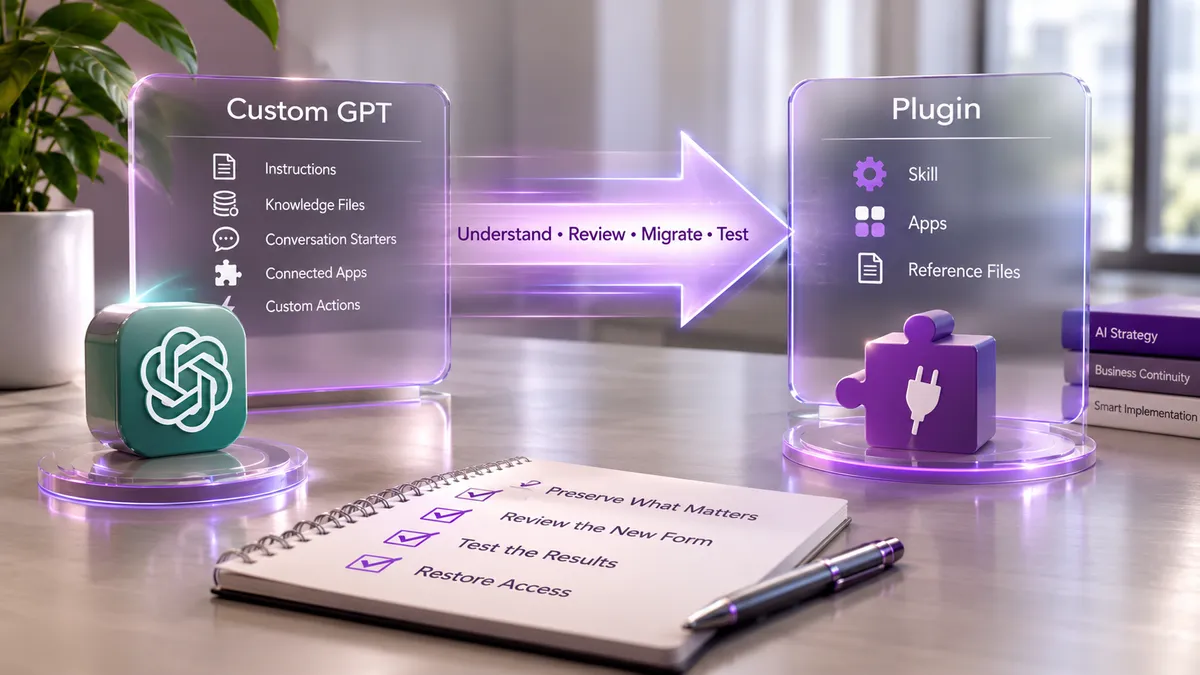
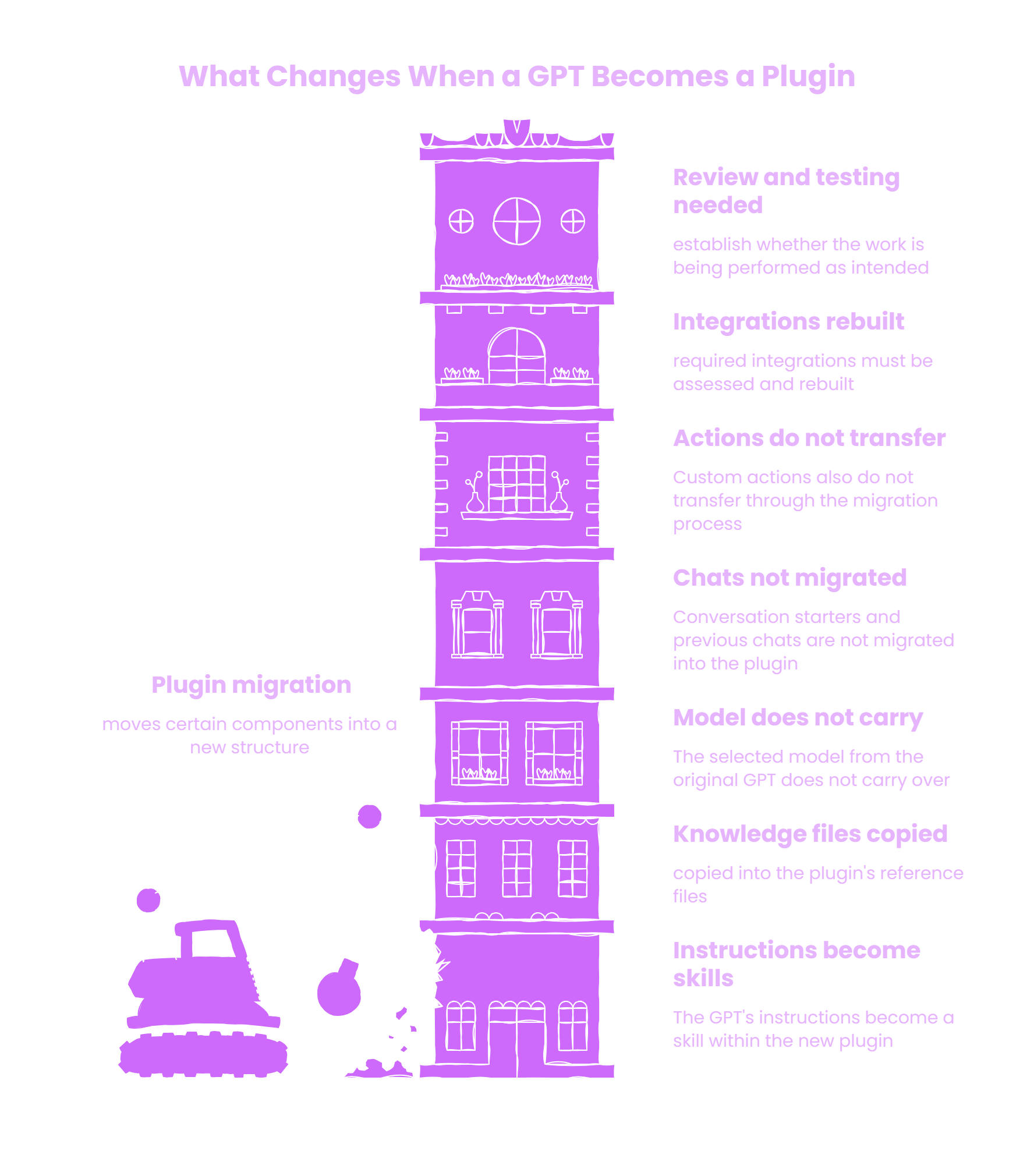
A plugin offers a different structure for organizing AI capabilities. Its skills provide reusable instructions for particular tasks, while connected apps can supply access to external services and the actions, they make available. Some plugins may contain skills without requiring an external app connection. Others may bring skills and connected apps together because the work requires both. Under OpenAI's migration process, the GPT's instructions become a skill within the new plugin. Connected apps are added as apps, and the GPT's knowledge files are copied into the plugin's reference files. These components provide a starting point for the new implementation. Other elements need separate attention. The selected model from the original GPT does not carry over. Conversation starters and previous chats are not migrated into the plugin. Custom actions also do not transfer through the migration process.
If those actions support work the business still needs, the required integrations must be assessed and rebuilt using a supported connector or a custom MCP server. It is important to understand the distinction between conversation history and migration. Previous conversations are not transferred into the plugin as part of the migration, but OpenAI's guidance indicates that existing conversations remain accessible after retirement. A business may still want to preserve particularly useful conversations separately, especially when they contain examples, decisions, or working history that will help maintain the capability. A migrated plugin may also respond differently from the original GPT. Even when its instructions and reference materials are present, the new implementation needs to be reviewed to establish whether the work is being performed as intended. The migration moves certain components into a new structure. Review and testing establish whether that structure can support the work that made the original GPT valuable.
Before Migration, Establish What the GPT Does
Preparation begins with the purpose of each GPT that matters to the business.
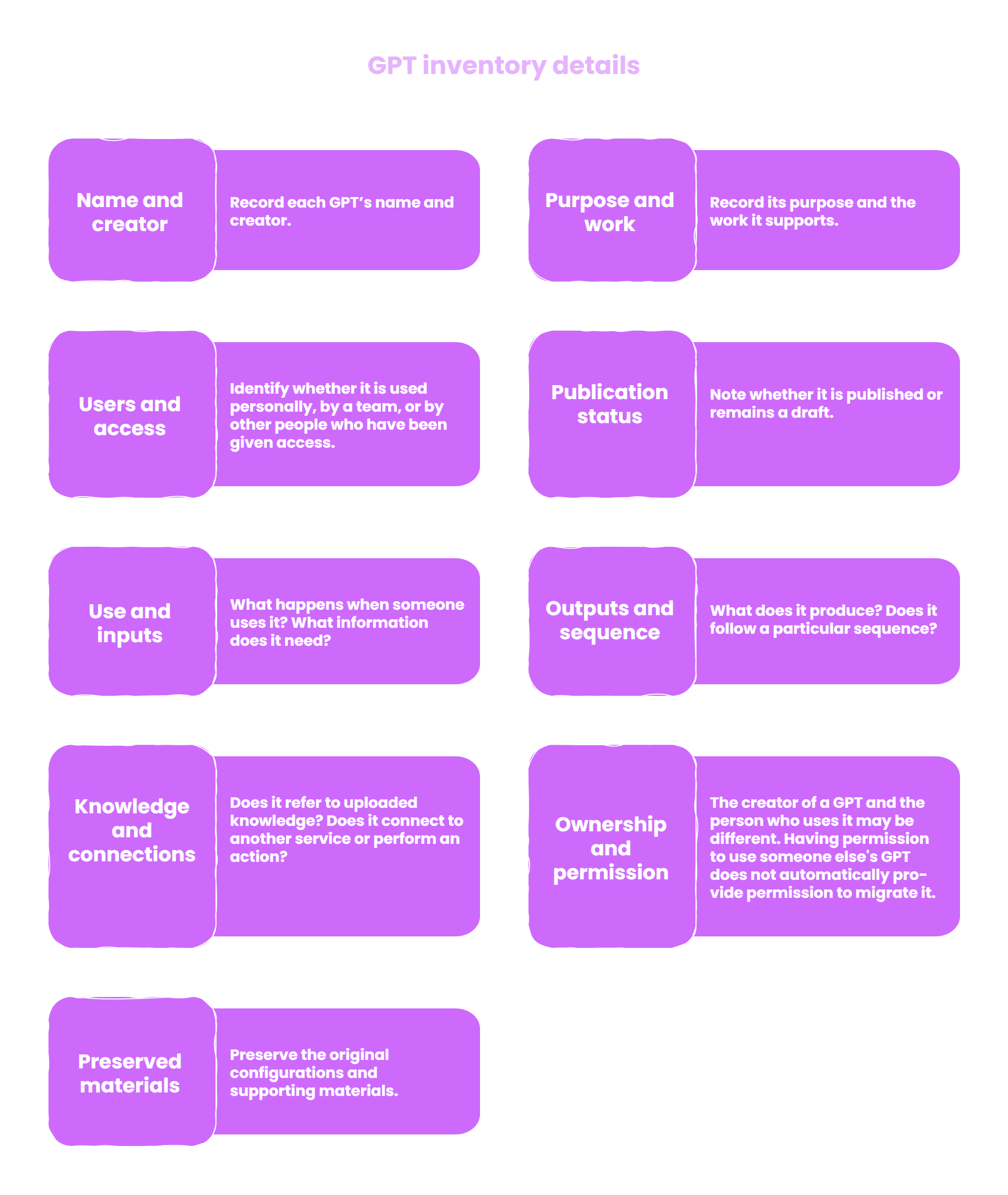
A collection of custom GPTs may include experiments, occasional use assistants, and tools that support recurring business activities. Their importance varies. Some may be useful but relatively easy to recreate. Others may contain developed methods, valuable reference materials, or integrations that support work the business depends on. An inventory makes these differences visible. For each GPT, record its name, creator, purpose, and the work it supports. Identify whether it is used personally, by a team, or by other people who have been given access. Note whether it is published or remains a draft, since the migration process depends on the published version. Then look beyond its name and description. What happens when someone uses it? What information does it need? What does it produce?
Does it follow a particular sequence? Does it refer to uploaded knowledge? Does it connect to another service or perform an action? These details establish the difference between a GPT that provides occasional assistance and one that carries a capability the business needs to preserve. Ownership matters as well. The creator of a GPT and the person who uses it may be different. Having permission to use someone else's GPT does not automatically provide permission to migrate it. If a business relies on a GPT created by another person, the creator's migration plans and the replacement's access arrangements need to be understood before the transition. Once the important GPTs have been identified, the original configurations and supporting materials can be preserved.
Preserve the Published Configuration and Its Supporting Materials
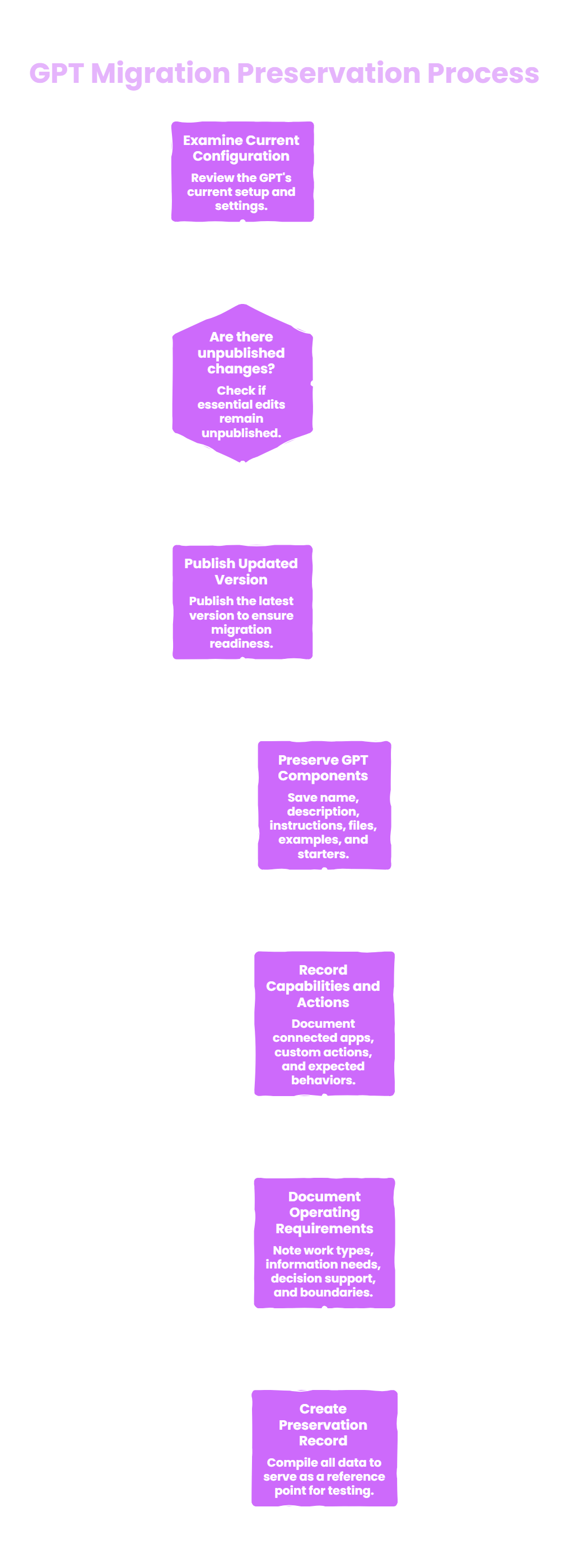
The original GPT provides a record of how the capability was established. Keeping that record gives the business something concrete to refer to when reviewing the new implementation. Begin by examining the GPT's current configuration. If essential changes have been made but remain unpublished, complete those changes and publish the updated version before migration. OpenAI's migration process uses the latest published version. Unpublished edits and drafts do not transfer as part of that process. Publishing for migration does not require making the GPT publicly available. It means ensuring that the version intended for migration is the published version. Next, preserve the complete set of relevant components. Save the GPT's name and description, its instructions, uploaded reference files, examples, conversation starters, and details of its configured capabilities. Record connected apps and any custom actions, including what each one is expected to do. Keep examples of useful outputs and note the conditions that made those outputs successful.
It is also helpful to document the operating requirements behind the GPT. This includes the type of work it should handle, the information it must have, the decisions it can support, the boundaries it must observe, and the activities that require human review or approval. For example, a GPT that prepares customer facing communications may need approved business information, a particular tone, and a review process before anything is sent. Its successful operation depends on more than generating polished language. The business needs to know which information is authoritative, who approves the final communication, and what the GPT is permitted to do. A useful preservation record makes those relationships visible. It also creates a reference point for testing. Without a record of the original instructions, supporting information, and expected results, it becomes difficult to determine whether a difference in the new environment is a harmless variation or a meaningful loss of capability.
Migrate, Review, and Rebuild What the Work Requires
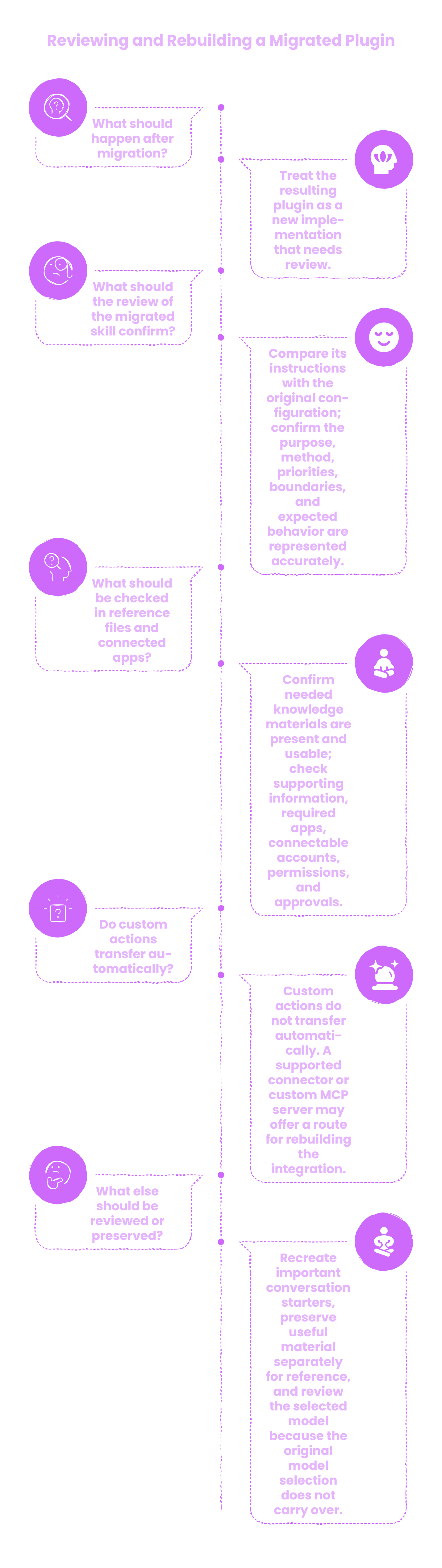
Once the original GPT has been prepared, the creator can follow the migration instructions available in the account or workspace, provided the GPT and account meet the applicable requirements. After migration, the resulting plugin should be treated as a new implementation that needs review. Begin with the migrated skill. Read the instructions and compare them with the original configuration. Confirm that the purpose, method, priorities, boundaries, and expected behavior are represented accurately. Next, examine the reference files. Confirm that the knowledge materials needed for the work are present and usable. Check important examples, templates, and other supporting information. If the original GPT relied on particular documents to maintain accuracy or consistency, those documents deserve specific attention. Connected apps should be reviewed as well. Confirm that the required apps are present, that the appropriate accounts can be connected, and that the necessary permissions and approvals are available. An app appearing in the configuration does not by itself establish that every expected activity is ready to work. Custom actions require particular care because they do not transfer automatically.
A business that depended on an action to communicate with another system needs to determine how that function will be provided in the new environment. A supported connector or custom MCP server may offer a route for rebuilding the integration, but the replacement should be evaluated against the original function. The existence of a new connection does not guarantee that it performs every activity the former action supported. Conversation starters can be recreated when they are important to how people begin using the tool. Previous conversations can remain available as historical records, and particularly useful material can be preserved separately for reference. The selected model should also be reviewed because the original GPT's model selection does not carry over. The goal of this review is to establish a complete picture of the new implementation. Each component should have a clear relationship to the work it supports, and anything missing should be identified before the plugin becomes part of the business's regular operation.
Test the Work, Not Just the New Assistant
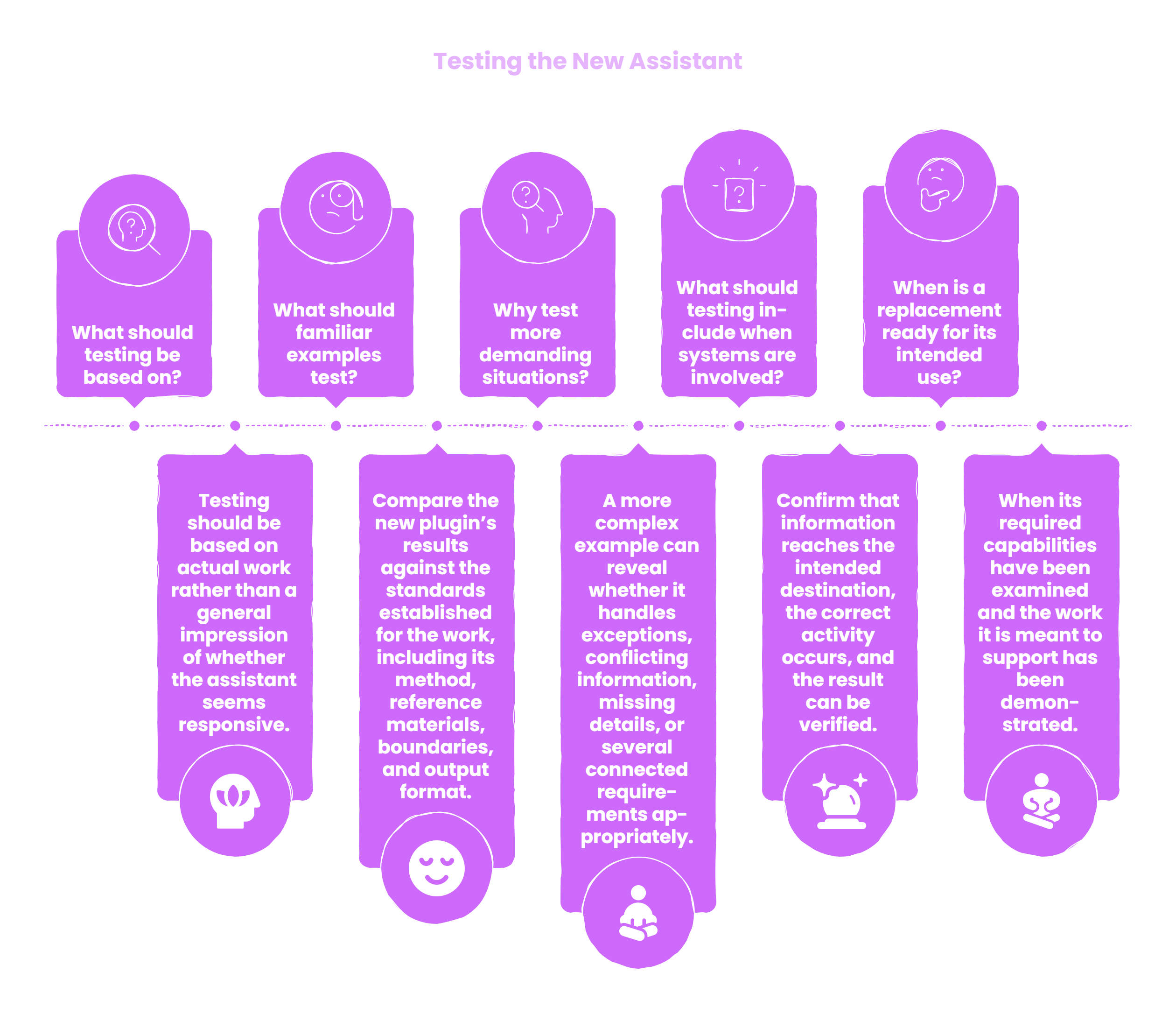
A plugin can appear correctly configured and still produce a different result from the original GPT. That is why testing should be based on actual work rather than a general impression of whether the assistant seems responsive. Begin with familiar examples. Use prompts that the original GPT handled well and compare the new plugin's results against the standards established for the work. Examine whether it follows the expected method, uses the appropriate reference materials, respects the required boundaries, and produces the complete output in the format needed. Then test more demanding situations. A straightforward prompt may demonstrate that the plugin can perform a basic task, while a more complex example can reveal whether it handles exceptions, conflicting information, missing details, or several connected requirements appropriately. For a content focused GPT, testing might involve asking the plugin to develop a piece of content using the same source material and standards as the original. The review would consider more than whether the writing sounds good. Does it preserve the intended message? Does it use the correct business information? Does it follow the established process? Does it recognize where additional information or human approval is required?
For a GPT that interacts with other systems, testing must include those interactions. Confirm that information reaches the intended destination, that the correct activity occurs, and that the result can be verified. Where actions involve external services, test them with appropriate permissions and safeguards before relying on them in live operations. OpenAI recommends comparing familiar prompts and at least one more challenging case. The review should examine whether the plugin follows its instructions, uses the expected reference materials, produces complete responses and files in the required format, and performs the necessary tool or integration activities. It is useful to keep a record of the results, including differences, corrections, and remaining limitations. This turns testing into an observable review rather than a one time impression. A replacement is ready for its intended use when its required capabilities have been examined and the work it is meant to support has been demonstrated.
Restore Access and Establish Ongoing Responsibility
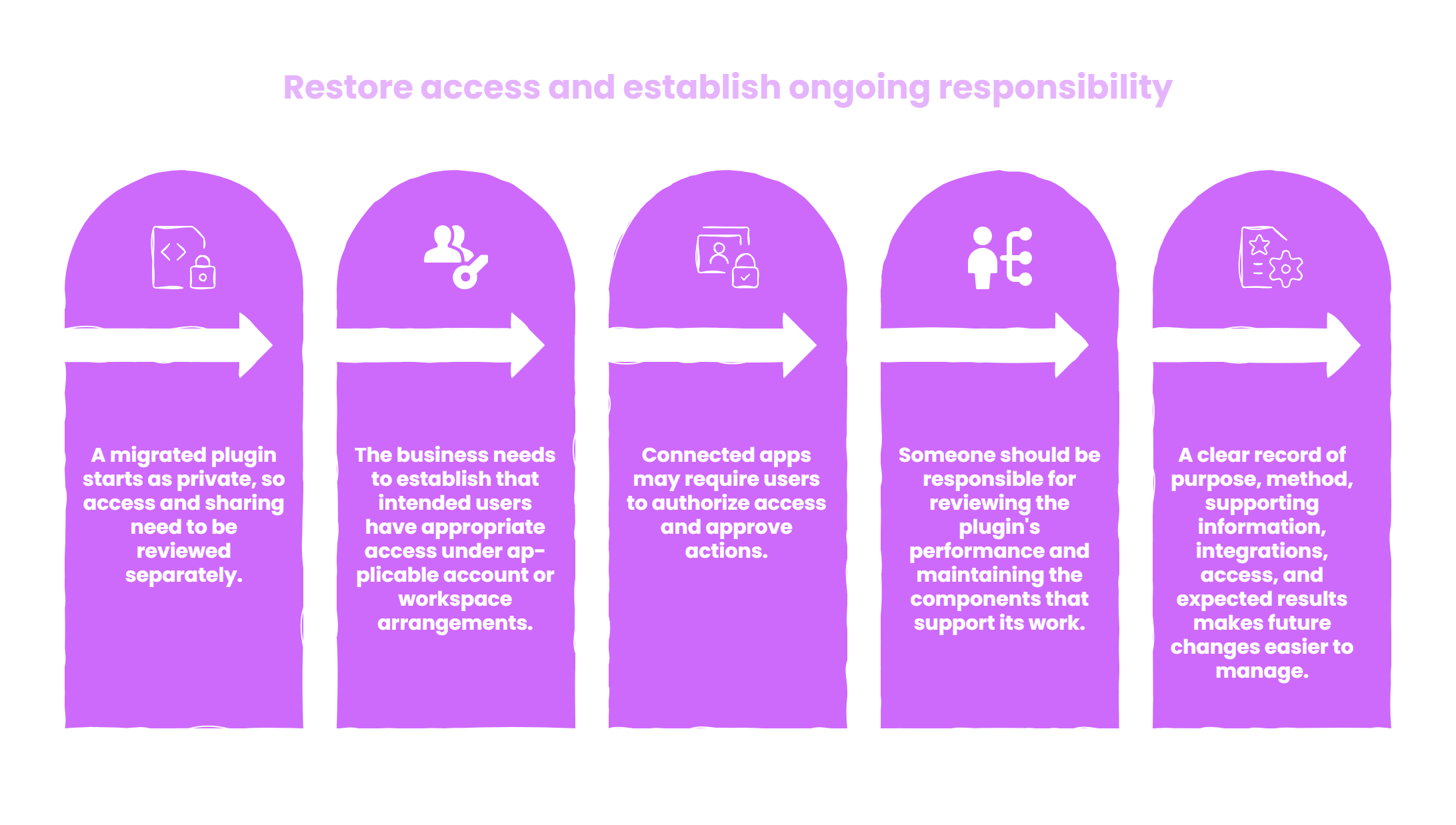
The transition also affects the people who rely on the GPT. A migrated plugin starts as private, so access and sharing need to be reviewed separately. In a workspace, availability may depend on its sharing settings and administrative permissions. People who previously used the GPT need to know how they will access the replacement, and the business needs to establish that the intended users have the appropriate access. A migration link or redirect should not be mistaken for permission to use the replacement. The people who need the plugin must have access under the applicable account or workspace arrangements. Connected apps may also require users to authorize access and approve actions. These considerations are especially important when a GPT supports a team or a recurring business process.
A replacement that works for its creator but remains unavailable to the people who depend on it has not yet restored the full working arrangement. Responsibility continues after the initial setup. Instructions may need refinement, reference materials may change, connected services may be updated, and the business process itself may develop. Someone should be responsible for reviewing the plugin's performance and maintaining the components that support its work. The form can change again in the future. A clear record of purpose, method, supporting information, integrations, access, and expected results makes those future changes easier to understand and manage.
Prepare One GPT for Its Next Form
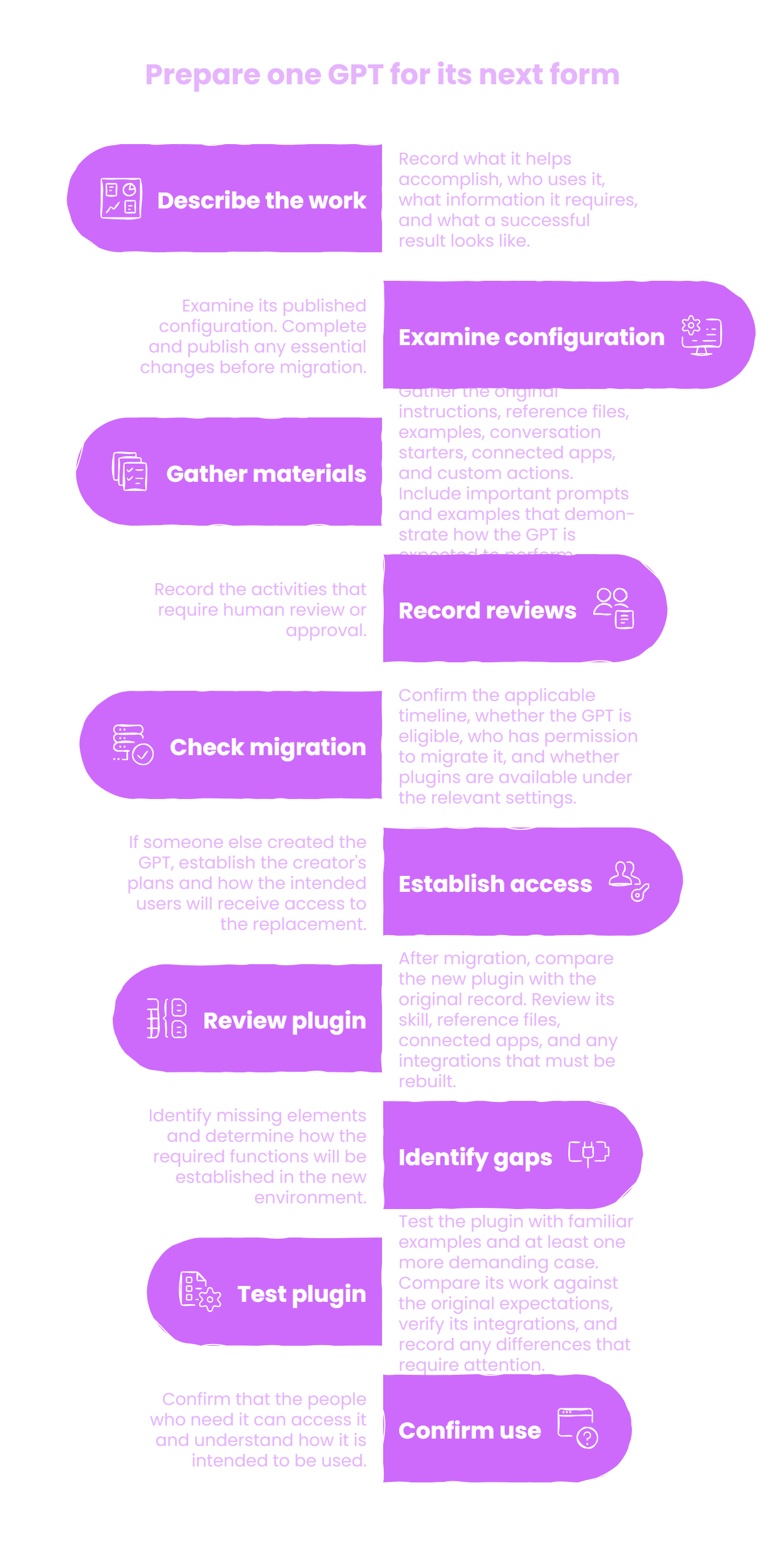
A practical way to begin is to select one custom GPT that has meaningful value to the business. It does not have to be the most complicated one. A GPT used regularly for an identifiable business activity can provide a useful starting point. First, describe the work it supports in ordinary business language. Record what it helps accomplish, who uses it, what information it requires, and what a successful result looks like. This description becomes the reference for evaluating its future form. Next, examine its published configuration. Complete and publish any essential changes before migration. Then gather the original instructions, reference files, examples, conversation starters, connected apps, and custom actions. Include important prompts and examples that demonstrate how the GPT is expected to perform. Record the activities that require human review or approval. Then examine the migration information available in the account or workspace. Confirm the applicable timeline, whether the GPT is eligible, who has permission to migrate it, and whether plugins are available under the relevant settings.
If someone else created the GPT, establish the creator's plans and how the intended users will receive access to the replacement. After migration, compare the new plugin with the original record. Review its skill, reference files, connected apps, and any integrations that must be rebuilt. Identify missing elements and determine how the required functions will be established in the new environment. Finally, test the plugin with familiar examples and at least one more demanding case. Compare its work against the original expectations, verify its integrations, and record any differences that require attention. Confirm that the people who need it can access it and understand how it is intended to be used. This exercise provides more than a migration checklist. It establishes a clearer understanding of what the GPT was carrying, what the new environment provides, and what the business must maintain for the capability to continue serving its purpose.
In Closing
A custom GPT can begin as a convenient way to make AI more useful for a particular task. With development and repeated use, it may come to carry instructions, knowledge, methods, examples, and connections that support meaningful business activity. Its value grows through the way those elements are established and used together. When the environment changes, the transition deserves more attention than simply moving a configuration from one place to another. The original needs to be understood and preserved. The new implementation needs to be reviewed. Missing integrations and supporting materials need to be addressed, access needs to be restored, and the work itself needs to be tested before people depend on it again.
This also points to a broader principle about AI implementation. A capability may be carried through different technical forms over time. The form provides a way for that capability to be used, while the knowledge, method, standards, and responsibilities behind the work give it substance. Migration carries components. Continuity requires preserving the capability those components were established to produce. Understanding that distinction helps a business approach change in AI with greater care. The technology may provide a new environment, but the business remains responsible for knowing what the work requires and establishing the conditions for it to continue well.
A capability survives a change of form when someone has recorded what it does, what it depends on, and who keeps it running. That same continuity is what gets built inside Plug Club, the offer, the follow-up, the systems, and the resources behind your business, alongside other owners doing the same, so what you've built carries forward instead of living in one tool or one person's memory."
→ Join Plug Club